
Cardano News Today: Cardano's 2026 Make-or-Break Moment: Upgrades vs. Liquidity Challenges


 Aime Summary
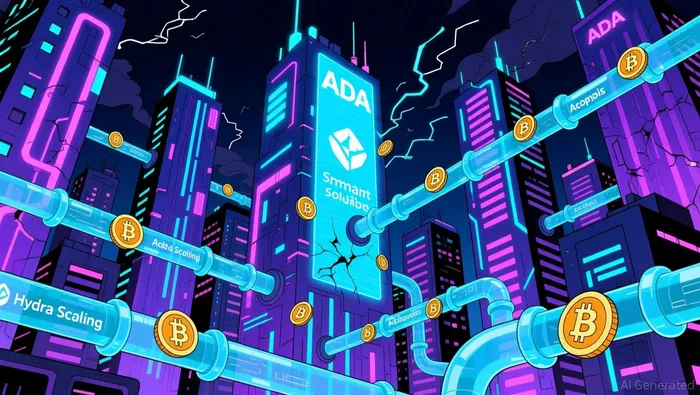
Cardano's recent governance approvals and technical upgrades have sparked mixed reactions among investors, with large stakeholders quietly withdrawing as the network navigates a critical phase of development. The CardanoADA-- community approved a $71 million treasury allocation for 12 months of upgrades, including layer-2 scaling via Hydra and node redesign under Project Acropolis, with 74% support despite criticisms over transparency and granularity. However, the broader market context remains challenging: a recent global crypto sell-off pushed BitcoinBTC-- below $86,000 and triggered over 10% losses for altcoins like ADAADA--, exacerbating concerns about liquidity and investor sentiment.
The approved budget aims to address Cardano's DeFi shortcomings by allocating 96 million ADA (13% of the treasury) for milestone-based payments to Input Output Global (IOG), overseen by governance body Intersect. Key deliverables include Hydra for faster transactions and Acropolis to streamline developer onboarding, which could eventually boost ADA demand according to the report. Separately, a $30 million initiative seeks to integrate stablecoins, custody providers, and cross-chain bridges to strengthen economic infrastructure, a move supported by IOG, EMURGO, and the Cardano Foundation. Yet, critics argue these measures alone may not resolve the network's chicken-and-egg liquidity challenges, where low DeFi adoption and fragmented vendor onboarding hinder growth as analysis shows.
 Compounding these challenges, Cardano experienced a brief chain split in November 2025 after a malformed AI-generated transaction exploited a validation bug. While node operators swiftly restored consensus, the incident exposed edge-case vulnerabilities and intensified scrutiny over operational maturity. Founder Charles Hoskinson acknowledged the need for Bitcoin interoperability and the Midnight privacy network to drive volume into Cardano's ecosystem, suggesting a longer-term solution rather than immediate fixes.
Market dynamics further complicate the outlook. The recent sell-off, which erased $140 billion in crypto market capitalization, saw ADA and other altcoins face deeper losses than Bitcoin. Over $300 million in leveraged long positions were liquidated, highlighting heightened sensitivity to macroeconomic pressures and leverage-driven volatility as data shows. Institutional holders, however, remain active: on-chain data indicates whale accumulation at two-year support levels, signaling confidence in Cardano's long-term trajectory despite near-term turbulence according to on-chain analysis.
Looking ahead, 2026 will test whether Cardano's governance and integrations pipeline can translate into measurable economic growth. If stablecoin adoption and infrastructure partnerships gain traction, the network's $248 million DeFi TVL could potentially double, aligning with early adoption phases on other layer-1 blockchains according to market analysis. Yet, the path remains fraught: without robust bridges, oracles, and institutional tooling, liquidity may continue to flow elsewhere, leaving Cardano to compete in a crowded DeFi landscape.

Stay ahead of the market.
Get curated U.S. market news, insights and key dates delivered to your inbox.


AInvest
PRO
AInvest
PRO



Comments
No comments yet