
Cardano News Today: AI's Cybersecurity Test: Cardano's Chain Split Reveals Blockchain Resilience


 Aime Summary
Cardano's blockchain network experienced a temporary chain split on November 21, 2025, triggered by a malformed delegation transaction that exploited a vulnerability in the protocol's software. The incident, attributed to a user leveraging artificial intelligence tools to craft the problematic transaction, caused a brief but significant disruption in network operations, sparking debates about the platform's resilience and the role of AI in cybersecurity. The CardanoADA-- community and developers swiftly addressed the issue, restoring network continuity within 24 hours.
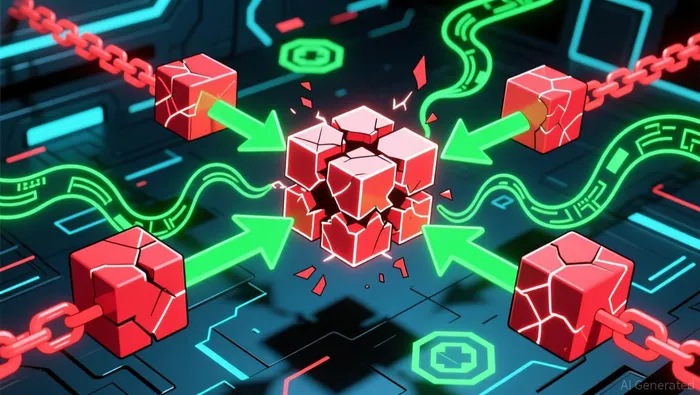
The split occurred when a staking pool operator, later identified as Homer J, submitted a transaction that bypassed initial validation checks, creating a fork between a "poisoned" chain containing the malformed transaction and a "healthy" chain according to reports. The transaction exploited a bug in older versions of the Cardano ledger, which had been masked by standard transaction tooling but surfaced in newer node releases. While block production continued on both chains, wallet providers and decentralized applications (dApps) faced inoperability, prompting exchanges to pause deposits and withdrawals as a precaution.
Homer J, who admitted responsibility via social media, described the incident as a "failed personal challenge" and denied malicious intent. "I didn't sell any AdaADA-- before my 'testing in production' disaster, or short it... I do have a lot to lose as a consequence of my actions. Sorry, Cardano community, I truly am," they wrote according to reports. Intersect, a governance body within the Cardano ecosystem, confirmed no user funds were lost and attributed the split to a combination of outdated software and specialized submission methods.
The resolution involved staking pool operators upgrading to patched node software, which reconsolidated the two chains into a single canonical history. Cardano's Ouroboros consensus mechanism, a proof-of-stake protocol, was highlighted as a key factor in preventing prolonged downtime. Dori, a Cardano Drep (Decentralized Representative), emphasized the collaborative effort: "This whole thing was only possible because of Ouroboros... and the way the community, SPOs, and dev teams all stepped up together".
 ADA, Cardano's native token, dropped over 6% in the immediate aftermath of the incident, though prices stabilized as the network recovered. The episode underscores growing concerns about AI's dual-use potential in blockchain ecosystems. While AI tools can enhance automation and efficiency, their misuse—such as generating malicious code or exploiting vulnerabilities—poses emerging risks.
The incident also highlighted the importance of rigorous validation processes and rapid response protocols in decentralized networks. Intersect noted the vulnerability had persisted for years due to older ledger versions, surfacing only in recent software iterations. Hoskinson's comments on potential legal consequences reflect a broader industry trend of holding individuals accountable for cyber incidents, even in permissionless blockchain environments.
As Cardano's community works to address the technical root cause, the episode serves as a case study in resilience. While the network faced temporary disruption, its ability to recover swiftly and maintain block production earned recognition from competitors and reinforced confidence in its architecture. For now, the focus remains on strengthening validation checks and educating users about the risks of AI-driven experimentation in live blockchain environments according to experts.

Stay ahead of the market.
Get curated U.S. market news, insights and key dates delivered to your inbox.


AInvest
PRO
AInvest
PRO



Comments
No comments yet