
Cardano Founder Praises Midnight's Security After Monero 51% Attack
 Aime Summary
Cardano founder Charles Hoskinson has emphasized the importance of robust security mechanisms in blockchain systems following a 51% attack on Monero. The incident, orchestrated by the Qubic project, involved a “pay-to-switch” strategy that incentivized miners to join their pool. This allowed Qubic to gain control of approximately 52.7% of the Monero network, granting it the power to reorganize the blockchain and manipulate transaction history for extended periods [1].
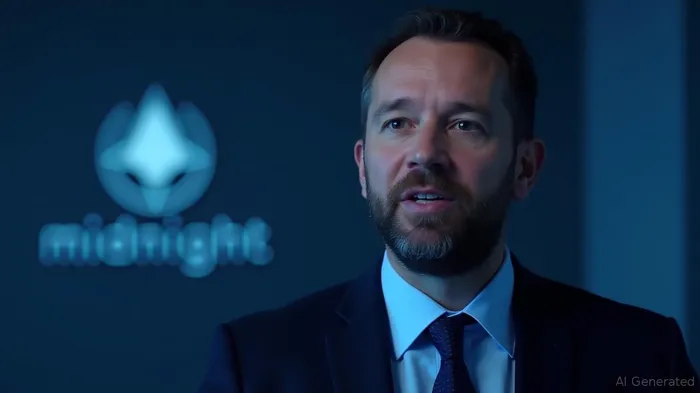
Hoskinson responded by highlighting Cardano’s Midnight sidechain and its Minotaur consensus protocol as a model for building resilient networks. He explained that Minotaur employs a multi-resource consensus model, integrating both Proof of Work (PoW) and Proof of Stake (PoS). This hybrid approach distributes control across different types of resources, making it significantly harder for any single entity to dominate the network [1].
The Monero incident has raised concerns about the vulnerability of single-resource consensus models. When one party accumulates a majority of a specific resource—in this case, hash power—it can exert undue influence over the network. This scenario is precisely what Minotaur was designed to prevent. By blending multiple consensus mechanisms, Minotaur ensures that no single point of failure exists, thereby enhancing the overall security and stability of the system [1].
Midnight, powered by Minotaur, is a fourth-generation blockchain developed by CardanoADA--, with a focus on privacy, scalability, and interoperability. It utilizes advanced cryptographic techniques, such as ZK-SNARKs, to validate transactions while maintaining user privacy. The computational demands of these privacy features require efficient and secure resource management, a challenge that Minotaur is engineered to address [1].
Industry commentators have noted that the Monero attack demonstrates the risks inherent in single-resource systems. The ability of Qubic to manipulate the Monero network underscores the need for diversified consensus models that prevent centralized control. Hoskinson’s emphasis on Minotaur’s design highlights Cardano’s proactive approach to addressing these vulnerabilities and reinforcing the security of its ecosystem [1].
The attack also had immediate financial implications for Monero. The price of XMR dropped more than 5% in a single day, falling from around $267 to under $244 before partially recovering to $253. This decline reflects broader concerns about double-spending and censorship risks associated with the 51% attack [1].
In addition, reports indicated that Qubic sold a significant portion of its mined Monero for stablecoins and used the proceeds to buy and burn its own QUBIC tokens. This strategy not only bolstered the value of QUBIC but also reinforced Qubic’s dominance in Monero mining [1].
The events surrounding Monero and the insights shared by Charles Hoskinson underscore the ongoing challenges and innovations in blockchain security. As the industry continues to evolve, the integration of multi-resource consensus models may become a standard practice in mitigating the risks associated with 51% attacks and other forms of network manipulation.
Source: [1] Cardano Founder Highlights Midnight’s Strength After Monero Hit by 51% Attack (https://thecryptobasic.com/2025/08/12/cardano-founder-highlights-midnights-strength-after-monero-hit-by-51-attack/?utm_source=rss&utm_medium=rss&utm_campaign=cardano-founder-highlights-midnights-strength-after-monero-hit-by-51-attack)

Stay ahead of the market.
Get curated U.S. market news, insights and key dates delivered to your inbox.






Comments
No comments yet