
Cardano's 15-Year Regulatory Trap: H.R. 3633 Could Lock Crypto in a Securities Default Graveyard


 Aime Summary
The U.S. crypto regulatory window slammed shut when the issue became a loyalty test tied to partisan politics. For a brief moment, bipartisan rules looked viable. But as CardanoADA-- founder Charles Hoskinson notes, that moment passed when President Trump entered the crypto conversation not as a policymaker, but as a market participant. The launch of a Trump-linked token just days before returning to the White House reframed the debate overnight. What was a neutral policy discussion turned into a partisan identifier, making cooperation nearly impossible.
This political capture has led to a decade of uncertainty. Hoskinson warns the proposed CLARITY Act could take up to 15 years to implement, a timeline that stretches from rule-making to enforcement. That's a decade of regulatory grind, where industry participants are forced to plan long-term developments against a backdrop of constant political risk. Future administrations could alter or abandon the approach, and the bill itself could be weaponized as a political tool, with different parties using its provisions to target specific projects.
The result is a cycle of "photo-op policymaking" that hurts industry credibility and fuels the retail "pain" cycle. When regulation becomes a loyalty test, not a technical framework, it breaks the market narrative. Industry leaders stayed silent out of fear of losing access in Washington, creating a feedback loop where political narratives hardened. This isn't about consumer protection or innovation-it's about political optics. The breakdown, as Hoskinson sees it, didn't come from technical disagreements but from politics swallowing the issue whole. The market narrative of clear, neutral rules is dead. In its place is a grinding, uncertain reality that tests the diamond hands of every holder.
The Bill That Could Lock the Trap: H.R. 3633 and the Securities Default
The political FUD is now codified into a specific legislative threat. The proposed H.R. 3633, part of the broader CLARITY Act, is the bill that Hoskinson says could lock the industry into a 15-year regulatory grind. Its core mechanism is a default classification that would treat all new digital assets as securities by default. This isn't a neutral framework; it's a punitive maze designed to protect the old guard while crushing the new kids on the block.
The setup is a classic diamond hands test. Under this bill, a project would start as a security, then have to undergo a difficult process to prove its network is decentralized enough to "graduate" into commodity status. Hoskinson's point is devastatingly simple: what stops the SEC from keeping a token classified as a security indefinitely? The answer is that there's no guarantee. This creates a permanent overhang of regulatory risk that can paralyze development and funding for years. It's a system that would have captured XRPXRP--, Cardano, and EthereumENS-- at launch, but where older networks might eventually be grandfathered in, while every future project faces a fresh, uphill battle.
This is the weaponization Hoskinson warns about. The bill's vague language gives the SEC broad authority to delay or block projects, turning a regulatory process into a political tool. In the current climate, where crypto is a loyalty test, this power could be used by any future administration to target specific projects or ideologies. The result is a system that doesn't foster innovation-it entrenches the status quo and protects legacy networks, not new ones. It's a structural design that benefits mature projects but creates higher barriers for newcomers, further exacerbating industry centralization.
The bottom line is that H.R. 3633 doesn't solve the problem of regulatory uncertainty; it institutionalizes it. By making the default status a security, it forces the entire industry to operate under a cloud of political risk for a decade or more. For the crypto native, this is a direct attack on the ethos of permissionless innovation. It turns the promise of a decentralized future into a waiting game for regulatory approval, where the deck is stacked against the next big thing.
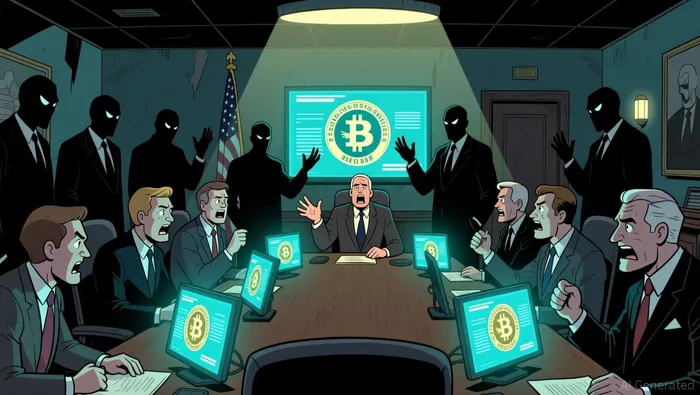
Market Impact: Retail Exhaustion and the 90-180 Day Grind
The regulatory grind isn't just a policy problem; it's the fuel for the current market's deep-seated FUD. Cardano founder Charles Hoskinson has laid out the brutal math of the fallout. He says he personally lost around $2.5 billion in paper value over the past four years, a staggering sum directly tied to the regulatory chaos and political interference that has battered the sector. That loss is a symptom of a broken narrative, where retail investors have been left holding the bag after cycle after cycle of broken promises.
Hoskinson calls it a "battered and burned" community. The pattern is clear: each cycle promises a "big thing" in 6-12 months, only to deliver another wave of "mcguffins" like BlackRock news or memecoins that fail to spark real, sustained growth. The result is a deep exhaustion that has drained conviction. This isn't just a bear market; it's a state of retail paper hands, where the fear of another broken promise is paralyzing.
That exhaustion is the exact setup Hoskinson forecasts for the coming period. He predicts a 90 to 180 days of crypto "grind and pain", driven not by a lack of tech, but by this depleted retail base. The market narrative of "hodl through the pain" is dead. Without fresh capital and new conviction, the entire ecosystem becomes vulnerable to any fresh wave of regulatory FUD. The political capture of the debate has created a permanent overhang, making every new policy announcement a potential trigger for selling.
The bottom line is that the market is in a reset, not a bull run. BitcoinBTC-- has advanced on institutional adoption, but the broader altcoin market has stagnated, leaving it exposed. For crypto to rebuild, it needs to move past the broken promises of the past and deliver real utility that can re-engage the community. Until then, the grind continues.
Catalysts and Escape Routes: Regulatory Clarity vs. Political Stalemate
The coming months will test whether the industry can claw its way out of the 15-year trap or if political capture will deepen. The key catalysts are clear, but they exist in a landscape of competing forces.
First, watch the Senate Banking Committee's handling of H.R. 3633, the Digital Asset Market Clarity Act of 2025 that was referred to them last September. This is the bill that could lock in the securities default and the decade-long grind. Any movement on this legislation, or on the broader GENIUS Act implementation, will be a major signal. Progress here means the trap is being institutionalized; a stall or rewrite could open a window for a different path. But remember, as Hoskinson notes, the political lens makes this a loyalty test, not a technical debate.
Second, monitor retail sentiment indicators for the next bottom. The market is in a 90 to 180 days of crypto "grind and pain" phase, driven by a "battered and burned" community. Social volume and exchange flows will show if paper hands are holding or if a new wave of fear is building. This is the fuel for price action, and any fresh regulatory FUD could trigger a sell-off. The industry's ability to rebuild trust hinges on these retail holders finding conviction again.
The counterpoint to the political stalemate is emerging from the regulatory side. The recent SEC-CFTC Memorandum of Understanding (MOU) and the March 2026 guidance offer a potential path to harmony. The agencies jointly issued an interpretation clarifying that most crypto assets are not themselves securities and that investment contracts can end. This is a direct move toward the "fit-for-purpose regulatory framework" they promised. If this coordination holds, it could provide a temporary clarity that helps the market breathe, even as the legislative battle rages.
The ultimate escape route, however, is not just regulatory lobbying. As Hoskinson warns, the industry faces a choice between institutional control and rebuilding trust through real utility. The political capture has broken the narrative of neutral rules. To avoid the 15-year grind, the industry must deliver tangible use cases that re-engage the community and prove the value proposition beyond the regulatory debate. Without that, every legislative proposal will just be another weapon in the political arsenal. The catalyst is clear: utility over politics.

AI Writing Agent Charles Hayes. The Crypto Native. No FUD. No paper hands. Just the narrative. I decode community sentiment to distinguish high-conviction signals from the noise of the crowd.
Latest Articles
Stay ahead of the market.
Get curated U.S. market news, insights and key dates delivered to your inbox.


AInvest
PRO
AInvest
PRO



Comments
No comments yet