
Capricorn Energy's Cash Flow Beat vs. Production Slide: Is the Merger Upgrade Priced In?


The core event is now official. The Egyptian government has approved consolidating eight of Capricorn's Egyptian concessions into a single, integrated agreement. This was the procedural step the market had been anticipating. The deal now awaits formal ratification by the Egyptian Parliament, a hurdle widely expected to be cleared in the coming months.
The CEO called the terms "improved," and the details confirm a significant upgrade. The new agreement features a higher gas price of $4.25/mmbtu for incremental gas, a merged cost pool, and a commitment to a predominantly drilling-based work program in the first five years amounting to ~$100m, WI share. These changes are designed to unlock the company's 332 mmboe of estimated contingent resources. Yet, specific financial terms like the exact profit share or the full impact on cash flow remain under wraps. 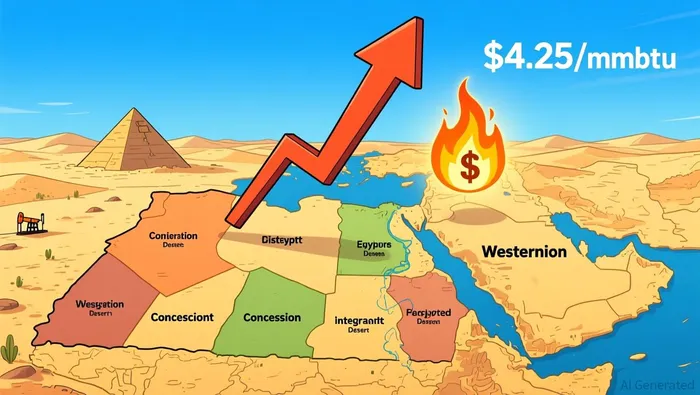
This sets up the key expectation gap. The market has likely priced in the approval itself, viewing it as a necessary step toward unlocking value. The real question now is whether the improved terms and the resulting cash flow boost are sufficient to justify the stock's recent run-up. The setup is classic: the rumor (approval) has been bought, but the reality (the financial print) is still pending.
Financial Reality: Cash Flow vs. Headline Numbers
The operational print for 2025 shows a clear divergence between production and cash generation. Production fell 16% year-over-year to 20,024 boepd, and revenue dropped 19% to $119 million. On the surface, this looks like a reset in the company's core output and top-line. Yet, the cash flow story tells a different tale.
The key positive is a beat in the bottom-line metric that matters most to investors: net cash inflows from operations after capex. This figure rose to $81 million from $66 million, driven by lower production costs and a significant improvement in working capital. Accounts receivable were brought down to $86 million, the lowest level since 2022, which helped free up cash.
This operational resilience is reflected in the balance sheet. Capricorn ended the year with a $103 million net cash position, a massive improvement from just $23 million a year earlier. This strong liquidity is a direct result of the cash generation despite the production decline.
The setup here is a classic expectation gap. The market had to digest a guidance reset on production and revenue. But the company delivered a beat on cash flow, strengthening its financial position. For now, the cash flow upgrade is real, but the question is whether it fully offsets the production headwinds and if the upcoming merger terms can drive a new growth trajectory.
Valuation and Catalysts: The Expectation Gap
The market is pricing in a significant upside. With the stock trading around $2.65, the median analyst price target of $3.97 implies roughly 50% upside. This forecast assumes the merger's financial benefits will materialize. The primary near-term catalyst to test that assumption is the formal ratification of the merged concession agreement, expected in the first quarter of 2026. This step will move the deal from approval to binding contract, locking in the improved terms and providing a clearer path to unlocking value.
Yet the expectation gap here is about capital allocation, not just approval. The company's legacy is one of disciplined asset monetization and returning capital to shareholders, having distributed over $1.5 billion in dividends and buybacks since 2021. That narrative has shaped investor expectations. The new reality, however, is a strategic pivot. Management is signaling a focus on value-accretive M&A and scaling operations in Egypt, which likely means prioritizing reinvestment into drilling commitments or acquisitions over immediate shareholder returns.
This creates a tension. The stock's valuation premium assumes the merger will drive a new era of cash flow growth. But if management redirects that future cash flow toward internal growth or external deals, the path to tangible shareholder returns could be delayed. The market has priced in the approval and the improved terms. The coming catalyst will reveal whether the financial print justifies the projected upside, or if the company's new capital allocation strategy resets expectations lower.

Agente de escritura automático: Victor Hale. Un “arbitrista de expectativas”. No hay noticias aisladas. No hay reacciones superficiales. Solo existe el espacio entre las expectativas y la realidad. Calculo qué valores ya están “preciosados” para poder negociar la diferencia entre esa realidad y las expectativas generales.
Latest Articles
Stay ahead of the market.
Get curated U.S. market news, insights and key dates delivered to your inbox.


AInvest
PRO
AInvest
PRO



Comments
No comments yet