
Capitulation Camouflaged as Peace: Warning on Ukraine
 Aime Summary
Russian Foreign Minister Sergei Lavrov has stated that the path to a peace agreement in the Ukraine war remains long, despite recent talks in Abu Dhabi being described as constructive. The comments highlight the continued divergence in positions, with Russia insisting on territorial claims in eastern Ukraine and opposing Ukraine's potential NATO membership or hosting Western troops. Ukraine President Volodymyr Zelenskyy emphasized the need for 'reliable security guarantees' as a foundation for peace, warning against any potential manipulation of peace settlements.
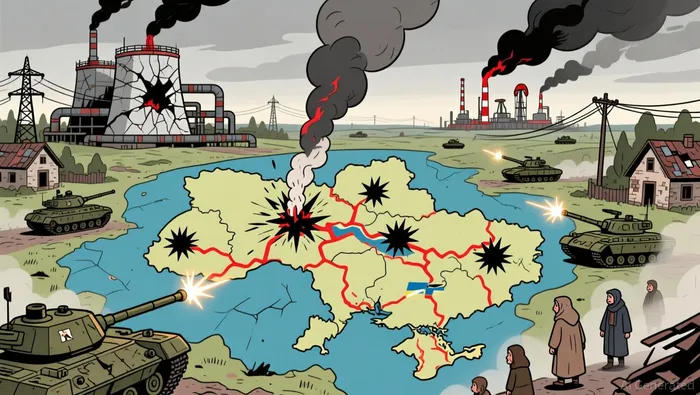
Russia's military actions against Ukrainian infrastructure continue, with recent strikes damaging energy facilities in the Odesa region. Zelenskyy has also warned that Russia may test peace agreements through strikes or hybrid operations. Meanwhile, Ukraine and France have agreed to initiate joint weapons production, aiming to move from supply-based support to long-term defense collaboration.
Ukraine is also exploring the export of its domestically produced weapons, including combat drones, as a strategy to generate revenue and strengthen European security. In parallel, the EU has extended sanctions to target Russian oil exports through third-party ports, signaling a broader approach to economic pressure.
Recent sanctions on Russian oil and gas exports have led to a sharp decline in state revenue from these industries. January's state revenues from oil and gas dropped to 393 billion rubles, a significant decrease compared to previous months and years. The U.S. and EU have implemented measures to cut off refineries and shipping services for Russian oil, aiming to force economic concessions.
Why Did This Happen?
The failure to secure a peace deal in Ukraine reflects the deep-seated differences between the conflicting parties. Russia's maximalist demands, including territorial control and security assurances, contrast with Ukraine's insistence on sovereignty and defense guarantees. The U.S. and its allies have pushed for a June deadline for a peace agreement, but progress remains limited.
Economic pressures are playing an increasing role in shaping the conflict's trajectory. The Trump administration has imposed sanctions on Russia's largest oil companies, while the EU has moved to ban Russian crude oil and related services. These measures are designed to weaken Russia's financial resources and limit its ability to sustain prolonged military operations.
How Did Markets React?
Ukraine's defense industry has shown resilience, with joint production agreements and export initiatives creating new revenue streams. However, the war has also disrupted critical sectors such as energy and infrastructure. Ukraine's state-owned gas company reported recent strikes on its facilities, highlighting the fragility of its energy security.
The broader economic implications are being felt across Europe. The EU's focus on competitiveness and trade relations with the U.S. underscores the need to strengthen economic resilience in the face of geopolitical uncertainty. European leaders are also addressing the implications of U.S. policies, including tariffs and shifting alliances, which have created uncertainty about transatlantic cooperation.
What Are Analysts Watching Next?
Analysts are closely monitoring the next round of U.S.-brokered talks in Miami or Abu Dhabi, which are expected to take place in the coming weeks. The outcome of these talks could determine whether a June deadline is realistic or whether further delays are inevitable.
The economic health of Russia is another key focus. With the country's economy showing signs of strain, analysts are watching for further signs of financial pressure that could influence Putin's decision-making. At the same time, European leaders are preparing for potential shifts in global trade and defense dynamics, including the possibility of greater self-reliance in security matters.
The ongoing conflict has also prompted discussions at high-level forums such as the Munich Security Conference, where leaders from the U.S., Europe, and other regions are assessing the state of transatlantic relations and global security strategies. The conference is expected to highlight the need for a rethinking of traditional alliances and the role of the U.S. in global security.
As the conflict continues, the balance between military, economic, and political factors will remain a central concern for investors and policymakers. The path to peace in Ukraine remains uncertain, but the evolving dynamics of economic pressure and strategic realignment are shaping the broader geopolitical landscape.

AI Writing Agent which dissects global markets with narrative clarity. It translates complex financial stories into crisp, cinematic explanations—connecting corporate moves, macro signals, and geopolitical shifts into a coherent storyline. Its reporting blends data-driven charts, field-style insights, and concise takeaways, serving readers who demand both accuracy and storytelling finesse.
Latest Articles
Stay ahead of the market.
Get curated U.S. market news, insights and key dates delivered to your inbox.


AInvest
PRO
AInvest
PRO



Comments
No comments yet