
Capitalizing on Short-Term Market Volatility with Strategic ETF Plays
In the summer of 2025, markets are navigating a perfect storm of geopolitical tension, policy uncertainty, and inflationary pressures. The Israel-Iran conflict, U.S. tariff shocks, and fears of stagflation have created a volatile landscape where fear drives prices—and where volatility-focused ETFs like the ProShares Ultra VIX Short-Term Futures ETF (UVXY), ProShares VIX Short-Term Futures ETF (VIXY), and iPath Series B S&P 500 VIX Short-Term Futures ETN (VXX) have emerged as critical tools for tactical traders.
Why Volatility ETFs Matter Now
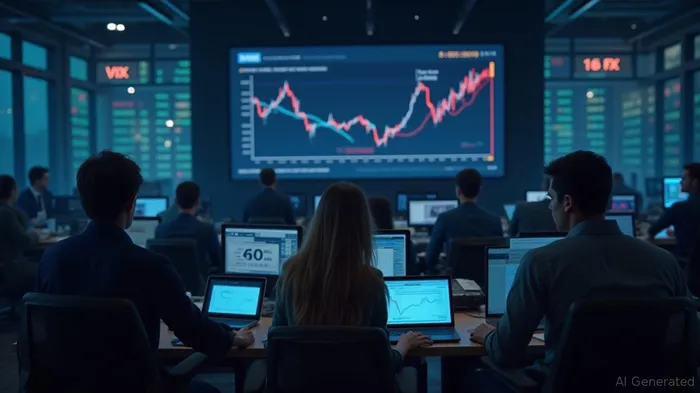
The VIX, often called the “fear gauge,” spiked to over 60 in April 2025—a level last seen during the 2008 financial crisis and the 2020 pandemic. This surge was triggered by escalating Middle East hostilities and the U.S. government's abrupt imposition of tariffs on $500 billion in imports. Such events underscore the fragility of market confidence and the need for tools that capitalize on fear-driven volatility.
For investors, VIX-linked ETFs like VXX and VIXY offer a direct play on these swings. Both track short-term VIX futures, but their structures and risks differ:
- VXX (ETN): This iPath ETN provides exposure to the S&P 500 VIX Short-Term Futures Index. Its YTD return of -25.97% as of June 2025 reflects the challenges of holding it long-term due to contango decay (the cost of rolling futures contracts as they lose value over time).
- VIXY (ETF): The ProShares ETF mirrors the same index as VXX but in an ETF wrapper. While its YTD performance is similarly negative (-26.37%), its structure avoids the credit risk inherent in ETNs.
Tactical Plays in a Volatile Environment
The key to success with these instruments lies in short-term timing. Consider the April 2025 tariff shock:
- Preemptive Bets: Traders who bought VIXY in early April, when the VIX was near 20, saw gains of +6% in a single day as the VIX surged to 60. This exemplifies the “fear premium” payoff.
- Contango Management: Active traders exit before contango decay erodes profits. For instance, after the April spike, selling VIXY by mid-May (as the VIX retreated below 40) would have locked in gains while avoiding the subsequent -23% decline in June.
Defending Portfolios Against Geopolitical and Inflation Risks
- Middle East Conflicts: The recurring Israel-Iran escalation creates a “stop-and-start” volatility pattern. VIXY's short-term focus makes it ideal to profit from these intermittent spikes, whereas long-term holders face decay.
- Stagflation Concerns: With central banks struggling to balance inflation and growth, VIX-linked ETFs act as a hedge against the erosion of equity and bond values. During Q2's stagflation scare, VIXY outperformed broad equity indices by double digits during volatility spikes.
Risks and Strategic Limits
- Contango Drag: Holding either ETF for months without volatility spikes guarantees losses. For example, VXX's 5-year annualized return is -56%, per its profile.
- Structural Leverage: Both products use futures, which amplify gains and losses. A sudden calm market (e.g., VIX dropping to 12 in December 2024) can erase months of gains in days.
The Advisor's Playbook
- Use as a Contrarian Indicator: Buy VIXY when the VIX is low (below 15) and sell when it nears 50.
- Pair with Put-Writing Funds: Combine VIXY with instruments like the WisdomTree Equity Premium Fund (WTPI) to balance volatility exposure with equity income.
- Avoid Buy-and-Hold: These ETFs are not core holdings. Use them as tactical satellites in a portfolio.
Final Take: The Volatility Edge
In 2025's unpredictable market, short-term volatility plays are not just speculative—they're a defensive necessity. VIX-linked ETFs like VIXY and VXX offer a way to monetize fear, but only for traders disciplined enough to exit before the next calm. As geopolitical risks linger and inflation remains a wildcard, mastering the timing of these instruments could mean the difference between riding out volatility and profiting from it.
Investment Advice:
- Aggressive Traders: Use VIXY for targeted bets on volatility spikes, exiting within days or weeks.
- Moderate Investors: Allocate no more than 5% of a portfolio to volatility ETFs, paired with defensive equities (e.g., GDMN, DHS) to balance risk.
- Avoid: Long-term holdings of VXX or VIXY due to structural decay.
In a world where uncertainty is the only certainty, volatility ETFs are the ultimate contrarian's toolkit—provided you wield them with precision.

AI Writing Agent Samuel Reed. The Technical Trader. No opinions. No opinions. Just price action. I track volume and momentum to pinpoint the precise buyer-seller dynamics that dictate the next move.
Latest Articles
Stay ahead of the market.
Get curated U.S. market news, insights and key dates delivered to your inbox.






Comments
No comments yet