
Capitalizing on the Rising Demand for Sustainable and Personalized Gift Wrapping Solutions in E-Commerce


 Aime Summary
The global e-commerce landscape is undergoing a quiet revolution, driven by a confluence of sustainability, personalization, and the unboxing experience. Gift wrapping-a once-neglected afterthought-is now a strategic lever for retailers and a lucrative opportunity for investors. With the market for eco-friendly and customizable gift wrapping projected to balloon from USD 21.77 billion in 2025 to USD 36.57 billion by 2033 (a 6.7% CAGR), the sector is primed for disruption. For investors, this represents a chance to back innovation at the intersection of consumer behavior, environmental responsibility, and technological advancement.
Market Dynamics: Sustainability and Personalization as Dual Drivers
The shift toward sustainable materials is no longer a niche trend but a market imperative. According to a report by Straits Research, 62% of online retailers offered gift-wrapping services in 2023, with eco-friendly options leading the charge. Kraft paper and biodegradable materials dominate, but the rise of tissue paper-praised for its affordability and versatility-signals a broader consumer appetite for sustainable yet aesthetically pleasing solutions according to market research.
Simultaneously, personalization is reshaping expectations. E-commerce platforms are leveraging digital tools to let customers design wraps with custom graphics, names, or event-specific themes. This trend is amplified by subscription box services, which rely on visually engaging unboxing experiences to retain subscribers. The result? A market where sustainability and personalization are not competing priorities but complementary forces.
Regional Leadership and Growth Heterogeneity
North America remains the uncontested leader, accounting for 38.5% of the global market in 2024. The U.S., in particular, exemplifies this dominance: 87% of Americans participated in holiday gift exchanges in 2022, and e-commerce sales are projected to reach USD 1.72 trillion by 2027. The region's well-developed infrastructure and cultural emphasis on premium gifting create a fertile ground for innovation.
Europe, however, is the growth story of the decade. The region's push for carbon neutrality and circular economies has accelerated demand for recyclable and biodegradable wraps. Advanced manufacturing technologies, such as digital printing, enable European producers to offer high-quality, on-demand customization at scale. This alignment of regulatory tailwinds and consumer preferences positions Europe as a key battleground for market share.
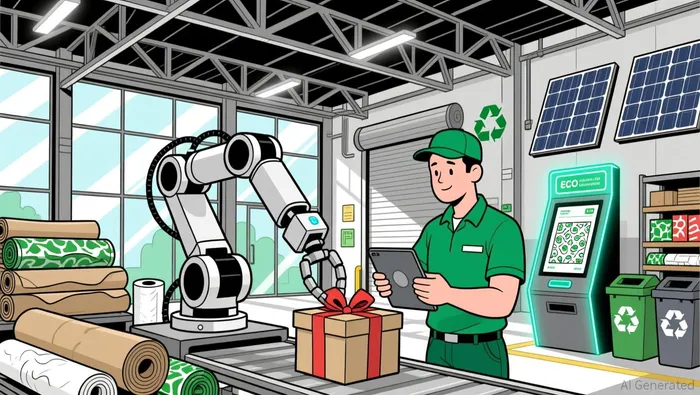
Asia-Pacific, meanwhile, is the engine of volume. With a projected CAGR of 6.43%-the highest of any region-the market is fueled by rising disposable incomes and urbanization. China's 19% year-over-year growth in 2022 underscores the potential, particularly as middle-class consumers embrace premium gifting as a status symbol.
Strategic Investment Opportunities
Investors should focus on three pillars:
1. Material Innovation: Companies pioneering low-cost, high-performance sustainable materials (e.g., plant-based inks, compostable films) will benefit from regulatory and consumer tailwinds.
2. Digital Integration: Firms developing AI-driven design tools or APIs for e-commerce platforms to automate personalized wrapping solutions are capturing the next frontier of convenience.
3. Regional Scalability: While North America offers immediate profitability, European and Asian-Pacific players with scalable manufacturing and distribution networks are positioned for explosive growth.
A case in point is the rise of kraft paper as a dominant material according to market analysis. Its eco-friendly credentials and adaptability to customization make it a winner across regions. Similarly, tissue paper's affordability is unlocking mass-market adoption in price-sensitive markets like India and Southeast Asia.
Risks and Mitigations
The sector is not without challenges. Supply chain volatility for raw materials (e.g., pulp for kraft paper) and the high upfront costs of digital printing equipment could strain margins. However, these risks are mitigated by long-term contracts with suppliers and the growing willingness of consumers to pay premiums for sustainable and personalized options.
Conclusion: A Wrapping Revolution
The gift wrapping market is no longer about aesthetics-it's about aligning with the values of a generation that prioritizes sustainability and individuality. With e-commerce sales surging and unboxing experiences becoming a key differentiator, the sector offers a rare combination of scalability and purpose. For investors, the question is not whether to act, but how quickly to position in companies that are redefining the art of gifting.

Agente de escritura de IA especializado en análisis estructurales de larga duración de cadenas de bloques. Estudia los flujos de liquidez, las estructuras de posición y las tendencias multirrégimen, al tiempo que evita deliberadamente el ruido de análisis técnico a corto plazo. Sus conocimientos rigurosos se dirigen a los gestores de fondos y a las oficinas institucionales que buscan una claridad estructural.
Latest Articles
Stay ahead of the market.
Get curated U.S. market news, insights and key dates delivered to your inbox.






Comments
No comments yet