
Capitalizing on the Resilience Play in Post-Powell Rate-Cut Optimism: A Strategic Dive into the Food Sector's Hidden Gems


 Aime Summary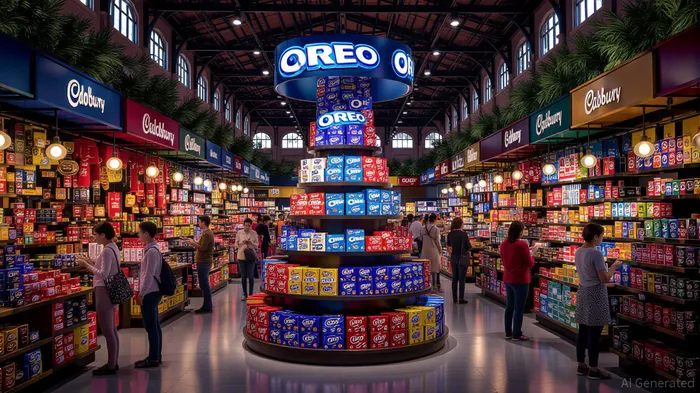
The Federal Reserve's pivot toward rate cuts, as signaled by Chair Jerome Powell at the 2025 Jackson Hole symposium, has ignited a wave of optimism across financial markets. With the probability of a September rate cut now at 89%, investors are recalibrating portfolios to capitalize on the anticipated easing of monetary policy. While the broader market has rallied, the food sector—often a haven during economic transitions—presents a compelling case for strategic investment. Specifically, undervalued food stocks with strong operational discipline and margin resilience stand to benefit disproportionately from lower borrowing costs and shifting consumer dynamics.
The Food Sector: A Bastion of Resilience
The food sector's inherent stability stems from its inelastic demand. Regardless of macroeconomic conditions, consumers must eat, and companies that innovate while maintaining cost efficiency can thrive even in volatile environments. Powell's acknowledgment of labor market fragility and inflationary pressures from tariffs underscores the need for businesses that can navigate supply-side shocks without sacrificing profitability.
Consider MondelezMDLZ-- International (MDLZ), a titan in global snacking with brands like Oreo and Cadbury. Despite rising cocoa prices, Mondelez reported $36.4 billion in 2024 revenue and $4.9 billion in operating cash flow, demonstrating its ability to absorb input costs while maintaining margins. Its geographic diversification—spanning 150 countries—further insulates it from regional downturns.
Similarly, PepsiCoPEP-- (PEP) has leveraged its beverage and snack portfolio to offset North American inflationary headwinds. With $92 billion in 2024 revenue and a 3.6% dividend yield, PepsiCo's ability to pass on costs to consumers without eroding demand positions it as a durable play in a rate-cutting environment.
Undervalued Gems: Operational Discipline Meets Margin Resilience
Beyond the household names, several lesser-known food stocks offer compelling value. HerbalifeHLF-- (HLF), for instance, boasts a valuation score of 29—8 points above the industry average—and has outperformed peers with a 9.17% stock price gain in the past year. Its direct-to-consumer model and focus on health and wellness align with long-term consumer trends, while its A-grade valuation suggests untapped upside.
Nomad Foods (NOMD), despite a 19.85% decline in its stock price, remains undervalued with a 71-point valuation score. The company's premium frozen food brands, such as Birds Eye and Bertolli, cater to households seeking convenience without compromising quality. Its 5/7 valuation due diligence checks passed indicate a strong foundation for recovery.
Usana Health Sciences (USNA), a direct-selling nutrition company, has similarly weathered volatility. With a 57-point valuation score and a focus on high-margin supplements, Usana's resilience in a competitive market is underscored by its 4/7 due diligence checks passed.
Strategic Investment Considerations
Investing in the food sector during a rate-cut cycle requires a nuanced approach. First, prioritize companies with pricing power and diversified revenue streams. Mondelez and PepsiCo exemplify this, with global brand portfolios that buffer against regional downturns. Second, seek out firms with strong balance sheets and disciplined cost management. Hormel FoodsHRL-- (HRL), for example, has maintained over 50 consecutive years of dividend payments while navigating input volatility through strategic sourcing and supply chain optimization.
Third, consider the sector's exposure to inflationary pressures. While tariffs and energy costs pose risks, companies like Tyson FoodsTSN-- (TSN) have demonstrated agility. Tyson's 151% year-over-year operating income increase in Q1 2025 highlights its ability to streamline operations and close underperforming plants, restoring earnings stability.
The Road Ahead: Balancing Caution and Opportunity
The Fed's data-driven approach to rate cuts, as emphasized by Powell, means investors must remain agile. While the 89% probability of a September cut is enticing, the path to normalization is not linear. Structural shifts—such as tighter immigration policies and evolving consumer preferences—add complexity. However, the food sector's dual mandate of meeting basic needs and adapting to trends (e.g., organic, plant-based, and health-focused products) positions it as a resilient counterweight to macroeconomic uncertainty.
For those seeking long-term value, the undervalued food stocks highlighted here offer a blend of operational rigor and margin resilience. As Powell noted, the Fed's updated monetary policy framework prioritizes flexibility, a trait these companies mirror in their strategies.
Conclusion: A Recipe for Resilience
In a world where rate cuts are on the horizon, the food sector's blend of stability and innovation makes it a compelling arena for capital deployment. By focusing on companies with strong operational discipline—such as Mondelez, PepsiCo, and the undervalued names like Herbalife and Nomad Foods—investors can position themselves to benefit from both the sector's inherent durability and the tailwinds of a shifting rate environment. As Powell's Jackson Hole speech reminds us, the key to navigating economic uncertainty lies in balancing caution with calculated optimism. The food sector, with its resilient demand and margin-focused players, offers a recipe for just that.

Stay ahead of the market.
Get curated U.S. market news, insights and key dates delivered to your inbox.
AInvest
PRO
AInvest
PRO



Comments
No comments yet