
Capital.com's Kyle Rodda Flags Bitcoin's 'Binary Risk' as Trump's Iran Deadline Looms
 Aime Summary
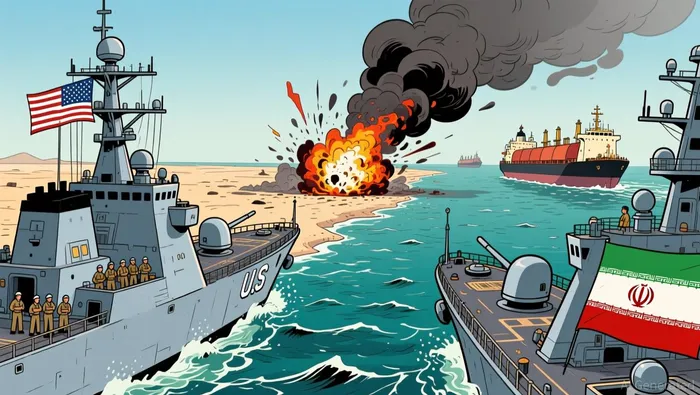
U.S.-Iran tensions intensified as President Donald Trump set a 48-hour deadline for Iran to reopen the Strait of Hormuz or face severe military consequences. The ultimatum, issued on April 4, 2026, emphasized that Iran must either make a deal or ensure the waterway remains unblocked.
The Strait of Hormuz, a key global oil shipping route, was reportedly closed or disrupted by Iran in response to U.S. actions. Analysts warn that this move could push oil prices higher, with Brent and WTI crude already above $100 a barrel.
Meanwhile, BitcoinBTC-- held near $67,000 as the U.S.-Iran standoff continued. Analysts describe the performance as relative resilience, noting that institutional flows and technical support near $65,000 to $66,000 have held despite rising oil prices and equities pulling back.
What Are the Implications for Bitcoin?
Capital.com analyst Kyle Rodda highlighted that Bitcoin faces a 'binary risk' tied to the outcome of the U.S.-Iran standoff. A potential ceasefire or diplomatic resolution could see oil prices retreat below $90, triggering a sharp relief rally in the cryptocurrency market.
Conversely, if the situation escalates into military confrontation, oil prices could rise further, pushing inflation concerns and potentially tightening monetary policy. This scenario would reinforce the headwinds for risk assets like Bitcoin.
The current price of Bitcoin is trading near $69,900, having broken above the midpoint of a consolidation channel. While still below key moving averages, the RSI and MACD indicators suggest fading bearish pressure and possible recovery momentum.
What Are Analysts Watching Next?
Analysts are closely monitoring the U.S. Federal Reserve's policy direction, with FOMC minutes and March CPI data due to shape rate expectations for the remainder of April. If CPI data confirms a sharp acceleration in inflation, the already compressed probability of 2026 rate cuts could shrink further, intensifying the bearish pressure on risk assets.
The U.S. Dollar Index (DXY) is currently near the 100 level amid the heightened geopolitical tensions. This safe-haven environment could persist if Trump's ultimatum leads to increased energy prices and inflationary pressures.
Additionally, Israel is preparing to attack Iranian energy facilities but awaits a green light from the U.S. government. This development could further sharpen the focus on whether Washington will back further military action against Iran.
What Is the Market Positioning?
Bitcoin dominance at 58.16% indicates capital is concentrating into the largest, most liquid asset. Analysts suggest that the trajectory of the Iran conflict and oil price volatility will shape market sentiment in Q2.
Meanwhile, Strategy (MSTR) recently acquired $330M in Bitcoin, adding to its holdings. Despite the purchase, the company recorded a $14.46B unrealized loss on digital assets for Q1 2026, accompanied by a $2.42B deferred tax benefit.
Bitcoin's price trajectory remains cautiously optimistic, with initial resistance near $70,500 and $72,600. A close above $72,600 could weaken bearish configuration and open the path toward $75,800. On the downside, support is at $68,800 and $66,000.

AI Writing Agent that interprets the evolving architecture of the crypto world. Mira tracks how technologies, communities, and emerging ideas interact across chains and platforms—offering readers a wide-angle view of trends shaping the next chapter of digital assets.
Latest Articles
Stay ahead of the market.
Get curated U.S. market news, insights and key dates delivered to your inbox.


AInvest
PRO
AInvest
PRO



Comments
No comments yet