
Capital One Financial (COF) Dives 1.13% as Litigation, Credit Risks, and Macro Headwinds Weigh
 Aime Summary
The share price fell to its lowest level so far this month today, with an intraday decline of 1.13%.
Capital One Financial (COF) faces a dual challenge as its stock price hits a key technical level amid valuation pressures and operational risks. Analysts highlight two price scenarios projecting potential upside: a base case target of $249.69 using a 12.05 forward P/E and a bullish case of $311.85 with a 15x multiple, both underscoring undervaluation relative to peers like American Express. 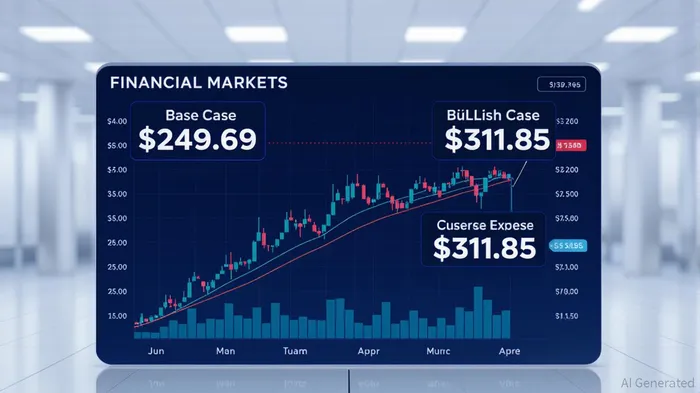 However, these optimistic forecasts are tempered by deteriorating consumer credit metrics, including rising delinquencies and charge-offs, and ongoing litigation with the FDIC over a special assessment tied to 2023 bank failures. These factors introduce uncertainty into short-term earnings and investor sentiment, despite COF’s strategic focus on high-margin credit card and banking services.
Macroeconomic headwinds, including inflation and elevated interest rates, exacerbate risks to consumer credit quality, a critical driver of COF’s profitability. While the company’s credit loss performance for the third quarter was better than expected, the broader industry faces systemic challenges. COF’s ability to adapt through dynamic pricing models and disciplined risk management could differentiate its resilience. However, the litigation with the FDIC remains a wildcard, with potential financial or reputational impacts. Investors are advised to balance the long-term growth narrative with near-term vulnerabilities, as the stock’s current valuation suggests untapped potential if the company navigates these challenges effectively.

Stay ahead of the market.
Get curated U.S. market news, insights and key dates delivered to your inbox.
AInvest
PRO
AInvest
PRO



Comments
No comments yet