
Canton Gains Institutional Interest Amid DeFi and RWA Tokenization Advances
 Aime Summary
- Morgan Stanley is hiring for DeFi and RWA infrastructure, with Canton among the blockchain platforms under consideration.
- Tokenization is being used by institutions like BlackRockBLK-- and DTCC to streamline financial operations and settlement.
- Recent security flaws in smart contracts have triggered global reassessments of DeFi security protocols, affecting major chains and cross-chain systems.
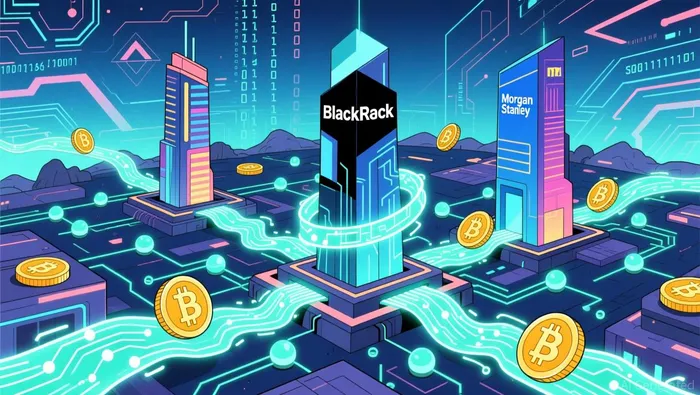
Institutional interest in blockchain-based finance is rising, with major Wall Street firms exploring new ways to integrate digital assets into their offerings. Morgan StanleyMS-- is actively building infrastructure for decentralized finance (DeFi) and real-world asset (RWA) tokenization, indicating its intent to support institutional-grade privacy and public network liquidity. Canton is among the platforms being considered for these developments.
Tokenization is playing a key role in redefining traditional financial operations. By leveraging smart contracts and blockchain infrastructure, institutions are enabling faster settlement, reducing operational friction, and increasing transparency. Examples include BlackRock’s BUIDL fund, which demonstrates how tokenization can support instant and transparent fund share settlement.
Security concerns are also at the forefront of DeFi and blockchain adoption. Recent findings highlight vulnerabilities in widely used smart contracts, including reentrancy loops and gas-centric issues. These flaws have led to significant financial risks and necessitated updated safeguards. Audit teams and security firms are now prioritizing continuous validation and real-time monitoring to prevent exploits.
How Are Traditional Institutions Adapting to DeFi and Tokenization?
Traditional financial institutions are experimenting with blockchain-based solutions to modernize their operations. These efforts include developing digital wallets for cryptocurrencies and tokenized assets, launching trading services for digital assets on existing platforms, and filing for spot ETFs. Morgan Stanley, for instance, has announced the launch of a digital wallet in the second half of 2026, supporting both cryptocurrencies and tokenized real-world assets such as private company equity and real estate. The bank is also exploring both spot and derivatives trading for institutional clients. JPMorgan and Bank of America are also integrating digital assets into their wealth management and capital markets operations.
What Are the Implications for DeFi and Institutional Blockchain Use?
The integration of blockchain technology into traditional finance has significant implications for market structure and risk management. Institutions are investing in scalable, secure, and compliant blockchain solutions to meet the growing demand for digital asset services. For example, Morgan Stanley’s hiring strategy for DeFi and RWA infrastructure reflects its broader digital asset roadmap, which includes transitioning from pilot programs to permanent revenue-generating initiatives. These developments signal a major shift in how digital assets are treated in wealth management and capital markets.
Traditional financial institutions are also collaborating with technology providers and regulatory bodies to develop robust infrastructure for tokenized assets. DTCC, for instance, has received a No-Action Letter from the SEC to operate a tokenization service for real-world assets in a controlled production environment. This partnership is seen as a roadmap for bringing high-value tokenization use cases to market, starting with Treasury securities and expanding to other DTC-eligible assets.
What Are the Risks and Limitations in DeFi and Tokenization?
Despite the growing adoption of blockchain-based finance, risks and limitations persist. Recent security findings in smart contracts highlight the importance of continuous validation and real-time monitoring in DeFi. The discovery of vulnerabilities such as reentrancy loops and gas-centric issues has prompted a global reassessment of DeFi security protocols. These flaws have affected major chains like EthereumETH-- and Binance Smart Chain, exposing a significant segment of DeFi users to financial risks.
To mitigate these risks, leading security firms and developer coalitions are accelerating patches and implementing comprehensive re-audits. The Ethereum Foundation has formed a task force to revalidate core smart contract libraries, while major DeFi protocols are suspending integrations to implement emergency hardening measures. Industry-wide efforts are shifting toward more resilient decentralized infrastructure with rapid-purpose toolchains enabling formal verification and automated testing.
Community-driven bug bounty expansions are also incentivizing ethical hackers, and modular contract architectures are being favored to isolate critical logic. As protocols integrate continuous monitoring, the DeFi industry is moving toward a self-regulating security model that emphasizes proactive hardening as a core principle. These developments are expected to enhance user trust and reduce the risk of financial losses in DeFi ecosystems.

Blending traditional trading wisdom with cutting-edge cryptocurrency insights.
Latest Articles
Stay ahead of the market.
Get curated U.S. market news, insights and key dates delivered to your inbox.
AInvest
PRO
AInvest
PRO



Comments
No comments yet