
CANTON Expands Institutional Blockchain Adoption with JPM Coin Integration and Treasury Tokenization
 Aime Summary
- JPMorgan and Digital Asset are integrating JPM Coin (JPMD) on the Canton Network to enable real-time, secure digital payments for institutional clients according to a press release.
- The Canton Network, a privacy-preserving blockchain, is being used by DTCC to tokenize U.S. Treasury securities with SEC regulatory approval as reported.
- Institutional-grade real-world asset (RWA) tokenization has seen significant growth, with five key protocols including Canton Network addressing distinct institutional needs according to analysis.
JPMorgan is expanding the use of its JPM Coin, a USD-denominated deposit token, by issuing it natively on the Canton Network. This move aims to facilitate real-time and secure digital payments, particularly for institutional clients, by leveraging Canton's privacy-enabled blockchain infrastructure as detailed in the announcement. The Canton Network is designed to support synchronized financial transactions while maintaining regulatory compliance and privacy for participants according to BNY.
Canton has also partnered with the Depository Trust & Clearing Corporation (DTCC) to tokenize U.S. Treasury securities, a move that received a no-action letter from the SEC as reported. This initiative is expected to enhance settlement efficiency and reduce costs for financial institutions by minimizing delays and improving collateral management according to industry analysis.
In the broader institutional blockchain landscape, Canton is one of five foundational protocols addressing specific institutional requirements, including privacy, compliance, and efficiency according to market research. Alongside projects like Rayls Labs and Ondo Finance, Canton is helping drive the growth of a $20 billion RWA market, which has expanded significantly since 2024 as noted.
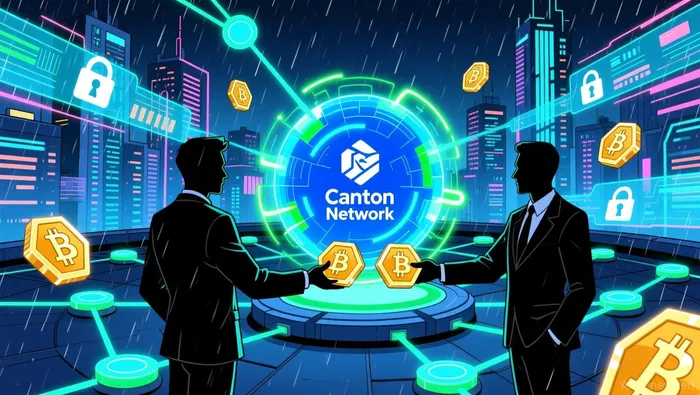
How is JPM Coin being integrated into blockchain networks for institutional use?
JPMorgan's JPM Coin is being issued natively on the Canton Network, allowing institutions to issue, transfer, and redeem tokens in near real time within a secure and synchronized ecosystem as announced. This initiative is intended to bridge traditional finance with digital infrastructure by leveraging the speed and innovation of blockchain while maintaining compliance and security according to industry coverage.
The integration is being executed in phases, starting with the technical and business frameworks for native issuance. Future plans may include blockchain-based deposit accounts, further enhancing the utility of JPM Coin for institutional clients according to financial reports.
What are the potential market implications for privacy-first blockchain platforms?
Privacy-first blockchains like Canton are becoming essential infrastructure for institutional finance, combining privacy with compliance to meet global regulatory requirements according to analysis. These platforms are supporting a growing trend in institutional markets toward always-on financial systems that prioritize speed, transparency, and programmable cash as reported.
The Canton Network has already processed $6 trillion in tokenized assets and supports 500,000 daily transactions across 600+ institutions according to data. Institutional backing from major financial players like Goldman Sachs and BNY Mellon further validates the platform's capabilities and readiness for large-scale adoption as noted.
However, challenges remain, including cross-chain liquidity fragmentation and regulatory uncertainty. Over the next 18 months, the scalability and adoption of these protocols will be critical in enabling the transition of trillions of traditional assets onto-chain according to industry analysis.
BNY (Bank of New York Mellon) has also taken steps in the digital asset space by enabling tokenized representations of client deposit balances on its private blockchain infrastructure according to company news. This move supports real-time, on-chain settlement for institutional clients and aligns with a broader trend toward programmable cash and always-on financial systems as detailed.
The institutional RWA market, supported by protocols like Canton, is projected to continue its growth trajectory, driven by yield arbitrage, regulatory clarity, and custody infrastructure according to market analysis. Institutional adoption has surged, with 55% of hedge funds already engaging with tokenized assets and stablecoin frameworks as reported.
Privacy-first blockchains are proving to be essential infrastructure for the future of institutional finance. By addressing compliance and confidentiality through advanced privacy protocols and innovative tokenomics, these platforms are laying the groundwork for a new financial ecosystem that prioritizes efficiency, transparency, and programmable cash according to industry experts.
Despite the optimism, challenges like cross-chain liquidity fragmentation and privacy vs. transparency trade-offs remain. As these platforms evolve, their ability to scale and adapt to regulatory environments will be key to their long-term success according to market research.

Mezclando la sabiduría tradicional del comercio con las perspectivas de vanguardia en el área de las criptomonedas.
Latest Articles
Stay ahead of the market.
Get curated U.S. market news, insights and key dates delivered to your inbox.




Comments
No comments yet