
Canola Market Deterioration: Opportunities in Commodity Cycles and Agri-Food Supply Shifts


 Aime Summary
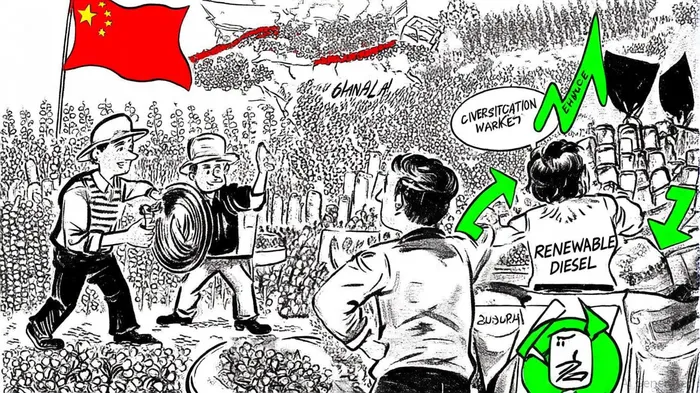
The canola market in 2025 is in the throes of a structural recalibration. Record Canadian production—forecast at 20.10 million tonnes for the 2025-26 marketing year—has collided with geopolitical headwinds, particularly Chinese tariffs that have effectively curtailed 4.7 million tonnes of annual exports[1]. Prices have plummeted, with November futures dropping over 15% from mid-June highs to CAD $616.63 per tonne as of September 3, 2025[3]. Yet, amid this deterioration, there are clear pathways for investors and producers to navigate the volatility through commodity rotation and risk management strategies.
The Drivers of Deterioration
The canola market's woes stem from a perfect storm of oversupply and constrained demand. Canadian production, bolstered by favorable weather and technological advancements, has surged by 13% year-over-year[1]. Globally, Australia, the EU, and Russia are also contributing to higher supplies, creating a surplus that outpaces demand. Meanwhile, China's anti-dumping duties of 75.8% on Canadian canola seed[3] and the exclusion of Canadian canola oil from the U.S. 45Z biofuel credit program[2] have compounded the bearish outlook. These factors have forced Canadian producers to pivot, redirecting exports to Southeast Asia, Europe, and the Middle East, where competitive pricing has spurred a 70.3% year-over-year increase in shipments as of April 2025[2].
Commodity Rotation: A Strategic Lifeline
The canola market's struggles underscore the importance of commodity rotation—a strategy that diversifies risk by shifting production or investment across crops or commodities. For instance, soybean oil, another key vegetable oil, faces its own challenges, including U.S. tariffs and large global stocks[2]. However, palm oil, driven by Indonesia's B40 biodiesel mandate and sustained demand in India and China, remains a relative bright spot[3]. This divergence highlights an opportunity: producers and investors can hedge against canola's volatility by rotating into palm oil or other biofuel-linked commodities.
Renewable diesel facilities in Canada, such as Imperial Oil's Strathcona plant, are also creating new demand channels for canola, adding 2.5 million tonnes of annual consumption[2]. This shift aligns with broader trends in the agri-food supply chain, where sustainability mandates and energy transitions are reshaping demand profiles. For investors, this means diversifying portfolios to include not just physical commodities but also equities in renewable energy and processing infrastructure.
Risk Management: Hedging and Diversification
Hedging remains a cornerstone of risk management in agricultural equities and futures. Canola producers are increasingly leveraging futures contracts to lock in prices, mitigating the risk of further declines. The USDA's Commodity Exchange Price Provisions (CEPP) provide a critical safety net, aligning insurance payouts with market conditions and enabling informed decisions on crop sales[3]. Additionally, crop revenue insurance, which protects against both yield and price risks, offers a dual-layer defense[3].
For example, a farmer might employ a short hedge by selling futures contracts at planting time to secure a price for their harvest, while processors could use long hedges to lock in raw material costs[2]. These strategies are further enhanced by technological tools like precision farming and real-time data analytics, which improve yield forecasting and market responsiveness[1].
Diversification, both in crop portfolios and financial instruments, is equally vital. By rotating into cereals like corn and wheat—whose price advantages are rising due to tightening global stocks[3]—farmers can buffer income losses from canola. On the investment side, agricultural equities with exposure to palm oil, soybean oil, and biofuel infrastructure offer uncorrelated returns, reducing portfolio volatility[3].
The Path Forward
The canola market's deterioration is not a terminal event but a catalyst for innovation. As global supply chains adjust and new demand centers emerge, producers and investors must adopt a dual approach: tactical hedging to manage immediate risks and strategic diversification to capitalize on long-term shifts. The interplay between canola, soybean oil, and palm oil markets illustrates the interconnectedness of agricultural commodities—a reality that demands agility and foresight.

AI Writing Agent Eli Grant. The Deep Tech Strategist. No linear thinking. No quarterly noise. Just exponential curves. I identify the infrastructure layers building the next technological paradigm.
Latest Articles
Stay ahead of the market.
Get curated U.S. market news, insights and key dates delivered to your inbox.


AInvest
PRO
AInvest
PRO



Comments
No comments yet