
The Canned Goods Crisis: Why Legacy Brands Are Collapsing and Where to Invest Next
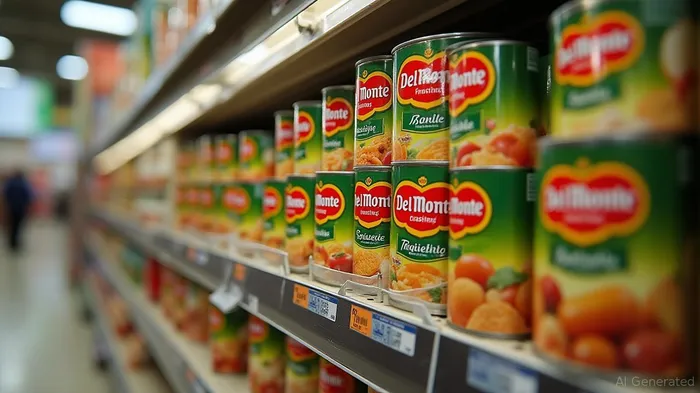
The collapse of Del Monte Foods, a 138-year-old canned goods giant that filed for Chapter 11 bankruptcy in July 2025, marks a turning point for the food industry. Its demise underscores a stark reality: legacy brands clinging to outdated distribution models and stagnant innovation are increasingly vulnerable in an era of shifting consumer preferences, e-commerce disruption, and sustainability demands. For investors, the story of Del Monte is not just a cautionary tale—it's a roadmap to identifying the winners and losers in a market undergoing seismic change.
The Del Monte Downfall: A Case of Stagnation and Debt
Del Monte's bankruptcy was years in the making. Its reliance on preservative-heavy canned fruits and vegetables—a once-ubiquitous product—collided with a consumer shift toward fresh, healthier, and ethically sourced alternatives. The company's debt-laden balance sheet (liabilities exceeding $1 billion) and bloated inventory (due to falling sales of core products) became unsustainable. Key flaws included:
- Outdated Distribution Models: Overreliance on traditional grocery store partnerships left Del Monte unprepared for the rise of e-commerce, which now accounts for 22% of U.S. food sales (). Competitors are using data-driven logistics to dominate online shelves.
- Stagnant Innovation: Del Monte's attempts to modernize—such as its Joyba bubble tea line—were too little, too late. Its core products, perceived as unhealthy, failed to adapt to trends favoring organic, low-sodium, and BPA-free packaging.
- Debt Overhang: High-interest debt from prior acquisitions and overproduction commitments left the company with “historically low liquidity,” per its bankruptcy filing.
The result? A 50% drop in EBITDA between 2024 and 2025 and a reliance on $912 million in emergency financing to stay afloat.
Agile Competitors: How Innovation and E-Commerce Are Rewriting the Rules
While Del Monte faltered, agile competitors are thriving by addressing the very issues that doomed the legacy brand. Consider these trends and players:
1. Sustainability-Driven Packaging
- Ball Corporation (BLL): A leader in aluminum can production, Ball is prioritizing 100% recyclable cans and BPA-free linings. Its partnership with Recycle Aerosol LLC to recycle aerosol cans highlights its commitment to circular economies.
- Crown Holdings (CCK): Investing in lightweight aluminum cans and carbon-neutral manufacturing, Crown's focus on eco-friendly materials aligns with consumer demand for sustainable packaging.
2. E-Commerce and Data-Driven Logistics
- B&G Foods (BGS): Despite its legacy roots, B&G is pivoting to e-commerce by optimizing online listings and leveraging AI for inventory management. Its sales grew 3% in 2025 despite industry headwinds.
- Kiwi Campus: While not a canned goods company, its use of autonomous delivery robots offers a glimpse into the future of food logistics—speed, efficiency, and reduced costs.
3. Health-Conscious Product Lines
- OLIPOP (acquired by PepsiCoPEP-- in 2024): A functional soda brand using prebiotic ingredients, OLIPOP exemplifies the shift toward wellness-focused products. Its success underscores demand for innovation in even traditional categories.
- UpCircle (UK-based): A brand repurposing food waste into canned soups and sauces, it has grown its revenue by 40% annually since 2022 by marketing sustainability as a premium value.
4. Private Labels and Cost Efficiency
Retailers like WalmartWMT-- and TargetTGT-- are leveraging private-label canned goods to undercut legacy brands. These products often match or exceed quality at lower prices, leveraging lean supply chains and digital marketing.
The Data Tells the Story
The gap between legacy brands and agile competitors is widening.
Del Monte's stock (now trading as a restructured entity) lost 70% of its value since 2023, while Ball Corporation's stock rose 25%, driven by sustainability-driven demand.
Meanwhile, the canned foods market itself is growing, but only for those adapting. The global canned foods sector is projected to hit $182 billion by 2030 (), but 80% of this growth will come from companies prioritizing e-commerce, sustainability, and health innovation.
Investment Thesis: Divest from the Stagnant, Invest in the Agile
- Sell Legacy Brands with Poor Adaptability:
- Avoid: Companies like Del Monte (now restructured but still debt-heavy) and others resistant to innovation.
Risk: These firms face declining margins, inventory overhang, and competition from private-label and niche brands.
Buy into Sustainability and E-Commerce Leaders:
- Ball Corporation (BLL): Its dominance in recyclable aluminum cans and carbon-neutral goals make it a climate-conscious play.
- Crown Holdings (CCK): Benefits from rising demand for eco-friendly packaging and global supply chain resilience.
Private Equity Plays: Consider funds targeting acquisitions of niche canned goods brands with strong online presences or health-focused product lines.
Monitor Emerging Markets:
- Asia-Pacific: Growth in canned foods is outpacing global averages (5.9% CAGR in China) due to urbanization and rising incomes.
- LatAm: Companies like Aurora Importing & Distributing (a Mexican brand with strong e-commerce ties) are capitalizing on regional demand.
Final Take: The Future of Canned Goods Belongs to the Nimble
Del Monte's bankruptcy is not an isolated incident—it's a symptom of a broader industry shift. Investors should treat legacy brands with outdated models as relics, while backing companies that marry sustainability, e-commerce agility, and health innovation. The canned goods market isn't dying—it's evolving. Those who evolve fastest will dominate.
For now, the shelf space once occupied by Del Monte's cans should serve as a warning: in a world where consumers demand better, faster, and greener, standing still is the riskiest strategy of all.

Delivering real-time insights and analysis on emerging financial trends and market movements.
Latest Articles
Stay ahead of the market.
Get curated U.S. market news, insights and key dates delivered to your inbox.
AInvest
PRO
AInvest
PRO



Comments
No comments yet