
The Cannabist Company's March 25 Forbearance Deadline: Binary Restructuring Setup or Liquidity Collapse?


 Aime Summary
The core event is a race against time. The Cannabist Company has agreed to sell its Virginia assets for $130 million to fund operations, following a go-shop process. This sale is a necessary liquidity event, but it does not resolve the company's fundamental debt overhang. The critical legal hurdle is the forbearance deadline. A key group of noteholders has extended their forbearance on $130 million in secured notes until March 25, 2026, providing the sole remaining breathing room.
The investment thesis is binary. The stock trades at a market cap of roughly $150 million, implying the sale alone leaves the company with a significant debt burden to address. The setup hinges entirely on reaching a restructuring deal by that March 25 deadline. The sale provides a potential cash infusion, but the company's ability to avoid default depends on negotiating a sustainable path for its secured notes. The clock is now ticking down to a specific date.
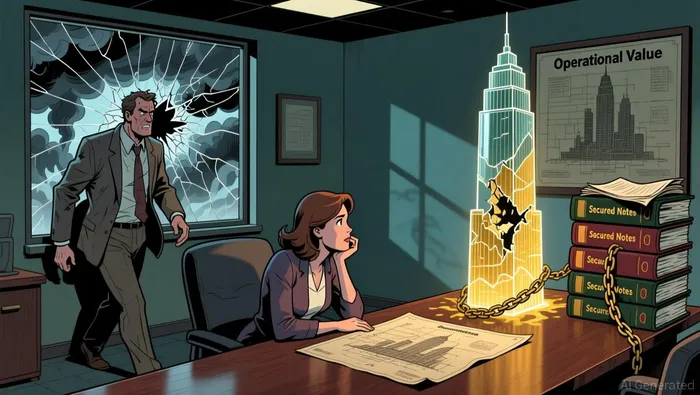
The Legal Hurdle: Why Chapter 11 is a Dead End
The company's path to a consensual deal is blocked by a fundamental legal wall. Federal law generally excludes businesses that deal in cannabis from Chapter 11 bankruptcy protection under the Bankruptcy Code. This isn't theoretical; it's been tested in court. In January, a federal judge dismissed the Chapter 11 filing of United Cannabis Corporation, a company that claimed to operate solely in legal hemp. The court's ruling underscores the risk: even if a company's current operations are legal, the mere association with the cannabis industry can be grounds for dismissal.
The reasoning is straightforward. The Bankruptcy Code is designed to protect reorganizations, not to assist businesses in continuing to violate federal law. As one legal analysis notes, courts are wary of a scenario where a bankruptcy court would be asked to help reorganize a company that is still engaged in, or plans to continue, activities that are illegal under the Controlled Substances Act. This creates a stark binary for The Cannabist Company. It cannot simply file for Chapter 11 to gain breathing room from creditors. Its only viable option is to negotiate a consensual restructuring agreement with its secured noteholders before the forbearance deadline.
This legal constraint raises the stakes significantly. Without the automatic stay and protection of a bankruptcy filing, the company faces the immediate threat of accelerated creditor actions if no deal is reached by March 25. The clock is not just ticking on a financial deadline; it is ticking on a legal one. The company must now rely entirely on direct negotiations to resolve its debt, with no fallback plan provided by the federal bankruptcy system.
Valuation & The Binary Setup
The Virginia sale is a significant cash infusion, but it does not change the company's fundamental valuation. The $130 million price tag is a major step toward addressing the $130 million in secured notes that are the immediate threat. However, the company's overall debt load remains pressing, and this transaction is part of a broader, ongoing strategy of asset liquidation. The Cannabist Company has already sold its Pennsylvania affiliate earlier this year, signaling that the Virginia deal is not an isolated event but a continuation of a pattern to fund operations.
The immediate catalyst is the March 25 deadline. Failure to reach a restructuring deal with noteholders by then would trigger a default, accelerating creditor actions and likely leading to a distressed sale of remaining assets. The stock's market cap of roughly $150 million already implies a deep discount for this risk. The binary setup is clear: a successful deal by the deadline could stabilize the balance sheet and allow the company to continue, while a failure would likely result in a rapid, disorderly liquidation.
The core risk is that asset sales are a symptom of a failing business model, not a cure. Selling off Virginia and Pennsylvania assets does not address the underlying challenges that led to the debt overhang. It leaves the company vulnerable to further liquidity crunches as it operates with reduced scale and capacity. For investors, the event-driven opportunity hinges entirely on the outcome of the next few days. The sale provides a potential lifeline, but the company's long-term viability depends on whether it can negotiate a sustainable path for its secured notes before the clock runs out.

Stay ahead of the market.
Get curated U.S. market news, insights and key dates delivered to your inbox.


AInvest
PRO
AInvest
PRO



Comments
No comments yet