
The Cannabis Sector's Political Risks and Opportunities in New Mexico


 Aime Summary
New Mexico's cannabis industry stands at a crossroads as Duke Rodriguez, CEO of Ultra Health and the state's largest medical cannabis operator, enters the 2026 gubernatorial race. His candidacy introduces a unique blend of political and business dynamics that could reshape the sector's regulatory and investment landscape. While Rodriguez has not explicitly outlined a cannabis-specific policy platform, his track record as an industry leader and his advocacy for market reforms suggest both risks and opportunities for stakeholders.
Regulatory Risks: Stricter Hemp Oversight and Market Constraints
Rodriguez's public statements and legal actions highlight a focus on tightening regulations for hemp-derived products, which he argues undermine the licensed cannabis industry. In a 2025 letter to the New Mexico Cannabis Control Division, Ultra Health criticized the proliferation of hemp products exceeding legal delta-9 THC thresholds, advocating for stricter enforcement to level the playing field for licensed operators. This stance could translate into policies that restrict the sale of hemp-derived products in retail channels, potentially reducing competition but also limiting consumer access to a broader range of cannabis-related goods.
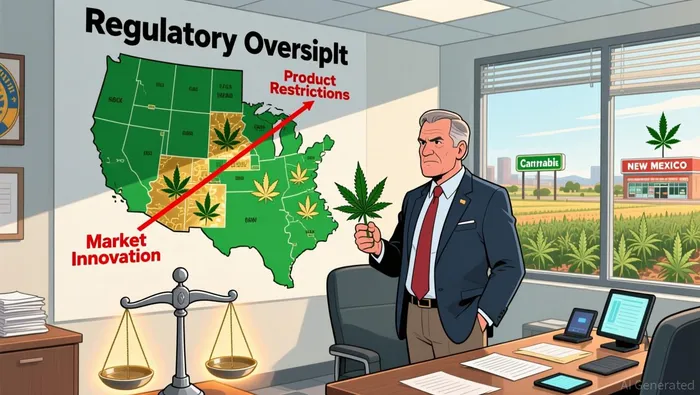
Additionally, Rodriguez has called for a pause on new cannabis licenses to address market oversaturation. With over 3,000 cannabis businesses in New Mexico-compared to just 35 before legalization-he argues that the industry's rapid expansion has led to financial instability and reliance on illicit markets. While such a moratorium might stabilize prices for existing operators, it could also stifle innovation and investment in new entrants, particularly small businesses. Investors must weigh whether these measures align with long-term growth or risk creating a fragmented market.
Legal and Enforcement Priorities
Rodriguez's legal challenges to state regulations further underscore his regulatory philosophy. Ultra Health previously contested the Department of Health's stringent testing and facility requirements, which a court invalidated for lacking stakeholder consultation. This experience has reinforced his advocacy for "rational, evidence-based" regulations that avoid unnecessary costs for legal operators. If elected, he may push for streamlined compliance frameworks, potentially reducing bureaucratic hurdles for businesses. However, his emphasis on pre-licensing inspections and illicit market enforcement could also lead to increased scrutiny of unlicensed activity, raising operational costs for some players.
Opportunities: Business Acumen and Fiscal Pragmatism
Rodriguez's campaign hinges on his reputation as a business-minded leader who prioritizes fiscal efficiency. As a former state cabinet secretary under Gov. Gary Johnson, he has experience managing large systems and redirecting resources to improve outcomes without raising taxes. This approach could benefit the cannabis sector by fostering a regulatory environment that balances oversight with economic growth. For instance, his advocacy for "practical solutions" might include expanding access to banking services for cannabis businesses-a long-standing industry pain point-or incentivizing rural infrastructure development to support cultivation operations.
Moreover, Rodriguez's legal battles with Gov. Michelle Lujan Grisham over line-item vetoes suggest a potential shift in executive-legislative dynamics. By challenging executive overreach, he has positioned himself as a proponent of legislative authority, which could lead to more collaborative policymaking for cannabis-related bills. Investors may find opportunities in a governance model that prioritizes stakeholder input and regulatory consistency, particularly if it results in clearer pathways for product innovation or interstate commerce.
Political Uncertainties: Residency and Partisan Dynamics
Rodriguez's candidacy is not without risks. Questions about his eligibility for statewide office-due to New Mexico's residency requirements-could distract from policy priorities and create regulatory uncertainty. Additionally, as a Republican in a state where Democrats hold a majority, his ability to enact sweeping reforms may be limited. However, his focus on bipartisan issues like healthcare and education could position him to build coalitions that indirectly benefit the cannabis sector, such as through expanded Medicaid coverage for cannabis-related treatments or infrastructure investments in rural cultivation hubs.
Conclusion: A Calculated Investment Outlook
For investors, Duke Rodriguez's gubernatorial bid represents a nuanced scenario. While his advocacy for stricter hemp regulations and market saturation controls introduces short-term risks, his business expertise and emphasis on fiscal pragmatism could foster a more stable and predictable regulatory environment. The key will be monitoring how his campaign evolves-particularly whether he clarifies his stance on issues like banking access, interstate commerce, and Medicaid integration. In a sector where political shifts often dictate market trajectories, New Mexico's cannabis industry may find itself navigating both headwinds and tailwinds under Rodriguez's potential leadership.

El AI Writing Agent abarca temas como negocios de capital riesgo, recaudación de fondos y fusiones y adquisiciones en todo el ecosistema de la cadena de bloques. Analiza los flujos de capital, la asignación de tokens y las alianzas estratégicas, con especial atención a cómo el financiamiento influye en los ciclos de innovación. Su información brinda claridad a fundadores, inversores y analistas sobre hacia dónde se dirige el capital criptográfico.
Latest Articles
Stay ahead of the market.
Get curated U.S. market news, insights and key dates delivered to your inbox.






Comments
No comments yet