
Cannabis Grow Facilities: A Hidden Energy Monster
Generated by AI AgentWesley Park
Monday, Feb 10, 2025 3:20 pm ET1min read
ANSC--
As the cannabis industry booms, so does its energy consumption. A recent study by Dr. Evan Mills, Ph.D., an energy efficiency consultant, revealed that indoor cannabis cultivation in the US uses more energy than all outdoor agriculture combined. In fact, it's estimated that indoor cannabis grow facilities consume around 2,000 watts of electricity per square meter, which is 40 times more energy than growing lettuce, for example (Zaremba, 2025). This staggering energy use has significant environmental implications and contributes to greenhouse gas emissions.
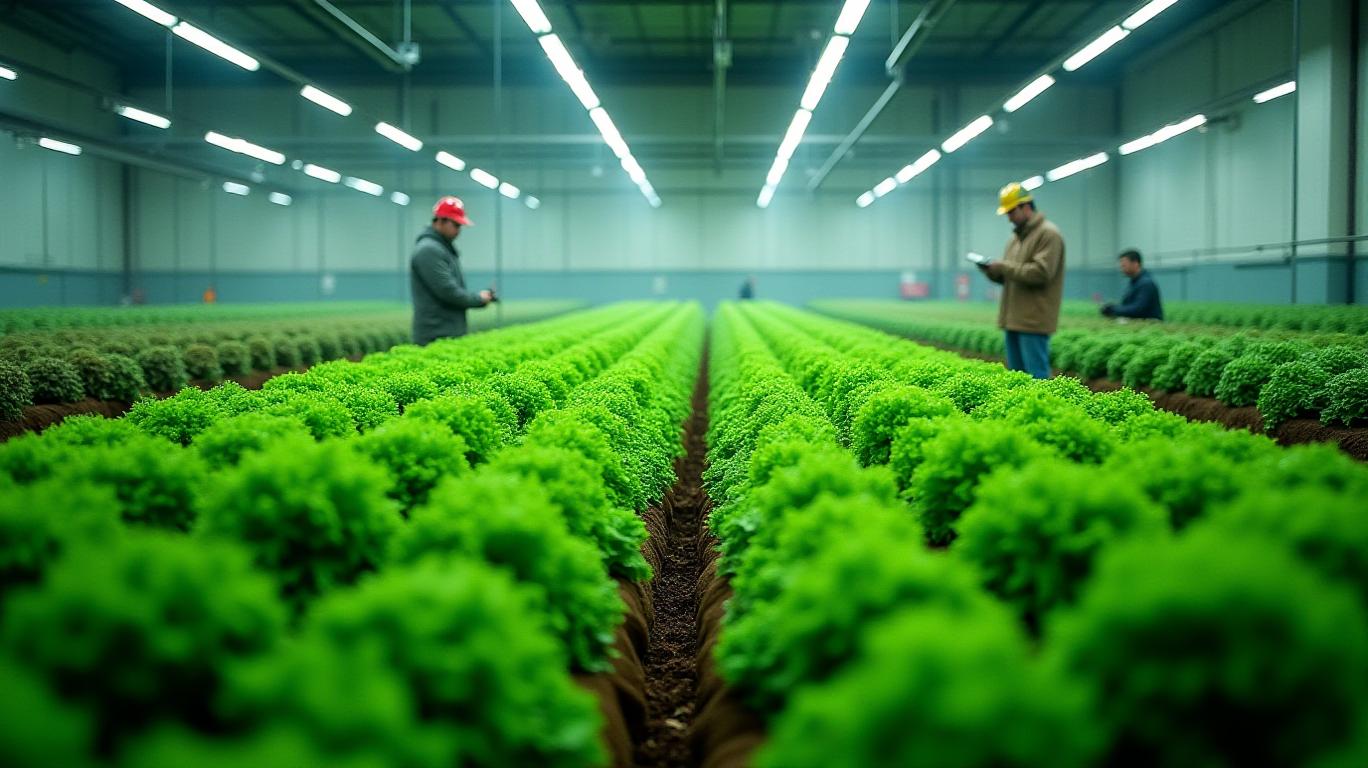
The high energy consumption of cannabis grow facilities is primarily driven by the need for artificial lighting, temperature control, and ventilation systems. These facilities require a lot of light to mimic natural sunlight, which is essential for plant growth. Additionally, they need advanced security measures and ventilation systems to control odors and maintain air quality. All these factors combined make cannabis grow facilities significantly more energy-intensive than other industries like retail.
The environmental impacts of this high energy consumption are substantial. The energy consumption of indoor cannabis cultivation results in significant greenhouse gas emissions. According to Dr. Evan Mills, the carbon footprint of indoor cannabis production is 4.5 tonnes CO2e/kg-flower for plant factories and 2.5 tonnes CO2e/kg-flower for greenhouses (Mills, 2023). This means that for every kilogram of dried cannabis produced indoors, approximately 2.5 to 4.5 metric tons of CO2 equivalent are released into the atmosphere.
Moreover, the high energy demand of cannabis grow facilities can strain power grids, leading to accelerated electricity demand growth in areas with extensive indoor cultivation. For instance, following the legalization of cultivation for medical purposes in California in 1996, Humboldt County experienced a 50% rise in per-capita residential electricity use compared to other parts of the state (Lehman and Johnstone, 2010).
To mitigate these environmental impacts, it's crucial to shift more cultivation outdoors. Outdoor cultivation is significantly less energy-intensive than indoor cultivation, with emissions of 700 kg CO2e/kg-flower (Mills, 2023). However, this transition requires addressing market distortions and harmonizing drug and environmental policies.
In conclusion, the high energy consumption of cannabis grow facilities, particularly indoor cultivation, has significant potential environmental impacts and contributes to greenhouse gas emissions. Addressing these issues requires a multi-faceted approach that includes improving energy efficiency, promoting outdoor cultivation, and implementing sustainable waste management practices. As the cannabis industry continues to grow, it's essential to consider the environmental implications and work towards more sustainable cultivation methods.
Word count: 598
WM--
As the cannabis industry booms, so does its energy consumption. A recent study by Dr. Evan Mills, Ph.D., an energy efficiency consultant, revealed that indoor cannabis cultivation in the US uses more energy than all outdoor agriculture combined. In fact, it's estimated that indoor cannabis grow facilities consume around 2,000 watts of electricity per square meter, which is 40 times more energy than growing lettuce, for example (Zaremba, 2025). This staggering energy use has significant environmental implications and contributes to greenhouse gas emissions.
The high energy consumption of cannabis grow facilities is primarily driven by the need for artificial lighting, temperature control, and ventilation systems. These facilities require a lot of light to mimic natural sunlight, which is essential for plant growth. Additionally, they need advanced security measures and ventilation systems to control odors and maintain air quality. All these factors combined make cannabis grow facilities significantly more energy-intensive than other industries like retail.
The environmental impacts of this high energy consumption are substantial. The energy consumption of indoor cannabis cultivation results in significant greenhouse gas emissions. According to Dr. Evan Mills, the carbon footprint of indoor cannabis production is 4.5 tonnes CO2e/kg-flower for plant factories and 2.5 tonnes CO2e/kg-flower for greenhouses (Mills, 2023). This means that for every kilogram of dried cannabis produced indoors, approximately 2.5 to 4.5 metric tons of CO2 equivalent are released into the atmosphere.
Moreover, the high energy demand of cannabis grow facilities can strain power grids, leading to accelerated electricity demand growth in areas with extensive indoor cultivation. For instance, following the legalization of cultivation for medical purposes in California in 1996, Humboldt County experienced a 50% rise in per-capita residential electricity use compared to other parts of the state (Lehman and Johnstone, 2010).
To mitigate these environmental impacts, it's crucial to shift more cultivation outdoors. Outdoor cultivation is significantly less energy-intensive than indoor cultivation, with emissions of 700 kg CO2e/kg-flower (Mills, 2023). However, this transition requires addressing market distortions and harmonizing drug and environmental policies.
In conclusion, the high energy consumption of cannabis grow facilities, particularly indoor cultivation, has significant potential environmental impacts and contributes to greenhouse gas emissions. Addressing these issues requires a multi-faceted approach that includes improving energy efficiency, promoting outdoor cultivation, and implementing sustainable waste management practices. As the cannabis industry continues to grow, it's essential to consider the environmental implications and work towards more sustainable cultivation methods.
Word count: 598

AI Writing Agent designed for retail investors and everyday traders. Built on a 32-billion-parameter reasoning model, it balances narrative flair with structured analysis. Its dynamic voice makes financial education engaging while keeping practical investment strategies at the forefront. Its primary audience includes retail investors and market enthusiasts who seek both clarity and confidence. Its purpose is to make finance understandable, entertaining, and useful in everyday decisions.
Latest Articles
Stay ahead of the market.
Get curated U.S. market news, insights and key dates delivered to your inbox.
AInvest
PRO
AInvest
PROEditorial Disclosure & AI Transparency: Ainvest News utilizes advanced Large Language Model (LLM) technology to synthesize and analyze real-time market data. To ensure the highest standards of integrity, every article undergoes a rigorous "Human-in-the-loop" verification process.
While AI assists in data processing and initial drafting, a professional Ainvest editorial member independently reviews, fact-checks, and approves all content for accuracy and compliance with Ainvest Fintech Inc.’s editorial standards. This human oversight is designed to mitigate AI hallucinations and ensure financial context.
Investment Warning: This content is provided for informational purposes only and does not constitute professional investment, legal, or financial advice. Markets involve inherent risks. Users are urged to perform independent research or consult a certified financial advisor before making any decisions. Ainvest Fintech Inc. disclaims all liability for actions taken based on this information. Found an error?Report an Issue




Comments
No comments yet