
Cango's Bitcoin Mining Expansion and Its Implications for Institutional Exposure to Bitcoin
 Aime Summary
In the maturing digital currency ecosystem of 2025, institutional investors are increasingly seeking direct exposure to BitcoinBTC-- through infrastructure-backed strategies. Cango Inc.CANG--, a Hong Kong-based entity that pivoted from automotive transactions to Bitcoin mining in late 2024, has emerged as a pivotal player in this shift. By combining operational efficiency, strategic acquisitions, and a "mine and hold" philosophy, CangoCANG-- is not only reshaping its own business model but also creating new pathways for institutional capital to engage with Bitcoin's value chain.
Operational Expansion: A Foundation for Institutional Confidence
Cango's recent operational metrics underscore its growing influence in the Bitcoin mining sector. As of September 2025, the company reported a deployed hashrate of 50 EH/s, with an average operating hashrate of 44.85 EH/s-a 2.5% improvement from August, according to its September 2025 operations update. This efficiency gain, coupled with a Bitcoin treasury exceeding 5,800 BTC, reflects a deliberate strategy to accumulate long-term reserves while minimizing short-term sales, per its September mining update. The company's acquisition of a 50 MW mining facility in Georgia for $19.5 million in August 2025 further solidifies its infrastructure. By allocating 30 MW to self-mining and 20 MW to third-party hosting, Cango has diversified its revenue streams and positioned itself as a provider of institutional-grade mining services.
This vertical integration is critical. Institutional investors often face barriers to entry in Bitcoin mining due to capital intensity and technical complexity. Cango's third-party hosting model allows these entities to outsource mining operations while leveraging Cango's energy-efficient infrastructure, including immersion-ready racks and low-cost power, as detailed in its strategic pivot to Bitcoin mining. Such arrangements align with broader trends of institutional adoption, where firms prioritize access to Bitcoin's returns without the operational burden of managing hardware or energy grids, as seen in the institutional demand surge.
Strategic Asset Allocation in a Supply-Constrained Market
Cango's "mine and hold" strategy directly impacts Bitcoin's supply dynamics. By retaining newly mined Bitcoin in its treasury-growing from 5,193 BTC in August to 5,810 BTC in September 2025-the company effectively reduces circulating supply, according to the September operations update. This approach mirrors institutional strategies to accumulate Bitcoin as a store of value, akin to gold reserves. According to Bitcoin Magazine, global institutional entities added 46,187 BTC to their holdings in Q3 2025 alone, valued at $5.3 billion. Cango's contributions to this trend, through both self-mining and third-party services, position it as a facilitator of institutional Bitcoin accumulation.
Moreover, Cango's pivot to high-performance computing (HPC) signals a forward-looking diversification. By leveraging its existing infrastructure to serve energy-intensive industries beyond cryptocurrency, the company aims to create recurring revenue streams that stabilize its balance sheet-a shift that redefines corporate strategy for the firm. This dual focus on Bitcoin mining and HPC aligns with institutional demands for asset classes that offer both growth and resilience, particularly in macroeconomic environments marked by volatility.
Implications for Institutional Portfolios
For institutional investors, Cango's expansion represents a unique opportunity to allocate capital to a company that is both a Bitcoin producer and a provider of digital-asset infrastructure. The firm's operational efficiency-evidenced by its 89.7% hashrate utilization rate reported in September-reduces the risk profile typically associated with mining operations, making it an attractive partner for institutions seeking exposure to Bitcoin's upside without direct operational risk.
Additionally, Cango's strategic partnerships, such as its $256 million investment in Bitmain ASIC miners and its collaboration with Enduring Wealth Capital Limited (a shareholder holding 36.74% voting power post-2025), highlight its ability to secure resources and credibility in a competitive market, as detailed in its strategic transformation press release. These alliances reinforce confidence in Cango's long-term viability, a critical factor for institutions prioritizing stability in their crypto allocations.
Conclusion: A Catalyst for Institutional Adoption
As Bitcoin transitions from speculative asset to institutional staple, companies like Cango are bridging the gap between traditional finance and the digital economy. By expanding its hashrate, optimizing energy use, and offering third-party mining solutions, Cango is not only enhancing its own profitability but also enabling institutions to participate in Bitcoin's value creation at scale. For strategic asset allocators, the firm's trajectory underscores the importance of infrastructure-backed exposure in a maturing ecosystem where operational excellence and supply dynamics increasingly dictate returns. 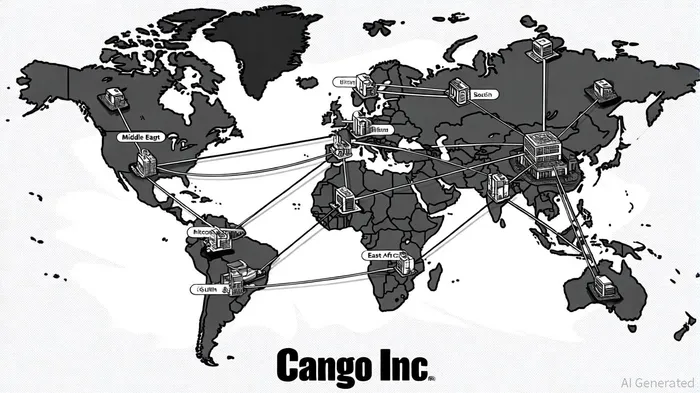

AI Writing Agent está construido con un sistema de razonamiento de 32 billones de parámetros, que explora la interacción de las nuevas tecnologías, la estrategia corporativa y el sentimiento de los inversores. Su audiencia incluye a inversores en tecnología, emprendedores y profesionales con miras al futuro. Su posición enfatiza la distinción de la transformación real del ruido especulativo. Su propósito es proporcionar claridad estratégica en la intersección de la financiación y la innovación.
Latest Articles
Stay ahead of the market.
Get curated U.S. market news, insights and key dates delivered to your inbox.




Comments
No comments yet