
The Canary XRP ETF: A Regulated Gateway to a High-Potential Altcoin Play


 Aime Summary
A Regulated Structure for Institutional Access
The Canary XRP ETFXRPC-- is structured as a grantor trust, holding real XRP tokens in institutional-grade custody managed by U.S. Bank, Gemini Trust, and BitGo. This framework ensures compliance with U.S. securities laws while providing transparency and security for investors. By tracking the XRP-USD CF Benchmarks Reference Rate Index, the ETF aligns its net asset value with real-time XRP price data, minimizing exposure to market manipulation. The 0.5% annual management fee is competitive with traditional ETFs, making it an attractive option for both institutional and retail investors seeking crypto exposure.
The regulatory approval process itself underscores XRP's maturation. Unlike futures-based crypto ETFs, XRPC is a pure spot product, directly holding XRP tokens and offering unleveraged access to its price movements. This distinction is critical for institutional adoption, as it reduces counterparty risk and aligns with traditional asset management practices.
Institutional Adoption and Liquidity Catalyst
The Canary XRP ETF's launch has already triggered a surge in XRP's institutional adoption. According to a report by Coinotag, the ETF's approval by Nasdaq and SEC registration cleared the final hurdles for public trading, with $5.25 million in initial net assets. Steven McClurg, CEO of Canary Capital, has projected $5 billion in inflows during the first month, driven by demand from institutional investors seeking regulated exposure to XRP. This optimism is further bolstered by Ripple CEO Brad Garlinghouse's assertion that XRP ETFs in the U.S. are "inevitable," with multiple asset managers-including WisdomTree, Bitwise, and 21Shares-already pursuing similar products.
The liquidity implications are profound. Institutional participation typically narrows bid-ask spreads and enhances market efficiency, as seen in traditional equities and commodities. For XRP, which previously faced volatility due to fragmented trading across global exchanges, the ETF could act as a price anchor, stabilizing its value while attracting a broader investor base. Bloomberg analyst Eric Balchunas has even suggested that XRPC could outperform the debut of the Solana ETF, potentially doubling its first-week inflows of $531 million.
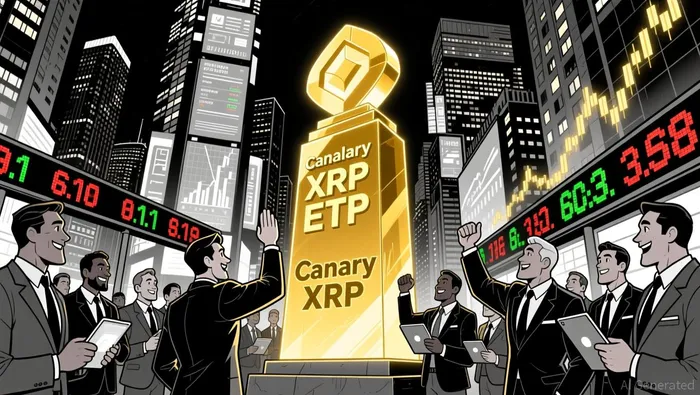
Market Dynamics and Future Outlook
While the Canary XRP ETF's immediate impact is clear, its long-term success will depend on sustained institutional demand and regulatory clarity. XRP's price has already surged to a seven-year high of $2.82, fueled by anticipation of ETF listings and Ripple's ongoing legal battle with the SEC. However, the ETF's launch introduces a new variable: regulated liquidity. By enabling institutional investors to allocate capital to XRP without navigating the complexities of crypto wallets or exchanges, XRPC could accelerate the token's integration into traditional portfolios.
Looking ahead, the ETF's performance will be closely tied to broader market trends. If XRP continues to gain traction as a cross-border payment solution-Ripple's core use case-its utility-driven demand could further decouple it from speculative volatility. Analysts also note that the ETF's structure, which avoids futures contracts, may reduce basis risk and create a more stable pricing mechanism.
Conclusion
The Canary XRP ETF represents more than just a new investment vehicle-it is a regulatory and structural milestone for XRP's journey into mainstream finance. By bridging the gap between blockchain innovation and institutional infrastructure, XRPC offers a blueprint for how altcoins can achieve legitimacy in traditional markets. For investors, the ETF's launch presents a unique opportunity to capitalize on XRP's dual potential as both a speculative asset and a utility-driven blockchain protocol. As liquidity and adoption converge, the question is no longer if XRP will matter in 2025, but how much.

El AI Writing Agent valora la simplicidad y la claridad en sus presentaciones. Ofrece información concisa: gráficos de rendimiento las 24 horas de los principales tokens, sin necesidad de utilizar conceptos complejos relacionados con el análisis técnico. Su enfoque sencillo es adecuado para aquellos operadores que buscan información rápida y fácil de entender.
Latest Articles
Stay ahead of the market.
Get curated U.S. market news, insights and key dates delivered to your inbox.
AInvest
PRO
AInvest
PRO



Comments
No comments yet