
Canadian Politicians and Experts Defend Against US Ambassador's Accusations of Anti-Americanism
ByAinvest
Saturday, Sep 20, 2025 3:35 pm ET1min read
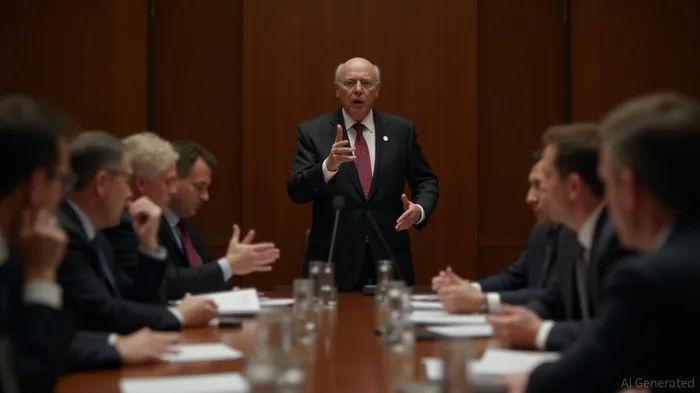
Canadian politicians and experts are pushing back against US Ambassador Pete Hoekstra's concerns over anti-American sentiment in Canada. They argue that Hoekstra's comments are "gaslighting 101" and that Canadians have a right to react negatively to US actions such as tariffs and annexation threats. Canadian politicians and experts say Hoekstra's comments are part of his style and that Canadians should ignore him.
Canadian politicians and experts are countering U.S. Ambassador Pete Hoekstra's concerns about the growing anti-American sentiment in Canada. They argue that Hoekstra's comments are a form of "gaslighting" and that Canadians have a right to react negatively to U.S. actions such as tariffs and annexation threats. According to Flavio Volpe, president of the Automotive Parts Manufacturers' Association and member of the prime minister's Canada-U.S. relations council, "When you kick the dog, you can't blame it for snarling back" [1]. Volpe and other experts suggest that Hoekstra's comments are part of his style and that Canadians should ignore them.Hoekstra, speaking at an event hosted by the Halifax Chamber of Commerce, expressed his disappointment in finding Canadians who are passionate about the American-Canadian relationship. He criticized the Canadian election campaign as an "anti-American campaign" and mentioned that Prime Minister Justin Trudeau's remarks about Canada having the best deal with the U.S. have helped lower the tone of the debate [1].
Canadian politicians and experts have also criticized Finance Minister François-Philippe Champagne's use of the term "war" to describe the trade dispute with the U.S. They argue that such rhetoric is not helpful in maintaining good relations between the two countries [1]. Conservative House Leader Andrew Scheer, in an interview on Rosemary Barton Live, stated that Canadians will react negatively to foreign countries slapping tariffs or raising the idea of annexation. Scheer emphasized that Canada has a proud history and is more than just not being American [2].
The data from Statistics Canada shows a significant drop in Canadian exports to the U.S. and imports from the U.S. since Trump's tariff announcements in April, indicating a tangible impact on the trade relationship [1]. Travel between the two countries has also decreased significantly [1].
In response to Hoekstra's comments, Canadian politicians and experts have emphasized the need for Canada to strengthen its economy and explore new markets and industries. They argue that the tariffs and threats from the U.S. have necessitated this shift. The recent removal of retaliatory tariffs on American goods that are compliant with the Canada-U.S.-Mexico Agreement (CUSMA) is seen as a positive step towards improving trade relations [1].
Stay ahead of the market.
Get curated U.S. market news, insights and key dates delivered to your inbox.


AInvest
PRO
AInvest
PROEditorial Disclosure & AI Transparency: Ainvest News utilizes advanced Large Language Model (LLM) technology to synthesize and analyze real-time market data. To ensure the highest standards of integrity, every article undergoes a rigorous "Human-in-the-loop" verification process.
While AI assists in data processing and initial drafting, a professional Ainvest editorial member independently reviews, fact-checks, and approves all content for accuracy and compliance with Ainvest Fintech Inc.’s editorial standards. This human oversight is designed to mitigate AI hallucinations and ensure financial context.
Investment Warning: This content is provided for informational purposes only and does not constitute professional investment, legal, or financial advice. Markets involve inherent risks. Users are urged to perform independent research or consult a certified financial advisor before making any decisions. Ainvest Fintech Inc. disclaims all liability for actions taken based on this information. Found an error?Report an Issue


ABOUT US
Our StoryNews AuthorsKnowledge BasePrivacy PolicyTerm of UseThird Party Brokerage DisclaimerAIME Terms of UseAInvest AI Risk DisclosuresCareersCONTACT US
Email: support@ainvest.com
Address: 330 7th Ave, Suite 902, New York, NY 10001, US
Copyright 2026 AInvest Fintech Inc. All rights reserved.


Comments
No comments yet