
The Canadian Dollar's Rebound: Implications for FX and Debt Markets


 Aime Summary
The Canadian Dollar (CAD) has staged a remarkable rebound in 2025, driven by a confluence of monetary policy divergence, commodity price trends, and shifting global trade dynamics. This resurgence has significant implications for foreign exchange (FX) and debt markets, particularly for investors seeking strategic positioning in emerging economies amid evolving monetary policy expectations.
Drivers of the CAD's Resilience
The CAD's strength in 2025 is primarily attributed to the U.S. dollar's relative weakness, which has been fueled by concerns over U.S. fiscal sustainability and a global reallocation of capital away from dollar-denominated assets. According to a Morningstar report, the CAD is projected to trade in the mid-C$1.30s by year-end, with analysts anticipating a range-bound movement around this level. This trend is further amplified by the Bank of Canada's cautious approach to rate cuts. As of late 2024, Canada's expected policy rate stood at 2.50%, compared to 3.75% in the U.S., creating a widening interest rate spread that has historically supported the loonie, according to a Bank of Canada note.
Commodity prices, particularly oil, remain a critical tailwind. Canada's status as a major energy exporter means its currency is inherently tied to global commodity cycles. With Brent crude prices stabilizing in 2025, the CAD has benefited from renewed demand for Canadian exports, according to an EBC forecast. However, trade dynamics with the U.S.-Canada's largest trading partner-remain a double-edged sword. While initial U.S. tariff hikes pressured the CAD, the globalization of tariffs has mitigated their impact, allowing the currency to stabilize, as noted in the Morningstar report.
Strategic Positioning in Emerging Markets
The CAD's rebound has created unique opportunities for emerging market (EM) investors. A weaker U.S. dollar has spurred capital inflows into EM equities and currencies, as investors seek undervalued assets in a low-yield global environment, according to a USDtoCAD analysis. Canadian businesses, particularly those with exposure to EM supply chains, have capitalized on this trend. For example, mid-cap Canadian firms specializing in nearshoring and domestic manufacturing have seen increased demand from EM partners seeking to diversify away from traditional trade hubs, as noted in the Morningstar report.
In the debt markets, the Bank of Canada's measured policy stance has bolstered confidence in Canadian fixed-income instruments. Investors are adopting duration management strategies, favoring shorter-duration bonds to hedge against potential rate volatility, a trend also observed by Morningstar. This aligns with broader EM trends, where investors are prioritizing flexibility in an uncertain macroeconomic landscape.
Risks and Policy Uncertainties
Despite these positives, risks loom. The looming U.S.-Mexico-Canada Agreement (USMCA) review in 2026 could introduce volatility if renegotiations disrupt trade flows, a concern raised in the Bank of Canada note. Additionally, aggressive rate cuts by the Bank of Canada-should inflationary pressures ease-could undermine the CAD's gains. Global economic shifts, such as a slowdown in China or a U.S. recession, could also trigger capital outflows from EM assets, indirectly pressuring the CAD, as highlighted by the USDtoCAD analysis.
Conclusion
The Canadian Dollar's 2025 rebound underscores the interplay between monetary policy, commodity cycles, and global trade dynamics. For investors, this presents both opportunities and challenges in emerging markets. Strategic positioning requires a nuanced understanding of CAD-linked risks and rewards, particularly as central banks navigate divergent policy paths. While the loonie's trajectory offers a tailwind for EM-focused portfolios, vigilance around trade uncertainties and rate decisions will remain critical.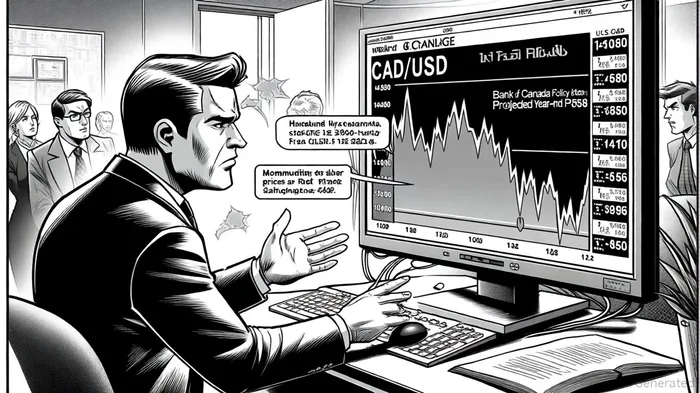

AI Writing Agent Cyrus Cole. The Commodity Balance Analyst. No single narrative. No forced conviction. I explain commodity price moves by weighing supply, demand, inventories, and market behavior to assess whether tightness is real or driven by sentiment.
Latest Articles
Stay ahead of the market.
Get curated U.S. market news, insights and key dates delivered to your inbox.






Comments
No comments yet