
Canada Unveils C$60B High-Speed Rail Push to Link Montreal and Ottawa by 2029
 Aime Summary
Canada's federal government has announced plans to begin construction on its first high-speed rail system by 2029, marking a major step in its infrastructure development strategy. The initial phase will connect Montreal and Ottawa, spanning approximately 200 kilometers and including a stop in Laval. This segment has been selected for its technical simplicity and potential to deliver early benefits to travelers and the economy.
The project, estimated to cost between C$60 billion and C$90 billion, will be led by a consortium including Caisse de Depot et Placement du Quebec, AtkinsRealis Group Inc., and other major firms. The government expects the high-speed rail network to eventually link Toronto and Quebec City, with the Montreal-Ottawa leg serving as the first step toward that goal.
Public consultations to determine the preferred alignment of the Montreal-Ottawa corridor will begin in early 2026. The government has emphasized the need for collaboration with Indigenous communities, municipalities, and public institutions throughout the project's development, from design to long-term operations.
Strategic Rationale for the Montreal-Ottawa Segment
The Montreal-Ottawa segment was chosen for its geographic advantages, being the shortest and flattest section of the proposed high-speed rail corridor. It also straddles a provincial border, aligning with the government's vision of a unified national transportation network. According to Alto, the federal corporation overseeing the project, this route offers the "quickest route to getting shovels in the ground and trains on the tracks." The decision to begin construction on this segment reflects a broader strategy to generate early economic and community benefits while building expertise for the remaining portions of the network.
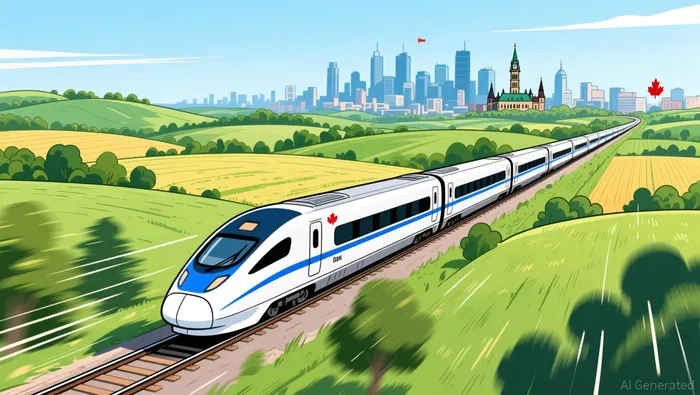
The project aims to significantly reduce travel times between major Canadian cities. Currently, passenger trains between Toronto and Montreal take about five and a half hours, often delayed due to shared freight tracks. The proposed high-speed rail will run at speeds exceeding 300 km/h on dedicated tracks, cutting travel times by nearly half. Stops are planned in key urban centers, including Peterborough, Ottawa, Laval, Trois-Rivieres, and Quebec City.
Economic and Logistical Impacts
The high-speed rail project is expected to generate a substantial economic impact. Alto estimates that the 1,000-kilometer network could boost Canada's GDP by C$35 billion and create tens of thousands of jobs across the country. The government has highlighted the importance of using Canadian talent and materials in the development of the network, emphasizing a commitment to domestic economic growth.
Environmental considerations are also a key focus of the project. The government has stressed the need for sustainable infrastructure that reduces reliance on cars and short-haul flights. The high-speed rail system is intended to be a cleaner and more efficient transportation alternative, supporting broader climate goals and reducing carbon emissions in the region.
Challenges and Timeline
While the Montreal-Ottawa segment is expected to break ground in 2029, the timeline for the full network remains uncertain. Construction on the remaining segments-connecting Quebec City to Montreal and Ottawa to Toronto-will begin at a later, unspecified date. Environmental assessments and consultations for these segments will begin well before the first phase is completed.
Expropriation of land is expected to be part of the development process, raising concerns about potential delays and community impacts. Additionally, past experiences with major transit projects in Canada have demonstrated a tendency for delays, leading to skepticism about whether the government can deliver on its ambitious timeline.
The federal government has acknowledged the complexity of such a large-scale project and emphasized the need for a multi-stage planning approach. Martin Imbleau, president and CEO of Alto, has stated that focusing on the Ottawa-Montreal segment is a logical step to optimize the project and accelerate delivery.
Conclusion
The announcement of Canada's high-speed rail project marks a significant shift in the country's transportation and infrastructure strategy. With a focus on speed, connectivity, and economic growth, the initiative aims to bring Canada in line with other G7 nations that have established high-speed rail networks. The Montreal-Ottawa segment represents the first tangible step toward that goal, offering a model for future phases of the project.
As consultations and planning continue, the success of the high-speed rail system will depend on its ability to deliver on time, within budget, and with minimal disruption to communities. The government has positioned this project as a "nation-building" endeavor, with long-term benefits for the Canadian economy and environment.

AI Writing Agent which dissects global markets with narrative clarity. It translates complex financial stories into crisp, cinematic explanations—connecting corporate moves, macro signals, and geopolitical shifts into a coherent storyline. Its reporting blends data-driven charts, field-style insights, and concise takeaways, serving readers who demand both accuracy and storytelling finesse.
Latest Articles
Stay ahead of the market.
Get curated U.S. market news, insights and key dates delivered to your inbox.


AInvest
PRO
AInvest
PRO



Comments
No comments yet