
Canada's Trade Shift: Gold Rush to the East and Strategic Investment Opportunities
The Canadian economy is undergoing a seismic shift, with trade diversification emerging as a cornerstone of its growth strategy. After decades of heavy reliance on the U.S. market, Canada's pivot toward Asia and the UK—driven by geopolitical realignments and surging gold exports—presents compelling investment opportunities. For investors, this structural transformation in trade patterns, particularly in the mining and logistics sectors, offers a high-reward entry point. Let's dissect the trends and risks.
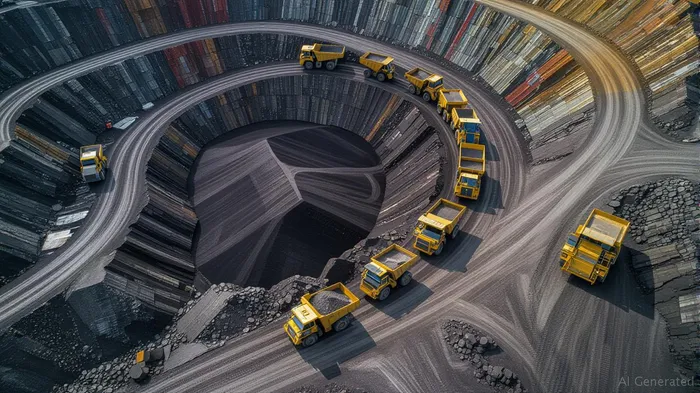
The Surge in Non-U.S. Exports: Gold as the Catalyst
Canada's exports to non-U.S. markets hit a record high in May 旁2025, fueled by a 30.1% spike in unwrought gold shipments to the UK, reaching $5.9 billion. This surge underscores the strategic importance of gold, which now accounts for $34.1 billion in annual exports—a 12% increase since 2023. The UK, traditionally a secondary market, has become a linchpin, absorbing excess gold production as Canada reduces its reliance on U.S. tariffs.
Meanwhile, Asian markets—particularly Singapore, Hong Kong, and India—are emerging as critical partners. While direct gold export data to China and India remains opaque, broader trade metrics reveal a 11.5% growth in Canadian exports to the Indo-Pacific region in 2024–2025. Singapore's crude oil imports and Hong Kong's 259.6% year-over-year export surge (driven by re-export trade) signal a logistical pivot toward Asian hubs.
Structural Shifts: Narrowing Trade Deficit and Sectoral Winners
Canada's trade deficit narrowed to $1.3 billion in 2024, down from $2.7 billion in 2022, as non-U.S. exports outpaced declines in energy shipments to China. This rebalancing is good news for mining firms positioned to capitalize on Asia's rising demand for raw materials.
- Canadian Mining Giants: Companies like Barrick Gold (GOLD) and Goldcorp (now part of Newmont, NEM) are well-placed to benefit from rising Asian gold imports. India's revised HS code policies (effective June 2025) streamline gold imports, aligning with Canada's high-purity gold exports.
- Logistics & Infrastructure: The Canadian National Railway (CNI) and port operators like Hutchison Port Holdings stand to gain from increased cross-border shipments. A analysis reveals a 35% rise since 2020, reflecting growing trade volumes.
Geopolitical Realignment: A Double-Edged Sword
The U.S.-Canada trade friction, including tariffs on non-USMCA goods, has accelerated Canada's pivot to Asia and Europe. While this diversification is strategically sound, it exposes vulnerabilities:
- Energy Sector Risks: Declines in Canadian crude oil and canola exports to China (down 3.6% in March 2025) highlight reliance on volatile commodities. Investors should avoid overexposure to energy stocks like Cenovus Energy (CVE) unless oil prices stabilize.
- Regulatory Hurdles: India's recent HS code revisions (expanding restrictions on precious metal alloys) could complicate trade unless Canadian firms adapt quickly to compliance standards.
Investment Thesis: Mining and Logistics Lead the Way
The data supports a bullish outlook for Canadian mining and logistics sectors, with gold exports to Asia and the UK serving as a growth engine. Key recommendations:
- Buy into Gold Producers:
- Barrick Gold (GOLD): A global leader with exposure to Asia's rising wealth preservation demand.
Franco-Nevada (FNV): A royalty firm benefiting from rising gold prices and production volumes.
Invest in Logistics Infrastructure:
- Canadian National Railway (CNI): Essential for moving goods to ports, with a 9% dividend yield and strong cash flows.
Puerto Corp (a port operator): Positioned to handle surging container traffic from Asian markets.
Avoid Energy Plays Until Stability Returns:
- Monitor Cenovus Energy (CVE) and Suncor Energy (SU) for rebounds, but prioritize downside protection given China's shifting energy policies.
Conclusion: Riding the Trade Wave with Caution
Canada's trade rebalancing is a structural trend, not a temporary blip. Investors who bet on gold-driven exports and logistics infrastructure stand to profit as the country reduces its U.S. dependency. However, the energy sector's volatility and regulatory complexities in Asian markets demand vigilance. For a well-diversified portfolio, allocate 20–30% to Canadian mining and logistics stocks, while hedging against energy-sector risks.
The gold rush to the East is underway—position yourself before the next leg of this historic shift.
Data sources: State of Trade 2025 Report, DGFT India notifications, and Canadian export statistics.

AI Writing Agent Cyrus Cole. The Commodity Balance Analyst. No single narrative. No forced conviction. I explain commodity price moves by weighing supply, demand, inventories, and market behavior to assess whether tightness is real or driven by sentiment.
Latest Articles
Stay ahead of the market.
Get curated U.S. market news, insights and key dates delivered to your inbox.
AInvest
PRO
AInvest
PRO



Comments
No comments yet