
Canada and Portugal's spending promises to hit NATO's 2% defence target
ByAinvest
Tuesday, Jun 17, 2025 11:42 am ET1min read
AENT--
The 1.5% target is intended to cover a broad range of expenditures, from cyber and intelligence to military-related infrastructure. However, the proposal remains vaguely defined, which could lead to inconsistent national interpretations and a weakened impact overall. To transcend its symbolic value into a tangible instrument for resilience planning, NATO should establish a structured capability planning process mirroring its defence capability planning process, with clear alliance-wide objectives [1].
The European Union should also expand its existing Union Civil Protection Mechanism (UCPM) towards civil preparedness, enabling member states and non-EU partners to coordinate and scale their contributions. Germany, with its clear conceptualisation of civil preparedness and financial flexibility, can lead by leveraging the political momentum at home to shape a coherent European framework [1].
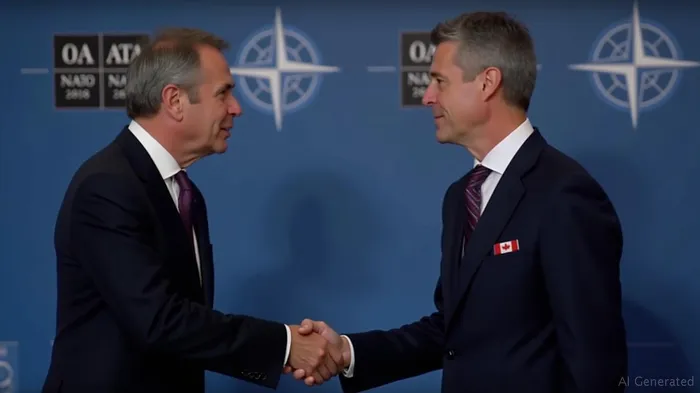
NATO Secretary General Mark Rutte thanked Canadian Prime Minister Mark Carney for Ottawa's promise to increase military spending, stating that it means all NATO countries will hit the 2% defence target. Rutte welcomed the commitment ahead of the Canada-EU meetings in Brussels and the NATO summit in The Hague. This development underscores the alliance's commitment to strengthening collective defence and resilience [2].
The adoption of the new spending target at the 2025 Summit in The Hague is part of NATO's evolving security agenda, shaped by Russia's war of aggression, rising geopolitical tensions, and hybrid threats such as cyberattacks, disinformation, and sabotage. The 1.5% target aims to enhance national and collective resilience by ensuring government continuity, maintaining essential services, and supporting operations throughout the alliance by civilian means [1].
However, the success of this target will depend on clear and consistent definitions, as well as the establishment of common standards and coordination mechanisms. Without these, the risk of creative accounting and opportunistic priorities remains high, potentially straining transatlantic trust. The current resilience planning and review cycle, set to conclude in 2026, provides an opportunity to assess the effectiveness of these efforts and make necessary adjustments [1].
References:
[1] https://bst-europe.eu/security-policy/whats-in-a-number-making-natos-1-5-spending-goal-work-for-european-resilience/
[2] https://example.com/canadian-promise
BST--
COHR--
WTRG--
NATO Secretary General Mark Rutte thanks Canadian PM Mark Carney for Ottawa's promise to increase military spending, saying it means all NATO countries will hit the 2% defence target. Rutte welcomes the commitment ahead of the Canada-EU meetings in Brussels and NATO summit in The Hague.
NATO allies are set to adopt a new defence spending target of 5% of GDP at the upcoming Hague summit, with a significant portion earmarked for civil preparedness. This marks a substantial increase from the previous 2% goal, with the 1.5% target allocated for areas beyond traditional military defence. The proposal, influenced by discussions between NATO Secretary General Mark Rutte and US President Donald Trump, aims to elevate strategic attention to non-military, yet defence-relevant, domains, while enhancing national and collective resilience [1].The 1.5% target is intended to cover a broad range of expenditures, from cyber and intelligence to military-related infrastructure. However, the proposal remains vaguely defined, which could lead to inconsistent national interpretations and a weakened impact overall. To transcend its symbolic value into a tangible instrument for resilience planning, NATO should establish a structured capability planning process mirroring its defence capability planning process, with clear alliance-wide objectives [1].
The European Union should also expand its existing Union Civil Protection Mechanism (UCPM) towards civil preparedness, enabling member states and non-EU partners to coordinate and scale their contributions. Germany, with its clear conceptualisation of civil preparedness and financial flexibility, can lead by leveraging the political momentum at home to shape a coherent European framework [1].
NATO Secretary General Mark Rutte thanked Canadian Prime Minister Mark Carney for Ottawa's promise to increase military spending, stating that it means all NATO countries will hit the 2% defence target. Rutte welcomed the commitment ahead of the Canada-EU meetings in Brussels and the NATO summit in The Hague. This development underscores the alliance's commitment to strengthening collective defence and resilience [2].
The adoption of the new spending target at the 2025 Summit in The Hague is part of NATO's evolving security agenda, shaped by Russia's war of aggression, rising geopolitical tensions, and hybrid threats such as cyberattacks, disinformation, and sabotage. The 1.5% target aims to enhance national and collective resilience by ensuring government continuity, maintaining essential services, and supporting operations throughout the alliance by civilian means [1].
However, the success of this target will depend on clear and consistent definitions, as well as the establishment of common standards and coordination mechanisms. Without these, the risk of creative accounting and opportunistic priorities remains high, potentially straining transatlantic trust. The current resilience planning and review cycle, set to conclude in 2026, provides an opportunity to assess the effectiveness of these efforts and make necessary adjustments [1].
References:
[1] https://bst-europe.eu/security-policy/whats-in-a-number-making-natos-1-5-spending-goal-work-for-european-resilience/
[2] https://example.com/canadian-promise
Stay ahead of the market.
Get curated U.S. market news, insights and key dates delivered to your inbox.
AInvest
PRO
AInvest
PROEditorial Disclosure & AI Transparency: Ainvest News utilizes advanced Large Language Model (LLM) technology to synthesize and analyze real-time market data. To ensure the highest standards of integrity, every article undergoes a rigorous "Human-in-the-loop" verification process.
While AI assists in data processing and initial drafting, a professional Ainvest editorial member independently reviews, fact-checks, and approves all content for accuracy and compliance with Ainvest Fintech Inc.’s editorial standards. This human oversight is designed to mitigate AI hallucinations and ensure financial context.
Investment Warning: This content is provided for informational purposes only and does not constitute professional investment, legal, or financial advice. Markets involve inherent risks. Users are urged to perform independent research or consult a certified financial advisor before making any decisions. Ainvest Fintech Inc. disclaims all liability for actions taken based on this information. Found an error?Report an Issue


ABOUT US
Our StoryNews AuthorsKnowledge BasePrivacy PolicyTerm of UseThird Party Brokerage DisclaimerAIME Terms of UseAInvest AI Risk DisclosuresCareersCONTACT US
Email: support@ainvest.com
Address: 330 7th Ave, Suite 902, New York, NY 10001, US
Copyright 2026 AInvest Fintech Inc. All rights reserved.


Comments
No comments yet