
Canada’s Part-Time Jobs Surge Defies Weak GDP
 Aime Summary
- Canada’s part-time employment change surged to 36.6K, nearly doubling the previous reading of 17.5K.
- The data indicates a resilient labor market, contrasting with subdued GDP growth forecasts of 0.7%.
- A softening labor market remains a key assumption for Bank of Canada interest rate policy in 2026.
- The divergence between robust part-time hiring and modest economic growth highlights structural shifts in the Canadian workforce.
Canada’s labor market demonstrated unexpected resilience in the latest employment data release, as part-time job creation nearly doubled to 36.6K from the prior period’s 17.5K. This surge in part-time hiring stands in stark contrast to broader macroeconomic headwinds, including subdued population growth and a downward revision in national GDP growth forecasts. For investors and policymakers, the data suggests that the Canadian economy is absorbing shocks better than anticipated, potentially complicating the Bank of Canada’s path toward further monetary easing.
What Does The Part-Time Employment Surge Reveal?
The latest data point highlights a significant acceleration in part-time employment, which jumped to 36.6K against a previous reading of 17.5K. This metric is often viewed as a bellwether for labor market flexibility and consumer confidence. When part-time hiring accelerates, it frequently indicates that employers are adjusting to rising demand without committing to long-term, full-time overheads. Alternatively, it can reflect a shift in the nature of work, where individuals seek flexibility alongside traditional employment.
Historically, part-time employment is more volatile than full-time hiring. However, a doubling of the previous reading suggests a tangible shift in the underlying labor dynamics. This surge may be driven by seasonal adjustments, though the magnitude of the increase points to structural factors. In the current economic environment, where businesses are navigating trade-related uncertainty and cautious investment, the willingness of firms to expand part-time roles suggests a baseline level of consumer demand that remains surprisingly sturdy.
How Does This Data Fit Into The Broader Economic Picture?
While the part-time employment data is bullish, it exists within a macroeconomic framework that is increasingly cautious. According to recent corporate filings and earnings transcripts, major Canadian entities are operating under the assumption of a "soft" labor market and modest economic growth. For instance, BCE outlined key macroeconomic assumptions for 2026, citing 0.7% GDP growth, a significant decrease from earlier projections of 1.2%. This revision reflects a weaker start to the year and subdued population growth, which typically correlates with slower labor force expansion.
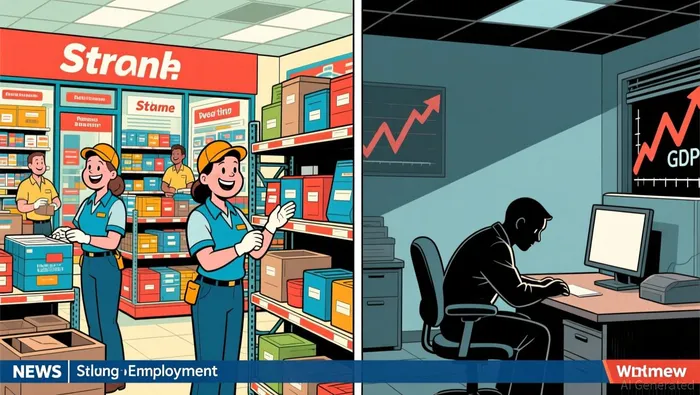
Furthermore, the broader economic context includes easing inflation driven by declining gasoline prices, which may allow interest rates to remain near current levels. However, the strong part-time employment data introduces a potential divergence. If consumers continue to spend despite modest GDP growth, it could sustain inflationary pressures longer than expected. This dynamic is critical for the Bank of Canada, which must balance the need to support a slowing economy with the risk of keeping rates too low for too long if labor demand remains tight.
Why Investors Should Watch Labor Market Divergences
The contrast between robust part-time hiring and weak GDP growth is a key area of focus for macro investors. Typically, strong employment data supports consumer spending, which drives corporate revenues. However, if this growth is primarily part-time, it may not translate into significant wage inflation or sustained consumer power. This nuance is vital for interpreting the health of the economy. A labor market that is growing in part-time roles but stagnant in full-time roles may indicate that businesses are cost-conscious, potentially squeezing profit margins in the retail and service sectors.
Investors should also monitor the interplay between this data and corporate performance. Recent earnings reports from Canadian companies highlight cautious business investment and shifting consumer behaviors. For example, Altus Group and Plains All American noted structural declines in certain sectors and exit costs, reflecting a complex operating environment. The strong part-time employment data suggests that while some sectors are contracting, the broader consumer base remains engaged. This divergence requires a nuanced approach to sector allocation, favoring companies that can leverage flexible labor models while avoiding those heavily exposed to discretionary spending that may wane if the labor market eventually softens.
In summary, the surge in part-time employment to 36.6K is a data point that underscores the resilience of the Canadian labor market. It challenges the narrative of a rapidly cooling economy and suggests that the Bank of Canada may face a more complex policy landscape than initially anticipated. As the year progresses, the sustainability of this part-time growth will be a critical indicator of whether the Canadian economy can maintain its footing amidst global uncertainties and domestic headwinds.

Stay ahead of the market.
Get curated U.S. market news, insights and key dates delivered to your inbox.


AInvest
PRO
AInvest
PRO




Comments
No comments yet