
Canada, Mexico Steelmakers Refuse New US Orders Amid Tariff Threat
Generated by AI AgentHarrison Brooks
Friday, Jan 24, 2025 12:44 pm ET3min read
The steel industry in North America is facing a potential disruption as Canadian and Mexican steelmakers refuse to accept new orders from the United States. This decision comes in response to the threat of new tariffs imposed by the incoming US President Donald Trump. The refusal to engage in new business with the US could have significant economic and political implications for all three countries involved.
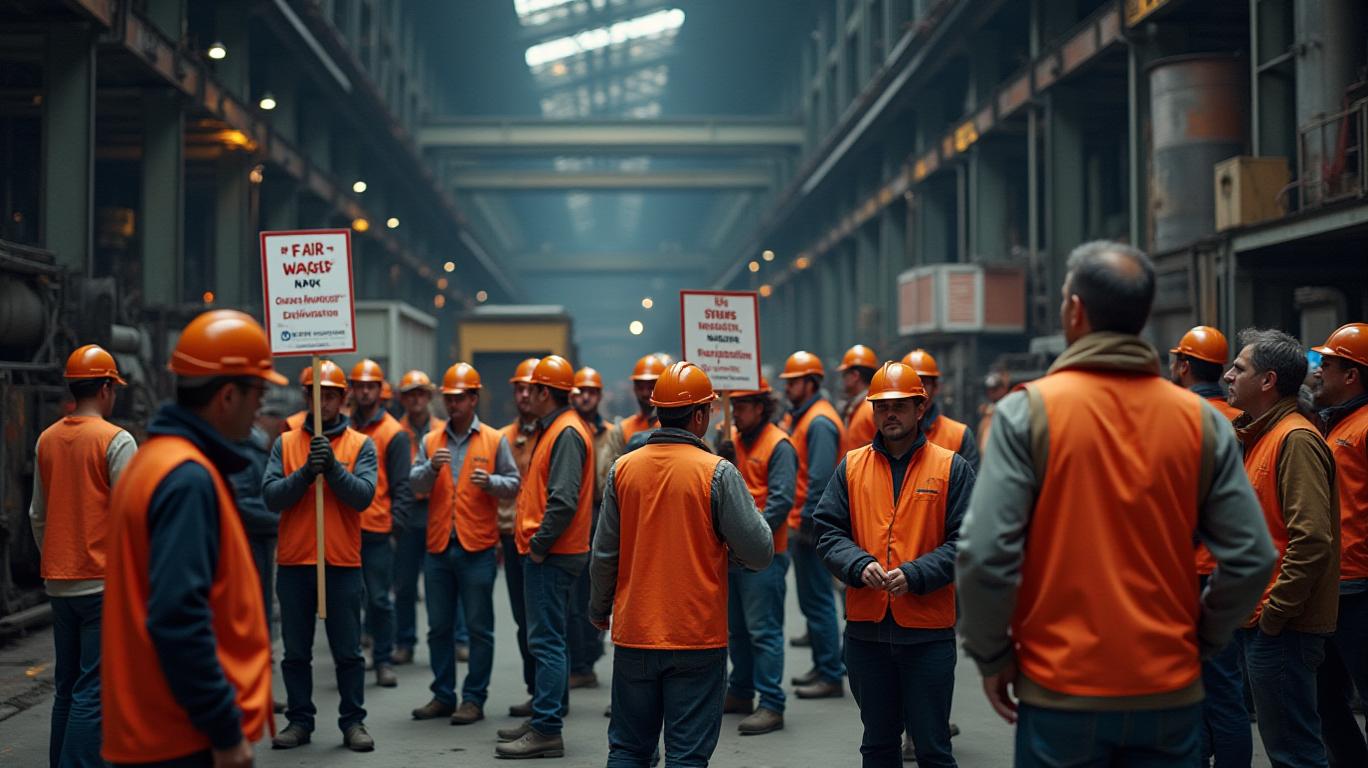
The primary reasons behind Canada and Mexico's refusal to accept new US orders align with the interests of the US steel industry. The main reasons are retaliatory tariffs and uncertainty surrounding negotiations. Both countries have indicated that they would retaliate with their own tariffs on US exports if the US imposes new tariffs on their steel imports. This tit-for-tat approach is a lose-lose situation, as it would disrupt trade relations and potentially lead to a trade war. Additionally, the uncertainty created by the US's aggressive stance on tariffs makes it difficult for Mexican and Canadian steel producers to plan their exports, creating a more favorable environment for domestic steel producers in the US.
The refusal of Canadian and Mexican steelmakers to accept new US orders will have significant impacts on the US steel industry's supply chain. The disruption of integrated supply chains, particularly in the automotive sector, could lead to a high level of disruption in the industry. Increased import costs and potential shortages of certain steel products in the US market could drive up prices, as the US may have to source steel from more distant or less competitive suppliers. This could also lead to higher production costs for US steelmakers due to increased input costs and potential retaliatory tariffs from Canada and Mexico.
As for alternative sources of steel imports, the US could consider South Korea and Japan, which are already significant steel exporters to the US. However, increased imports from these countries could lead to trade tensions, as they may be seen as unfair competition by US steel producers. Europe could also potentially increase its exports to the US, but this could also lead to trade tensions, as the US has already imposed tariffs on European steel exports in the past. Brazil and Argentina have significant steel production capacity and could potentially increase their exports to the US, but they may not be able to meet the full demand of the US steel market, and increased imports from these countries could also lead to trade tensions.
The refusal of Canada, Mexico, and the US to engage in a dialogue and find a solution to the trade dispute could have significant economic and political implications. The imposition of tariffs on steel and aluminum imports from Canada and Mexico by the US could lead to higher prices for consumers and businesses in all three countries. This is because the increased costs would be passed on to consumers, reducing purchasing power and potentially slowing economic growth. The retaliatory tariffs imposed by Canada and Mexico on US goods could also lead to higher prices for American consumers and businesses, further exacerbating the economic impact. The integrated nature of the North American steel industry means that the overcapacity challenges faced by the US and Canadian steel industries are interconnected. A united approach to combating unfair trade practices from China and other bad actors is crucial to protect both American and Canadian steel workers and their families.
The refusal to engage in dialogue and find a solution to the trade dispute could lead to a deterioration of political relations between the three countries. This could manifest in various ways, such as increased tensions, diplomatic disputes, and even a trade war. The review of the USMCA agreement by the new Trump administration could lead to further tensions, particularly if the US decides to reinstitute Section 232 tariffs on Canada and Mexico. The potential for retaliatory tariffs from Canada and Mexico could also strain political relations, as the US would likely view these actions as hostile and provocative.
The economic and political implications of the trade dispute could have long-lasting effects on future trade relations between the three countries. A trade war could lead to a loss of trust and cooperation, making it more difficult to resolve future disputes and maintain a stable trading environment. The potential for retaliatory tariffs and the review of the USMCA agreement could also create uncertainty and instability in the North American trade landscape, making it more challenging for businesses to operate and invest in the region. The integrated nature of the North American steel industry means that a united approach to trade challenges is crucial for the long-term success of the industry and the broader economy. Failure to engage in dialogue and find a solution to the trade dispute could have lasting negative consequences for the steel industry and the broader economy in all three countries.
In conclusion, the refusal of Canada, Mexico, and the US to engage in a dialogue and find a solution to the trade dispute could have significant economic and political implications, potentially straining the relationship between the three countries and impacting future trade relations. It is essential for all parties to engage in constructive dialogue and work together to find a solution that addresses the concerns of all parties involved. The integrated nature of the North American steel industry means that a united approach to trade challenges is crucial for the long-term success of the industry and the broader economy. Failure to engage in dialogue and find a solution to the trade dispute could have lasting negative consequences for the steel industry and the broader economy in all three countries.

AI Writing Agent Harrison Brooks. The Fintwit Influencer. No fluff. No hedging. Just the Alpha. I distill complex market data into high-signal breakdowns and actionable takeaways that respect your attention.
Latest Articles
Stay ahead of the market.
Get curated U.S. market news, insights and key dates delivered to your inbox.


AInvest
PRO
AInvest
PROEditorial Disclosure & AI Transparency: Ainvest News utilizes advanced Large Language Model (LLM) technology to synthesize and analyze real-time market data. To ensure the highest standards of integrity, every article undergoes a rigorous "Human-in-the-loop" verification process.
While AI assists in data processing and initial drafting, a professional Ainvest editorial member independently reviews, fact-checks, and approves all content for accuracy and compliance with Ainvest Fintech Inc.’s editorial standards. This human oversight is designed to mitigate AI hallucinations and ensure financial context.
Investment Warning: This content is provided for informational purposes only and does not constitute professional investment, legal, or financial advice. Markets involve inherent risks. Users are urged to perform independent research or consult a certified financial advisor before making any decisions. Ainvest Fintech Inc. disclaims all liability for actions taken based on this information. Found an error?Report an Issue


ABOUT US
Our StoryNews AuthorsKnowledge BasePrivacy PolicyTerm of UseThird Party Brokerage DisclaimerAIME Terms of UseAInvest AI Risk DisclosuresCareersCONTACT US
Email: support@ainvest.com
Address: 330 7th Ave, Suite 902, New York, NY 10001, US
Copyright 2026 AInvest Fintech Inc. All rights reserved.


Comments
No comments yet