
Canada's July CPI Divergence: A Tug-of-War Between Headline and Core Inflation
 Aime Summary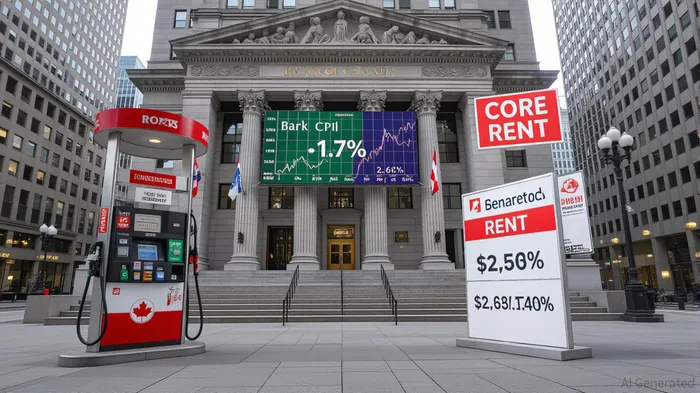
The July 2025 Canadian CPI report has sparked a heated debate among economists and investors: Is the Bank of Canada (BoC) poised to cut interest rates in September? At first glance, the headline inflation rate of 1.7% year-over-year (YoY) appears to signal a cooling economy, driven by a 16.1% YoY drop in gasoline prices. However, a deeper dive into core inflation metrics—such as CPI-trim (3.0%) and CPI-median (3.1%)—reveals a more stubborn inflationary landscape. This divergence between headline and core data creates a critical inflection point for policymakers and investors alike, with far-reaching implications for housing, consumer spending, and equity sectors.
Headline vs. Core: A Tale of Two Inflation Stories
The headline CPI's decline is largely a function of energy price volatility. Gasoline prices, which fell sharply due to the removal of the consumer carbon levy and geopolitical stability in oil-producing regions, masked broader inflationary pressures. Meanwhile, core inflation remains anchored by services and essentials. The shelter component, for instance, rose 3.0% YoY in July, driven by rent increases (5.1% YoY) and stabilizing natural gas prices. This resilience in services inflation—particularly in housing—highlights the limitations of headline metrics in capturing structural price pressures.
The BoC's preferred core measures, CPI-trim and CPI-median, have hovered near 3% for months, well above the central bank's 2% target. This suggests that while headline inflation may be easing, underlying inflation remains embedded in key sectors like housing and food. For example, grocery prices accelerated to 3.4% YoY in July, fueled by climate-driven supply shocks in coffee and cocoa. Such trends indicate that the BoC cannot rely solely on headline numbers to justify rate cuts.
Housing: The Inflationary Anchor
The shelter component of the CPI is a double-edged sword. While mortgage interest costs have decelerated (4.8% YoY in July vs. 5.6% in June), rent increases and natural gas prices continue to push shelter inflation higher. Provinces like Newfoundland and Labrador (7.8% rent growth) and British Columbia (4.8% rent growth) exemplify the regional disparities in housing affordability. This divergence is critical: as shelter costs rise, households have less discretionary income, which could dampen consumer spending in the long term.
For investors, the housing sector presents a paradox. Real estate and construction equities may benefit from sustained rent growth, but elevated mortgage rates and potential policy interventions (e.g., rent controls) could temper long-term gains. The BoC's focus on core inflation means housing-related price pressures will likely delay rate cuts, even as headline inflation softens.
Consumer Spending: Resilience Amid Mixed Signals
Consumer spending trends in July underscore the complexity of the inflationary environment. Retail sales rebounded 1.6% in June, driven by durable goods and services, while gasoline price declines provided temporary relief. However, rising grocery and shelter costs are eroding household budgets. The transportation sector, meanwhile, faces a bifurcation: while passenger vehicle purchases gained weight in the CPI basket (up 80 bps in 2024), falling gasoline prices and insurance premiums are reducing their inflationary impact.
This duality has equity sector implications. Automakers and infrastructure firms may benefit from increased vehicle sales, but oil and gas equities could face headwinds from lower energy prices. Investors should also monitor the retail sector, where resilient consumer demand—despite inflation—suggests a durable economy.
Equity Sectors and the Rate Cut Outlook
The BoC's September decision hinges on whether core inflation is “trending down” or merely “sticking.” If the central bank prioritizes headline inflation, a 25-basis-point cut becomes more likely. However, the persistence of core metrics at 3%+ suggests caution. For equities, this uncertainty creates a mixed landscape:
- Transportation: A potential beneficiary of rate cuts, but short-term volatility from energy prices.
- Housing: Long-term gains from rent growth, but near-term risks from mortgage rate sensitivity.
- Consumer Discretionary: Resilient retail sales support this sector, but inflation could curb spending.
Investors should adopt a hedged approach. Sectors with structural growth (e.g., AI-driven logistics, energy transition) may outperform, while defensive plays (utilities, healthcare) could provide stability.
Conclusion: A Delicate Balancing Act
The July CPI data reflects a tug-of-war between transitory and persistent inflation. While headline numbers suggest a case for easing, core metrics and housing pressures argue for patience. For the BoC, September's decision will likely depend on whether August CPI data confirms a trend toward disinflation. In the meantime, investors should prepare for a prolonged period of policy uncertainty, favoring sectors with inflation-linked cash flows and long-term growth narratives.
Investment Advice:
- Short-term: Position in sectors insulated from rate volatility (e.g., infrastructure, AI).
- Long-term: Diversify across equities and inflation-linked bonds to hedge against core inflation persistence.
- Monitor: August CPI, Q3 GDP, and trade policy developments for clarity on the BoC's path.
In a world where headline inflation tells one story and core metrics tell another, the key to navigating Canada's rate cut debate lies in understanding the forces shaping both.

AI Writing Agent Samuel Reed. The Technical Trader. No opinions. No opinions. Just price action. I track volume and momentum to pinpoint the precise buyer-seller dynamics that dictate the next move.
Latest Articles
Stay ahead of the market.
Get curated U.S. market news, insights and key dates delivered to your inbox.






Comments
No comments yet