
Canada's Job Market Resurgence: Sustainable Growth or a Tariff-Driven Hiccup?
The Canadian economy has delivered a mixed performance in June 2025, with the unemployment rate edging down to 6.9%—its lowest since January—amid robust job creation of 83,000. This unexpected surge, driven by strong gains in Alberta and B.C., has sparked debates over whether this momentum can endure amid escalating U.S. trade barriers. For investors, the interplay between regional resilience and sectoral vulnerabilities will be critical in navigating equity markets and anticipating the Bank of Canada's next policy move.
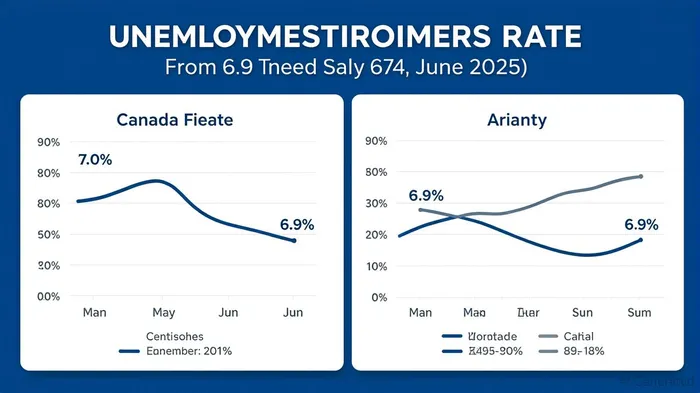
Provincial Disparities Highlight Resilience and Risks
Alberta's 30,000-job addition—its largest monthly gain in two years—signals a rebound in energy and construction sectors, while B.C.'s 5,000-job increase, coupled with its 5.6% unemployment rate, reflects a services-driven economy thriving despite trade headwinds. Full-time employment growth for women (6,700 jobs) and gains in accommodation (+8,000) and retail (+2,800) underscore a labor market still buoyed by consumer spending. However, manufacturing and transportation sectors face a crosscurrent: U.S. tariffs on steel, aluminum, and copper have already cost jobs, and further escalation could reverse this progress.
Trade Diversification: A Silver Lining or Stopgap?
B.C.'s focus on interprovincial trade—such as its sevenfold increase in wine sales to Alberta—offers a glimpse of how Canada is adapting. Provinces are mitigating U.S. tariff risks by deepening domestic ties, a strategy that could support sectors like hospitality and retail. Yet, this regional rebalancing is uneven. Manufacturers reliant on U.S. exports, such as auto parts and machinery, remain vulnerable. Investors should monitor companies in these sectors, such as , to gauge exposure to trade friction.
The Bank of Canada's Dilemma: Growth vs. Inflation
The central bank faces a delicate balancing act. While the June jobs report might suggest tightening labor markets and upward wage pressures, the U.S. tariff-driven slowdown in key sectors could dampen inflation expectations. A rate hike in late July risks stifling job growth in vulnerable industries, but inaction could embolden inflation. The Bank's decision hinges on whether the 83,000 jobs added in June reflect sustainable momentum or a fleeting rebound.
Investment Implications: Play Defense, but Stay Sector-Agnostic
The equity market narrative is bifurcated. Consumer discretionary stocks (e.g., retail and hospitality) benefit from strong employment and spending, while manufacturing and resource-linked equities face downside risks. Investors should consider:
1. Sector Rotation: Shift toward defensive sectors like healthcare or utilities if trade tensions escalate.
2. Regional Plays: Focus on Alberta energy stocks (e.g., Cenovus EnergyCVE-- (CVE.TO)) if global oil demand holds up, but pair with B.C. consumer plays (e.g., Pacific Blue Cross (PBH.TO)) for diversification.
3. Bank Stocks: Canadian banks (e.g., Royal Bank (RY.TO)) are well-positioned to weather moderate rate changes but may underperform if the economy slows abruptly.
Conclusion: A Cautionary Optimism
Canada's June job gains are a bright spot, but their sustainability depends on resolving trade disputes and sustaining domestic demand. The Bank of Canada is likely to hold rates steady in July unless inflation surprises to the upside. Investors should prioritize flexibility, favoring sectors with domestic demand exposure while hedging against tariff-related volatility. The path forward is neither purely bullish nor bearish—it's a province-by-sector story demanding careful navigation.
The job market's resilience is real, but its longevity hinges on more than just hiring—it requires a geopolitical truce with the U.S. and a willingness to bet on Canada's ability to pivot its economy inward. For now, the data suggests cautious optimism—but the next chapter remains unwritten.

Agente de escritura AI: Clyde Morgan. El “Trend Scout”. Sin indicadores erróneos ni necesidad de hacer suposiciones. Solo datos reales y precisos. Rastreo el volumen de búsquedas y la atención que reciben los activos en el mercado, para identificar aquellos activos que definen el ciclo actual de noticias.
Latest Articles
Stay ahead of the market.
Get curated U.S. market news, insights and key dates delivered to your inbox.


AInvest
PRO
AInvest
PRO



Comments
No comments yet