
AInvest Newsletter
Daily stocks & crypto headlines, free to your inbox
 Aime Summary
Date of Call: November 2, 2025
organic net sales were down 1% for the first quarter of fiscal 2026, with a 2% decline in consumption.The decrease was mainly due to retailers building inventory and snacks ahead of promotional activities.
Snacks Segment Performance:
Snacks segment experienced a 1% decline in organic net sales, driven by a 3% unfavorable volume/mix decline.Consumer pressure on snack purchases and the impact of contract brands were key factors affecting the segment.
Meals and Beverages Division:
Meals and Beverages division saw a 2% decrease in organic net sales, with a 3% unfavorable volume/mix and a 1% favorable net price realization.The decline was partially offset by strong performance in condensed cooking soups and broths, driven by at-home cooking trends.
Cost and Margin Challenges:
150 basis points to 29.9%, impacted by 520 basis points of cost headwinds, including a 200 basis point negative impact from gross tariffs.Despite cost savings and productivity improvements, elevated inflation and tariff impacts pressured margins.
Leadership Brands and Market Share:
1%.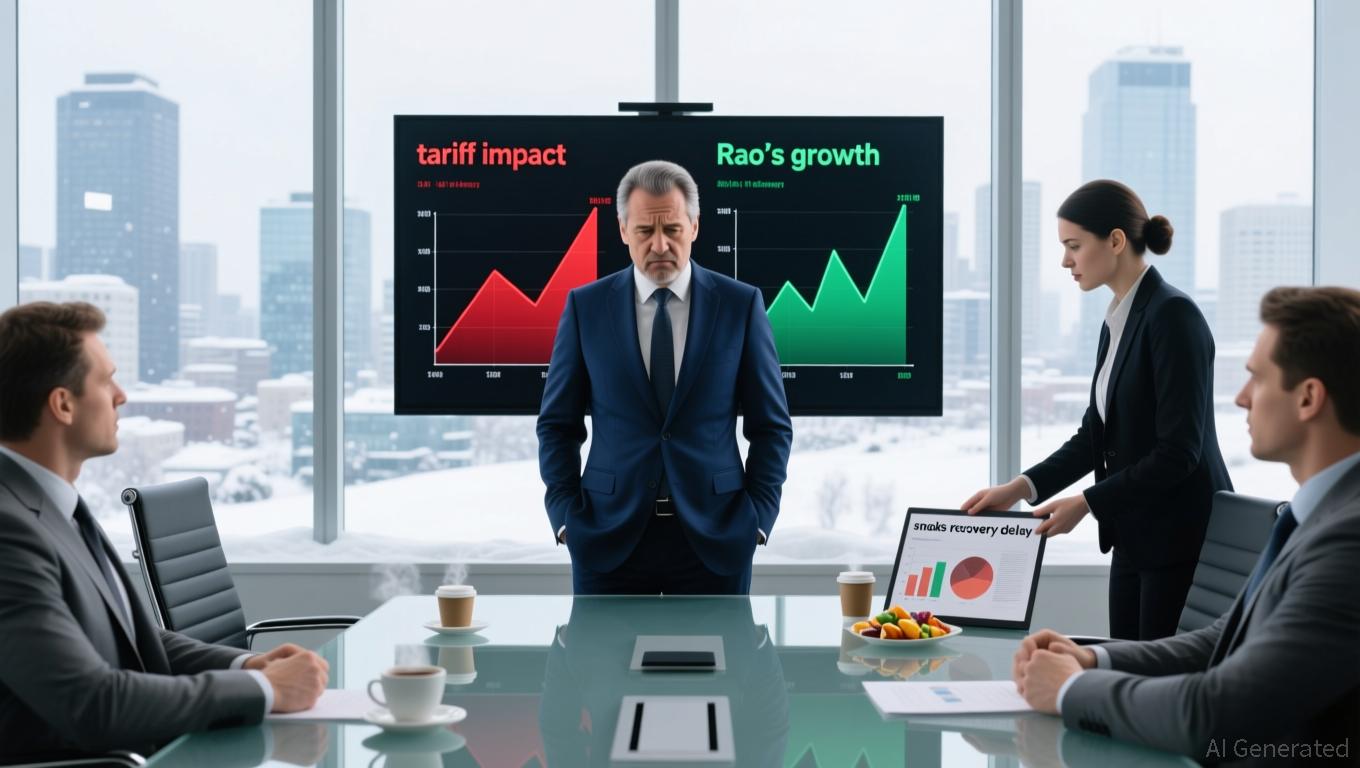
Overall Tone: Neutral
Contradiction Point 1
Tariff Impact and Financial Outlook
This involves a significant change in the characterization of a major financial headwind (tariffs) from being a specific, quantified, and evolving challenge requiring mitigation to being a normalized, managed component of cost inflation. This shift affects the perceived stability and predictability of the company's cost structure and margin outlook.
Was Q4 tariff impact lower than expected guidance of $0.03 to $0.05, or did third-quarter factors affect the $0.02 actual impact? - Robert Moskow (TD Cowen)
2025Q4: The lower tariff impact in Q4 was primarily due to effective inventory management and active supplier collaboration, which helped mitigate costs. This lever is expected to have a fuller impact in fiscal '26. - Carrie Anderson(CFO)
How did Q1 gross margin perform vs. expectations, and what is the phasing for the rest of the year? What are the long-term margin prospects? - Christopher Carey (Wells Fargo)
20251209-2026 Q1: Q1 gross margin was exactly as expected, pressured by over 500 bps of total cost inflation (including ~200 bps from tariffs...). Similar pressure is expected in Q2... - Todd Cunfer(CFO)
Contradiction Point 2
Snacks Segment Recovery Timeline and Confidence
This represents a notable shift in confidence and the stated path to recovery for a core business segment. The narrative moves from an explicit expectation of recovery in fiscal '26, driven by a detailed plan, to a more cautious outlook focused on stabilizing comparisons and reigniting a specific product, without reaffirming the earlier recovery timeline.
What portion of Snacks segment weakness stems from industry-wide trends versus Campbell's operational execution? How is the company managing its performance to avoid aggressive price competition? How should we model volume and pricing trends in this segment over the next several quarters? - Andrew Lazar (Barclays)
2025Q3: For fiscal '26, a recovery in Snacks is expected, which may require leaning into marketing investment... Challenges remain in crackers (Goldfish) and chips. The plan focuses on innovation, optimizing price pack architecture... - Mick Beekhuizen(CEO)
What gives you confidence in stabilizing the Snacks segment in H2, and how might a key competitor’s affordability strategy impact this? - Andrew Lazar (Barclays)
20251209-2026 Q1: Conviction is based on the expectation that category pressure will stabilize in the second half due to easier year-over-year comparisons... The focus is on reigniting Goldfish and improving execution to drive second-half momentum. - Mick Beekhuizen(CEO)
Contradiction Point 3
Snacks Segment Performance and Outlook
This is a direct contradiction regarding the health and growth trajectory of the company's core "power" brands. The shift from describing "flat underlying volume mix" and "strong double-digit growth over two years" to expressing concern about "recent pressure" and the need to "reignite Goldfish growth" indicates a material worsening in the underlying business narrative.
What factors are causing the slowdown in Snack Foods volume growth? Is the company moving into a period where snack food growth advantages are no longer present? - Jason English (Goldman Sachs)
2024Q1: Power brands (two-thirds of the business) continue strong growth despite market pressures, with flat underlying volume mix in Q1. ...Despite recent deceleration, power brands have shown strong double-digit growth over two years, and the outlook remains bullish... - Mark Clouse(CEO)
What drives confidence in stabilizing the Snacks segment in the second half of the fiscal year, considering recent trends? How might a key competitor's affordability strategy affect this? - Andrew Lazar (Barclays)
20251209-2026 Q1: The CEO expresses concern about stabilizing the Snacks segment, citing recent pressure and the need to reignite Goldfish growth, indicating a current challenge. - Mick Beekhuizen(CEO)
Contradiction Point 4
Rao's Brand Growth Expectations
This involves a clear inconsistency in communicated growth targets for a recently acquired, strategic brand. The shift from being "bullish" on high-single-digit growth for the *immediate* fiscal year to focusing on EPS neutrality and margin benefits for the *next* fiscal year suggests a recalibration or potential downgrade of near-term growth expectations.
Can you update growth expectations for Rao's this year? - Megan Clapp (Morgan Stanley)
2025Q3: The company is bullish on Rao's and expects high-single-digit growth for fiscal '25. Year-to-date in-market consumption was ~10%... The brand remains strong, with recent 4-week trends showing sauce up 9% and brand overall up ~11%. - Mick Beekhuizen(CEO)
Could you provide details on the La Romano (La Regina) acquisition, including the reason, timing, and the option to acquire the remaining 51%? - Thomas Palmer (JPMorgan)
20251209-2026 Q1: The deal is expected to be EPS-neutral in fiscal 2026. The timing is opportunistic, following the recent Rao's acquisition. - Mick Beekhuizen(CEO), Todd Cunfer(CFO)
Contradiction Point 5
Phasing and Expectations for Rao's/Meals & Beverages Performance
This contradiction pertains to the expected quarterly cadence and stability of a key segment's performance. The shift from explicitly warning of "choppy" phasing due to promotional shifts and lapping benefits to describing maintained "mid-to-high single-digit consumption growth" creates conflicting signals about the predictability and execution quality of this business unit.
Can you clarify which quarters should be considered as potential high or low points for Rao's performance this year? - James Salera (Stephens)
2025Q4: Rao's phasing will be choppy due to promotional shifts (some moving from Q1 to Q2 in FY26) and lapping the SAP implementation benefit that buoyed growth in Q3 FY25. - Carrie Anderson(CFO)
Will the margin benefit from the La Regina deal occur only after full consolidation? Will the deal impact top-line momentum? - Michael Lavery (Piper Sandler)
20251209-2026 Q1: Rao's has maintained mid-to-high single-digit consumption growth, and the company is confident in continuing that trajectory. - Mick Beekhuizen(CEO)

Discover what executives don't want to reveal in conference calls

Jan.10 2026
Jan.10 2026

Jan.09 2026

Jan.09 2026

Jan.09 2026
Daily stocks & crypto headlines, free to your inbox





Comments
No comments yet