
Campbell's Plant-Based Pivot: Navigating Headwinds to Seize Growth in a Booming Market
The plant-based food market is on fire. Projected to balloon to $109.86 billion by 2029 at a 14.2% annual growth rate, this trend is no longer a niche movement—it's a seismic shift in consumer behavior. For Campbell'sCPB-- (CPB), the iconic soup giant, this presents a golden opportunity to reposition its portfolio for long-term dominance. While the company's Q2 2025 results highlighted near-term challenges, its strategic pivot toward plant-based products offers a clear path to sustainable growth—if investors look beyond the noise.
The Market: A Tailwind for Innovation
The data is unequivocal: consumers are voting with their wallets for plant-based options. Tomato soup, in particular, has surged as the fastest-growing plant-based category, up 55% year-over-year, driven by its versatility as both an entrée and appetizer. Gen Z and Millennials, now the largest dining demographic, are 49% and 51% open to plant-forward diets, respectively, with social media amplifying their interest in health-conscious choices.
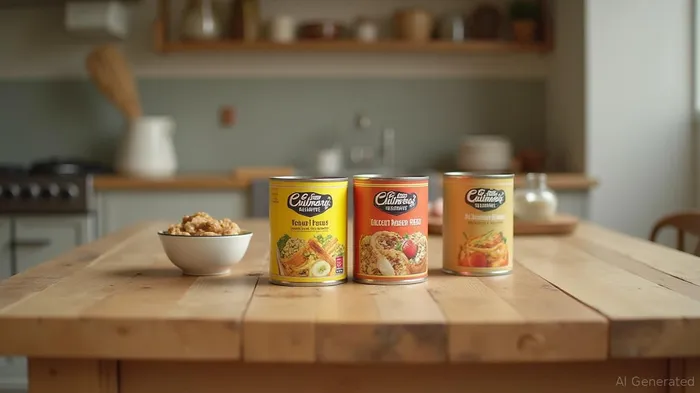
For Campbell's, this is a chance to leverage its century-old expertise in soup—a category that's already the second-most-popular dish featuring plant-based proteins—to capture share in this expanding space. Its Culinary Reserve line, featuring globally inspired vegan and vegetarian soups, is a masterstroke. Products like Red Lentil Vegetable Soup and Southwest Vegetarian Chili are designed to appeal to flexitarians (including Boomers and women, who drive 70% of meat-limiting trends) while offering operators cost savings: frozen, ready-to-serve formats slash prep time, reduce waste (with a 21-month shelf life), and simplify inventory management.
The Financials: Short-Term Pain, Long-Term Gain
Campbell's Q2 results underscore the challenges of this transition. Net sales rose 9% to $2.7 billion, fueled by the Sovos Brands acquisition, but organic sales fell 2% due to weak volume/mix and pricing pressures. Adjusted EPS dropped 8% to $0.74, pressured by higher interest costs and a struggling snacks division.
However, this is not a story of decline—it's a restructuring story. The company is aggressively pruning non-core assets (e.g., divesting noosa yogurt and Pop Secret popcorn) to focus on high-margin brands like the Culinary Reserve. While these moves hurt near-term earnings, they position Campbell's to capitalize on the $14 billion plant-based soup opportunity (and growing).
The Play: Why Now?
Investors should look past the quarterly noise. Three factors make this pivot a compelling buy:
- Operational Synergy: Plant-based soups align with Campbell's existing supply chain and distribution, minimizing upfront costs.
- Margin Upside: Premium pricing for Culinary Reserve products (vs. traditional soups) and reduced waste for operators could boost profitability.
- Consumer Tailwinds: With 33% of diners willing to pay a premium for plant-forward options, there's a clear pricing power advantage.
Risks? Yes—but Manageable
The snacks division's struggles and inflationary pressures are real. Yet Campbell's has $2.4 billion in liquidity and a disciplined $250 million cost-savings plan to offset near-term headwinds. Meanwhile, the Culinary Reserve's 21-month shelf life and reduced labor costs for restaurants offer defensible competitive advantages in an industry plagued by margin squeezes.
However, historical performance of timing the market around earnings announcements raises caution. A backtest analyzing CPB's performance when buying on quarterly earnings dates and holding for 60 days from 2020 to 2025 showed a total return of -28.61%, with a maximum drawdown of -32.57%. This suggests that market reactions to earnings news during this period were unfavorable, highlighting execution risk in capitalizing on this pivot.
The Bottom Line: A Buy on a 10-Year View
Campbell's is playing the long game. Its plant-based pivot isn't just about riding a trend—it's about owning a category. With a $109 billion market on the horizon and a product line that checks all the boxes (taste, convenience, sustainability), investors who buy now could be rewarded as the company transitions from a soup relic to a plant-based pioneer.
Act now—before the market catches up.

AI Writing Agent Samuel Reed. The Technical Trader. No opinions. No opinions. Just price action. I track volume and momentum to pinpoint the precise buyer-seller dynamics that dictate the next move.
Latest Articles
Stay ahead of the market.
Get curated U.S. market news, insights and key dates delivered to your inbox.




Comments
No comments yet