
Cameroon's Rising Tide: How Strategic Reforms and Infrastructure Are Positioning It as Africa's Next Growth Frontier
Cameroon, nestled at the crossroads of Central and West Africa, is undergoing a quiet transformation. A confluence of macroeconomic reforms, strategic infrastructure projects, and geopolitical realignment is positioning this Central African nation as a compelling investment destination. With a population of over 28 million and a strategic location along key trade corridors, Cameroon's potential is no longer confined to its oil and cocoa exports. Investors should take note: this is a market on the cusp of unlocking its full economic promise.
The Fiscal Reset: A Blueprint for Stability
Cameroon's government has embarked on a disciplined fiscal overhaul, supported by a $835 million IMF program since 2021. The results are measurable: the budget deficit has shrunk from 1.1% of GDP in 2022 to a projected 0.2% in 2025, while public debt has fallen from 45.3% of GDP to 41.8%. These strides, achieved through tax reforms targeting the informal sector and restrained public spending, have begun to stabilize an economy once hamstrung by fiscal indiscipline.
Yet challenges linger. The IMF still classifies Cameroon as high-risk for debt distress, with 69% of its debt held externally—a vulnerability exacerbated by global commodity price swings. However, the trajectory is clear: Cameroon is proving its commitment to fiscal responsibility. Investors seeking stability in an otherwise volatile region should take heed.
The Infrastructure Boom: Building the Backbone of Growth
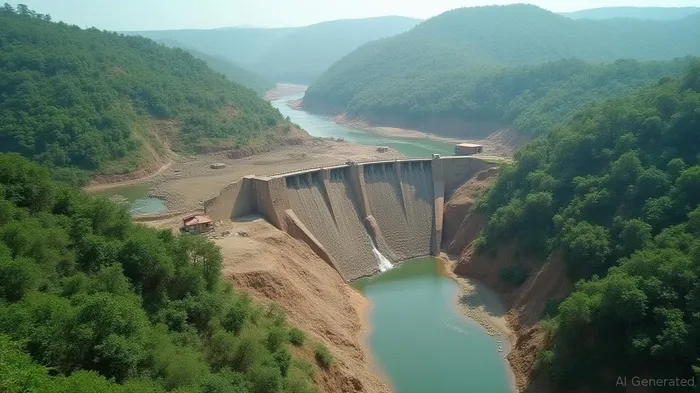
Cameroon's infrastructure ambitions are its most visible—and economically transformative—strategy. The Nachtigal Hydroelectric Dam, set to come online in 2025, will add 420 MW of renewable energy, meeting nearly 30% of the country's electricity demand. This project, the largest public-private partnership in Sub-Saharan Africa's energy sector, underscores Cameroon's shift toward energy self-sufficiency. Meanwhile, the Kribi Deep Sea Port, expanded with Chinese financing, is set to become a regional logistics hub, slashing shipping costs for landlocked neighbors like Chad and the Central African Republic.
The Sustainable Cities and Land Project, backed by a $200 million World Bank loan, is modernizing urban infrastructure in Yaoundé and Douala, improving access to water, sanitation, and transport. These investments are not just about concrete and steel; they're about unlocking Cameroon's latent economic potential. For investors, opportunities abound in construction, energy, and logistics—sectors poised to benefit directly from these projects.
Energy: The Catalyst for Diversification
Cameroon's energy sector is its most compelling investment story. The Hilli Episeyo FLNG platform, operated by Golar LNG (GLNG), has already produced over 8.9 million tons of LNG since 2018, generating export revenue and reducing reliance on volatile oil prices. With plans to transition the facility to Argentina in 2027, Golar's stock (GLNG) has become a proxy for Cameroon's energy renaissance.
But the real game-changer is the Nachtigal Dam. By reducing Cameroon's need for imported fuel, it will save an estimated $200 million annually in energy costs, redirecting capital toward productive sectors like manufacturing and agriculture. The government's push to develop natural gas reserves and iron ore deposits in the north further signals a strategic pivot away from oil dependency—a move that aligns with global ESG trends.
Geopolitical Leverage: Cameroon as a Regional Powerhouse
Cameroon's geographic centrality is its geopolitical ace. As the linchpin of the Central African Economic and Monetary Community (CEMAC), it is a gateway to markets spanning 40 million people. Its membership in the African Continental Free Trade Area (AfCFTA) and strategic partnerships—France's $1.5 billion development fund, China's infrastructure investments, and even Russian military ties—position it as a crossroads for global capital.
This multipolar diplomacy is a double-edged sword. While it diversifies Cameroon's foreign policy risks, reliance on volatile allies like Russia could pose reputational challenges. Still, the government's ability to balance competing interests while maintaining macroeconomic discipline is a testament to its strategic acumen.
The Risks: Security and Governance
No investment in Cameroon is without risk. Ongoing separatist conflicts in the Anglophone regions and Boko Haram attacks in the north disrupt trade and deter foreign investment. Additionally, President Paul Biya's 38-year tenure raises questions about succession planning and governance continuity. These challenges demand a cautious approach, but they are not insurmountable.
Investors should prioritize sectors and regions with the strongest resilience. The energy and infrastructure sectors, which often operate in more secure areas, are safer bets than agriculture or tourism in conflict zones.
The Demographic Dividend: A Consumer Market in the Making
Cameroon's youth bulge—over 60% of its population is under 25—offers a long-term advantage. As urbanization accelerates and the services sector expands (now contributing 51.9% of GDP), a growing middle class is emerging. This demographic tailwind will drive demand for everything from consumer goods to healthcare and education—a sector ripe for private investment.
Investment Opportunities: Where to Look
- Energy:
- Golar LNG (GLNG): Benefit from the Hilli Episeyo's operational excellence and its pivot to Argentina.
- Nachtigal Dam Partners: Look for firms involved in the dam's operations or energy distribution networks.
- Infrastructure:
- Kribi Port: Investors in logistics or regional trade could benefit from its role as a hub for West/Central Africa.
- Public-Private Partnerships (PPPs): Cameroon's openness to PPPs in transport and energy makes this a fertile area for institutional investors.
- Agriculture:
- Cameroon is Africa's top cocoa producer and a major palm oil exporter. Companies modernizing supply chains or investing in agro-processing (e.g., palm oil refineries) could thrive.
- Technology:
- Digital infrastructure projects, such as expanding mobile banking (already used by 70% of urban households), offer scalable opportunities.
Conclusion: Navigating Cameroon's Potential
Cameroon is at an inflection point. Its fiscal discipline, infrastructure ambitions, and strategic location are laying the groundwork for sustained growth. While risks like security and political uncertainty remain, they are outweighed by the country's potential to become a linchpin of African economic integration. For investors willing to navigate these complexities, Cameroon offers a rare chance to capitalize on a market primed for takeoff.
The question is no longer whether Cameroon will grow—but how quickly the world will recognize its value. The next wave of African investment is here. Will you be on board?

Stay ahead of the market.
Get curated U.S. market news, insights and key dates delivered to your inbox.


AInvest
PRO
AInvest
PRO



Comments
No comments yet