
Cameroon's 2026 Budget and Its Implications for African Infrastructure Equity


 Aime Summary
High-Growth Infrastructure Exposure: A Double-Edged Sword
The 2026 budget prioritizes infrastructure as a catalyst for growth, with the Ministry of Public Works to road construction and maintenance. Key projects include the second phase of the Yaoundé–Douala Motorway and the Lolabe–Campo Expressway, which are expected to reduce regional disparities and stimulate trade according to OECD analysis. Additionally, , targeting the 81% of Cameroon's road network classified as communal, .
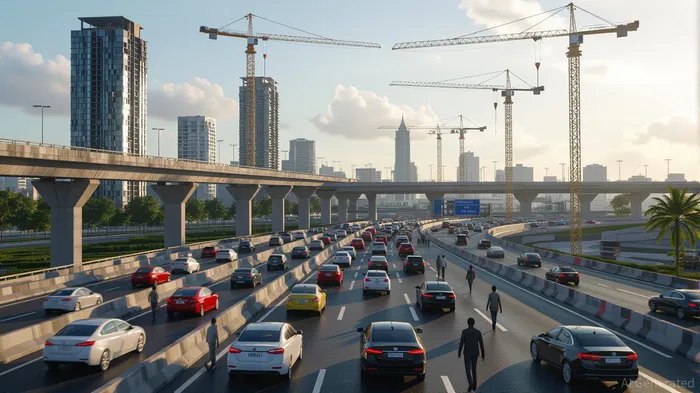
However, this aggressive infrastructure push is financed by a projected fiscal deficit of CFA 631 billion in 2026-a . The government plans to cover this shortfall through external loans, project-based financing, and domestic borrowing, despite warnings from analysts about "very high debt risk" amid global economic uncertainty and currency volatility according to financial reports. For investors, this creates a paradox: while infrastructure projects offer high-growth potential, the reliance on debt-driven expansion could undermine long-term fiscal stability.
Fiscal Sustainability and Regional Alignment
Cameroon's fiscal strategy for 2026 is framed as a balancing act between development and prudence. The budget aligns with the (Economic and Monetary Community of Central Africa) reference debt-to-GDP threshold of 70%, with the government projecting a 2026 debt-to-GDP ratio below this level. Additionally, the Ministry of Housing and Urban Development has for housing and urban development, reflecting a commitment to inclusive growth.
Yet, the alignment with international frameworks like the IMF's fiscal sustainability guidelines remains tenuous. The 2026 deficit is attributed to , in health and education, and debt servicing costs. While the government has outlined plans for fiscal consolidation-such as improved tax collection and expenditure management-these measures may struggle to offset the risks of over-reliance on borrowing according to economic forecasts. For African infrastructure equity, this underscores a broader challenge: how to scale transformative projects without exacerbating debt vulnerabilities in emerging markets.
Equity Gains vs. Systemic Risks
The 2026 budget's emphasis on communal road maintenance and youth employment programs highlights a focus on equity. , the government aims to improve access for rural populations, who have historically been marginalized in infrastructure planning according to public management reports. Similarly, according to .
However, the success of these initiatives hinges on effective implementation. A 2025 OECD report notes that infrastructure equity in Central Africa is often undermined by inefficiencies in public spending and weak governance according to . If Cameroon's 2026 projects fail to deliver on their promises, the fiscal risks-such as a widening current account deficit and rising external debt-could erode investor confidence and deepen inequality according to .
Conclusion: A Test Case for Emerging Markets
Cameroon's 2026 budget represents both an opportunity and a cautionary tale for African infrastructure equity. The scale of its infrastructure investments, , positions the country as a high-growth market for emerging market investors. Yet, the doubling of the fiscal deficit and reliance on external financing highlight the fragility of this model. For the broader continent, Cameroon's experience will serve as a test case: Can ambitious infrastructure projects be scaled sustainably, or will the pursuit of equity come at the cost of fiscal resilience?
As the government navigates this tightrope, stakeholders must prioritize transparency, debt management, and inclusive governance to ensure that infrastructure equity becomes a reality-and not a mirage.

Delivering real-time insights and analysis on emerging financial trends and market movements.
Latest Articles
Stay ahead of the market.
Get curated U.S. market news, insights and key dates delivered to your inbox.






Comments
No comments yet