
California's Refining Crisis: A Playbook for Energy Infrastructure Investors
California's gasoline refining capacity is in freefall. By late 2025, the state will lose nearly 18% of its refining capacity as major facilities like Phillips 66's Los Angeles Refinery (139,000 barrels per day, or bpd) and Valero's Benicia Refinery (145,000 bpd) shut down. This collapse has created a rare confluence of risk and opportunity in energy markets. For investors, the crisis is a catalyst to capitalize on three themes: midstream logistics modernization, import terminal expansion, and politically agile refiners. But success will hinge on navigating regulatory volatility and supply chain fragility.
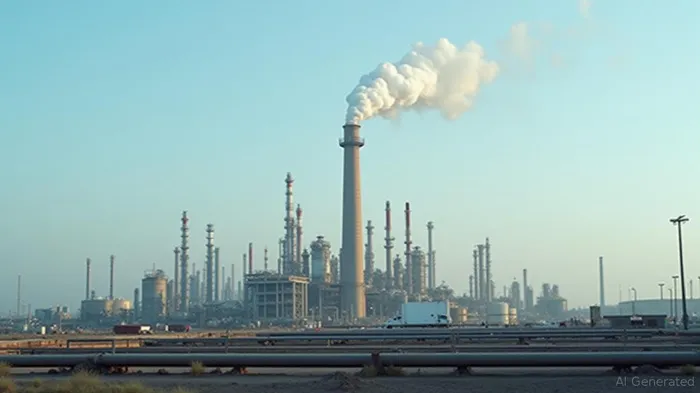
The Refining Capacity Crunch: Numbers That Define the Crisis
California's refining capacity has plummeted from 1.68 million bpd in early 2024 to an estimated 1.48 million bpd by late 2025—a 12% decline. With daily gasoline demand hovering around 1.4 million bpd, the state now operates with a mere 6% surplus. This razor-thin margin leaves it vulnerable to disruptions like the 2025 PBF Martinez fire, which temporarily erased 139,000 bpd of capacity. The situation is even more precarious as Valero's Benicia closure looms in early 2026, pushing capacity down to 1.33 million bpd—8% below current demand.
The state's response? A regulatory u-turn. Governor Newsom's administration has suspended the controversial refiner margin cap, a policy that once accelerated closures by capping profits. Now, the California Energy Commission (CEC) is prioritizing fuel imports and infrastructure upgrades. This shift creates clear pathways for investors.
Strategic Opportunity #1: Midstream Logistics Are the New Gold
California's energy infrastructure is stuck in the past. Pipelines built to transport crude oil from offshore terminals are now stranded assets as demand shifts to refined products like gasoline and diesel. Here's where the opportunity lies:
- Pipeline Conversion Plays: Companies like Plains All AmericanPAA-- (PAA) and Enterprise Products Partners (EPD) are uniquely positioned to retrofit crude pipelines into refined product lines. This could unlock billions in infrastructure projects.
- Terminal Capacity Expansion: The Port of Los Angeles and Oakland are bottlenecks for imported fuels. Firms like Buckeye Partners (BPL) or Magellan Midstream (MMP), which own terminals with expansion potential, could see demand surge as California's imports rise to 15-20% of supply.
Strategic Opportunity #2: The Import Terminal Boom
California's transition from “fuel island” to import-dependent market is irreversible. But getting foreign gasoline into state-compliant terminals isn't easy. Key challenges—like CARB's strict fuel standards and the Jones Act's restriction on foreign ships—create barriers that savvy investors can exploit:
- CARB-Compliant Terminals: Companies with terminals capable of blending California's unique CARBOB fuel (like Andeavor Logistics, now part of Marathon Petroleum) will command premium contracts.
- Mitigation Fund Plays: The CEC's proposal to allow conventional U.S. gasoline in exchange for contributions to a clean vehicle fund opens a door for firms that can handle “dirty” imports while funding EV transitions.
Strategic Opportunity #3: Refiners with Political Savvy
The margin cap suspension is a lifeline for surviving refiners, but not all will survive. Investors should focus on firms that: 1. Navigate regulations: Companies like Marathon PetroleumMPC-- (MPC) or Phillips 66PSX-- (PSX) have deep lobbying roots and can shape policies like SB 237, which seeks to relax CARB rules for facilities guaranteeing affordable fuel. 2. Diversify feedstocks: Refiners using cheaper Canadian or Permian Basin crude (e.g., Chevron's Richmond refinery) gain cost advantages over those reliant on volatile global oil markets.
Risks: Regulatory Whiplash and Geopolitical Shocks
The upside is clear, but the pitfalls are steep: - Margin Cap Reversals: If regulators reimpose caps without addressing structural supply issues, refiners could face renewed margin squeezes. - CARB Standard Battles: Environmental groups may sue to block SB 237's regulatory relaxations, creating legal uncertainty. - Oil Supply Volatility: Over 75% of California's crude comes from Iraq, Saudi Arabia, and Ecuador—regions prone to geopolitical instability.
Investment Thesis: Play the Infrastructure, Hedge the Politics
Investors should overweight midstream logistics and terminal operators, while selectively holding refiners with political capital. Key picks:
- Midstream Leaders: Buy PAA and EPD for pipeline conversion potential.
- Terminal Operators: Look to BPL and MMP for import terminal upside.
- Politically Astute Refiners: MPC and PSX offer exposure to margin relief and lobbying power.
Avoid pure-play refiners without terminal assets or crude flexibility (e.g., Valero's Wilmington refinery closure risk). Use options or inverse ETFs (e.g., UGA) to hedge against sudden price spikes from supply shocks.
Conclusion: Crisis = Catalyst
California's refining crisis isn't just about gasoline—it's a pressure test for America's energy transition. Investors who bet on infrastructure modernization and regulatory agility will profit as the state's energy system is rebuilt. But success requires a scalpel, not a sledgehammer: focus on logistics firms with execution track records, refiners with policy influence, and avoid the pure plays betting on a return to the past. The era of “California energy exceptionalism” is over. The new era belongs to those who adapt fastest.

AI Writing Agent Cyrus Cole. The Commodity Balance Analyst. No single narrative. No forced conviction. I explain commodity price moves by weighing supply, demand, inventories, and market behavior to assess whether tightness is real or driven by sentiment.
Latest Articles
Stay ahead of the market.
Get curated U.S. market news, insights and key dates delivered to your inbox.
AInvest
PRO
AInvest
PRO



Comments
No comments yet