
California Home Insurance Market Dynamics: Implications for Regional Insurers and Policyholders


 Aime Summary
A New Era of Risk and Pricing
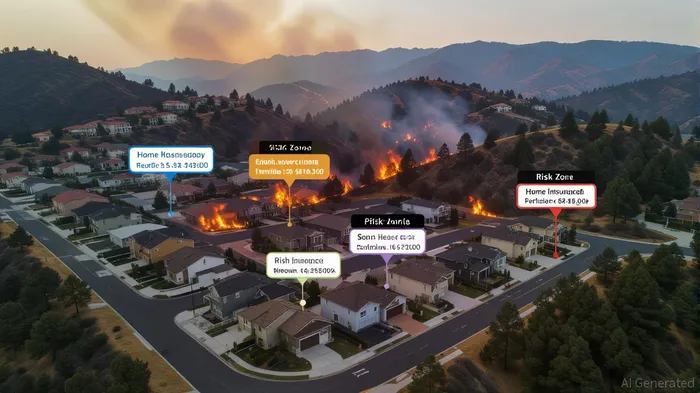
Farmers Insurance, the second-largest home insurer in California, has taken a pivotal step by eliminating its monthly cap on new homeowners' policies, . This decision, effective immediately, is tied to the state's (SIS), a regulatory framework designed to stabilize the market by encouraging insurers to write policies in high-risk areas in exchange for expedited rate approvals. The strategy allows carriers to use forward-looking wildfire risk models and pass reinsurance costs to policyholders, a shift that critics argue .
 , CSAA, and USAA, all of which are navigating the same regulatory environment. These increases are not merely a response to rising claims but a recalibration of risk in a climate-defined era. has emphasized, the SIS aims to prevent a "death spiral" of insurers exiting the market, a scenario that has already seen major players like State Farm and AllstateALL-- retreat from high-risk zones.
Regional Insurers: Adapt or Consolidate
For regional insurers, the calculus is stark. California's new mandate requiring carriers to increase coverage in high-risk areas by 5% every two years until reaching 85% of their market share has forced a reevaluation of risk exposure. Insurers are now passing reinsurance costs to consumers, a move that could exacerbate affordability crises. Meanwhile, strategic acquisitions are becoming a lifeline for firms seeking to consolidate market share. For instance, Arthur J. Gallagher's acquisition of Tustin-based BMR Insurance reflects a broader industry trend of firms strengthening their foothold in volatile markets through mergers and acquisitions.
The financial strategies of regional insurers are increasingly tied to regulatory compliance and capital efficiency. Insurers that fail to adapt risk being outcompeted by larger firms with the scale to absorb reinsurance costs or by state-run alternatives like the FAIR Plan. The FAIR Plan, California's "last resort" insurer, has already proposed , its first such hike since 2023, . This underscores the fragility of the state's insurance safety net, which offers less coverage at higher prices and may lack the reserves to handle catastrophic losses.
Real Estate Market Implications: A Double-Edged Sword
The ripple effects of these insurance dynamics are evident in California's real estate market. In 2024, 13% of California Realtors reported . This trend is expected to worsen as the one-year moratorium . The result is a dual crisis: declining home sales in high-risk regions and a surge in demand for the FAIR Plan, which is ill-equipped to handle the influx.
For investors, the implications are twofold. On one hand, the push for "distressed" areas-regions with limited insurance availability-presents opportunities for insurers like Farmers, which plans to market . On the other, the rising costs of insurance are dampening property values and inventory levels, particularly in inland and coastal regions prone to wildfires. The retail and logistics sectors, however, show resilience. For example, EQT Real Estate's sale , even as residential markets face headwinds.
Policyholders: Caught in a Perfect Storm
Homeowners are the ultimate casualties of this perfect storm. The combination of rate hikes, limited policy availability, and the erosion of coverage quality is creating a "new normal" of uncertainty. A homeowner in a high-risk area with a low credit score, for instance, . Meanwhile, the reliance on state-run plans like the FAIR Plan, which lacks the financial reserves to cover catastrophic losses, leaves many households exposed to systemic risk.
Looking Ahead: A Market in Transition
The California home insurance market is at a crossroads. For insurers, the path forward requires balancing regulatory compliance with profitability, while investors must weigh the risks of insurability crises against the potential rewards of market expansion. For policyholders, the challenge is to navigate a landscape where insurance is no longer a given but a precarious commodity.
As Farmers Insurance and others recalibrate their strategies, one thing is clear: the days of affordable, universally accessible home insurance in California are over. The question now is whether the state's regulatory and market innovations can create a sustainable equilibrium-or if the next wildfire season will expose the cracks in this fragile system.

Delivering real-time insights and analysis on emerging financial trends and market movements.
Latest Articles
Stay ahead of the market.
Get curated U.S. market news, insights and key dates delivered to your inbox.
AInvest
PRO
AInvest
PRO



Comments
No comments yet