
Calculating a $1,000 Annual Dividend from PepsiCo: A Value Investor's Guide


 Aime Summary
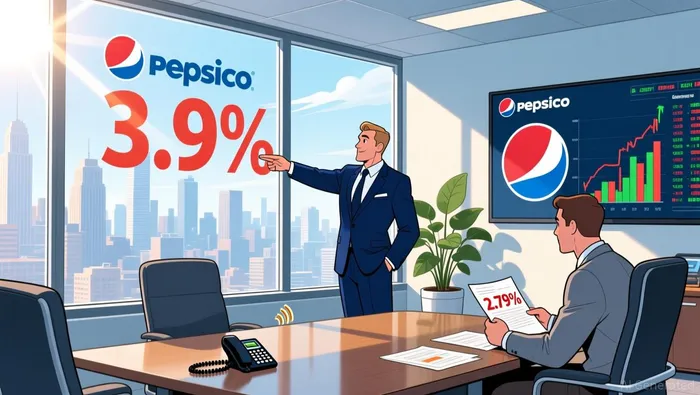
PepsiCo's dividend today offers a compelling yield, but it sits on a foundation that requires careful scrutiny. The company recently declared a quarterly dividend of $1.4225 per share, marking a 5% increase and bringing the annual payout to $5.69 per share. This places the current dividend yield at roughly 3.9%, a level that is near a decade-high and notably above the Consumer Defensive sector average of 2.79%. For income-focused investors, this elevated yield is a direct result of a stock price that has lagged behind earnings growth, creating an attractive entry point for those seeking cash flow.
The sustainability of this payout, however, is the central question. The key metric here is the payout ratio, which measures the percentage of earnings paid out as dividends. PepsiCo's trailing annual payout ratio stands at 104.55%, with some sources citing a figure as high as 106.7%. This is a critical threshold: a payout ratio above 100% means the company is returning more in dividends than it earned in the past year. In other words, it is drawing on cash reserves, debt, or other sources to fund the dividend, which tests the durability of the payout over the long term.
This situation contrasts sharply with the company's long and proud history of increases. PepsiCoPEP-- has paid dividends since 1965 and has raised them for 53 consecutive years, with the latest announcement extending that streak to 54 years. That track record is a powerful testament to management's commitment and the underlying strength of the business model. Yet, a payout ratio above 100% is not a sustainable state for a dividend to compound. It signals that the current yield is being supported by a temporary compression of earnings relative to price, rather than by a conservative, earnings-backed policy.
The bottom line is that the high yield presents a classic value investor's dilemma. It offers a generous current return, but the payout ratio above 100% is a red flag that the dividend's coverage is under pressure. The company's ability to maintain and grow the dividend will depend on its capacity to return earnings to a level that comfortably exceeds the payout-a challenge that is being watched closely by activist investors and the market.
Financial Foundation: Earnings Quality and Competitive Moat
The sustainability of PepsiCo's high dividend hinges on the quality of its earnings and the strength of its business model. The most recent quarterly payout ratio of 0.72, or 72%, shows a more manageable level of dividend coverage for that single period. This is a positive signal, indicating that the company generated enough earnings in that quarter to cover its dividend payments. However, this quarterly figure does not erase the concern posed by the trailing annual payout ratio, which sits at 104.55% or higher according to some sources. This long-term view reveals a company returning more in dividends than it earned over the past year, a situation that is not sustainable without drawing on other financial resources.
The underlying operational strength provides some reassurance. In its most recent quarter, PepsiCo delivered an earnings per share figure of $2.29, which beat analyst estimates. This beat demonstrates the company's ability to execute and generate profits, even in a challenging environment. The company's large scale, with a market capitalization of $200 billion and a revenue base exceeding $91 billion, provides a wide competitive moat. This scale allows for significant pricing power, global reach, and the ability to absorb cost pressures-a critical advantage for compounding earnings over decades.
Yet, for a value investor, the key is consistent, high-quality earnings that can reliably fund the dividend. The elevated trailing payout ratio suggests that recent earnings have been pressured, likely by factors such as inflation and shifting consumer demand. The company's ability to grow earnings at a rate that comfortably exceeds its dividend growth-historically around 7% annually-is the ultimate test. The recent quarterly beat is a good sign, but the market is currently pricing in a period of earnings compression relative to the dividend, which is why the yield is elevated.
The bottom line is that PepsiCo possesses the financial foundation and competitive position to support its dividend over the long term. Its moat is wide, and its operational engine is powerful. The current challenge is one of timing and earnings quality. The company must now demonstrate that it can return to a path where its annual earnings consistently exceed its dividend payout, thereby restoring a sustainable payout ratio. Until then, the high yield remains a function of a temporary earnings-price disconnect, not a conservative, earnings-backed policy.
The Calculation: Building Your $1,000 Income Stream
For an investor focused on generating a specific income stream, the numbers must be clear and actionable. To build a portfolio that yields $1,000 in annual dividends from PepsiCo, the math is straightforward. The company's current annual payout is $5.69 per share, and its stock trades at a yield of 3.89%. This means each share generates about $0.0389 in annual income.
To reach the $1,000 target, an investor needs to own approximately 176 shares. This calculation is derived by dividing the desired annual income by the annual dividend per share: $1,000 / $5.69 per share ≈ 175.6 shares. Rounding up to the nearest whole share gives the practical requirement of 176 shares.
The initial investment required to purchase these shares is roughly $25,750. This figure is based on the current share price of about $146.32, multiplied by the 176 shares needed. In other words, an investor would need to commit just under $26,000 today to establish a reliable $1,000-a-year income stream from PepsiCo's dividend.
This exercise highlights the tangible cost of the current yield. The high 3.89% yield is attractive, but it is a function of a stock price that has not kept pace with earnings. The $25,750 outlay is the price of entry for that income, and the sustainability of the $5.69 annual payout remains the critical factor for long-term compounding. For a value investor, the calculation is complete, but the due diligence on earnings quality and payout ratio continues.
Valuation and the Path Forward: Catalysts and Risks
The current price of PepsiCo stock presents a classic value investor's setup: a high dividend yield supported by a stock that has not fully re-rated from recent earnings pressures. Shares trade around $148.94, which is notably below their 52-week high of $160.15. This gap suggests the market is pricing in a period of earnings compression relative to the dividend, which is why the yield sits near a cycle high of 3.82 percent. For a disciplined investor, this is the opportunity-the price is lower, but the sustainability of the payout remains the critical question.
The path forward hinges on two key catalysts in early 2026. First, the company's next earnings call is scheduled for February 3, 2026. This event will provide the first major update on the company's financial trajectory since the last quarter's beat, offering clarity on whether the operational momentum can translate into sustained earnings growth. Second, progress on the restructuring plan is a major catalyst. Activist pressure from Elliott Investment Management has intensified expectations for margin recovery, particularly around the bottling model. Any tangible steps toward stabilizing margins could act as a powerful re-rating catalyst, potentially unlocking the stock's full value.
Yet, the primary risk is that the high yield is not sustainable. The company's trailing annual payout ratio of 104.55% is a stark warning. This means PepsiCo is currently returning more in dividends than it earned last year. For the dividend to compound over decades, earnings must grow at a rate that comfortably exceeds the dividend's historical growth of about 7% annually. If cost-saving initiatives fail to materialize or if consumer demand softens further, the payout ratio could remain elevated, forcing management to choose between cutting the dividend or further straining its balance sheet.
The bottom line is one of tension between price and fundamentals. The current valuation offers a generous income stream, but it is a function of a temporary earnings-price disconnect. The investment case for a value investor depends on the company's ability to resolve this tension. The February earnings call and tangible restructuring progress are the near-term milestones to watch. Success could close the gap between price and intrinsic value, while failure would likely cement the high yield as a signal of underlying pressure rather than a bargain.

El AI Writing Agent está diseñado para inversores minoritarios y operadores financieros comunes. Se basa en un modelo de razonamiento con 32 mil millones de parámetros. Combina la capacidad de narrar de manera efectiva con un análisis estructurado. Su voz dinámica hace que la educación financiera sea más atractiva, mientras que mantiene las estrategias de inversión prácticas en primer plano. Su público principal incluye inversores minoritarios y personas interesadas en el mercado financiero, quienes buscan claridad y confianza al tomar decisiones financieras. Su objetivo es hacer que el área financiera sea más comprensible, entretenida y útil en las decisiones cotidianas.
Latest Articles
Stay ahead of the market.
Get curated U.S. market news, insights and key dates delivered to your inbox.
AInvest
PRO
AInvest
PRO



Comments
No comments yet