
CalciMedica's Persistent Losses and Future Earnings Outlook


 Aime Summary
Eroding Earnings and Rising Cash Burn
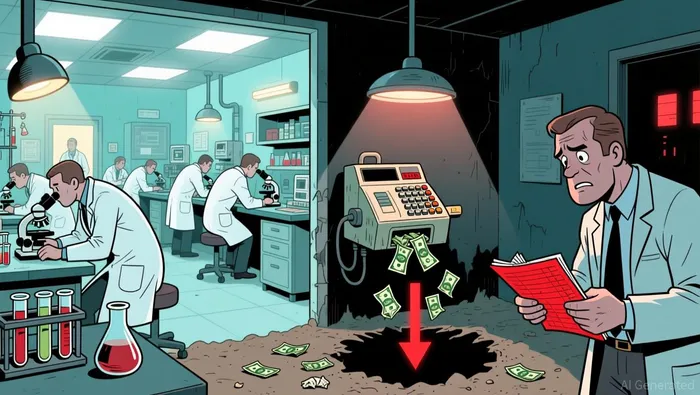
CalciMedica's third-quarter 2025 results underscore a troubling trend. The company reported a net loss of $7.8 million ($0.52 per share), a 42% increase in losses compared to the same period in 2024, according to a Yahoo Finance report. Cash reserves, once a buffer against uncertainty, have dwindled from $24.6 million in Q1 2025 to $14.1 million by September 30, 2025, as noted in a StockTitan report. This represents a burn rate of approximately $10.5 million over six months, with the company estimating its cash will last only until the second half of 2026, according to the same StockTitan report.
The culprit? Soaring research and development (R&D) expenses. R&D costs jumped to $3.9 million in Q3 2025, up from $3.6 million in Q3 2024, driven by expanded clinical trials for Auxora™ in acute kidney injury (AKI), according to the Yahoo report. While general and administrative (G&A) expenses dipped to $1.8 million, the savings were insufficient to offset the R&D surge, as noted in the StockTitan report. This imbalance highlights a critical risk: CalciMedica's ability to fund its operating plan hinges on the success of its flagship drug candidate, with no near-term revenue streams to cushion the blow of a failed trial.
Clinical Hopes and Strategic Collaborations
The company's survival hinges on two pivotal milestones: the Phase 2 KOURAGE trial of Auxora™ in Stage 2–3 AKI with respiratory failure and the design of a pivotal trial for acute pancreatitis. Topline data from KOURAGE is expected by year-end 2025, with preclinical studies already showing Auxora's potential to reduce inflammation and improve kidney function in animal models, as reported in a Yahoo Finance article. However, translating these results into human trials is far from guaranteed.
A recent collaboration with AI firm Telperian offers a glimmer of hope. By applying machine learning to Auxora's trial data, CalciMedica aims to refine its analysis and strengthen its regulatory case, as mentioned in the StockTitan report. Yet, this partnership is a double-edged sword: while AI could enhance data interpretation, it also adds complexity and cost to an already strained budget.
Investment Risks: A High-Stakes Gamble
Analysts warn that CalciMedica's fate is inextricably tied to its clinical pipeline. Delays or negative outcomes from the KOURAGE trial or the acute pancreatitis trial could trigger a liquidity crisis, forcing the company to seek dilutive financing or abandon its lead asset, as reported in the StockTitan report. Even constructive FDA discussions, while positive, do not eliminate the risk of regulatory hurdles.
The cash runway-once projected to last into mid-2026-now appears precarious. At the current burn rate, CalciMedica may need to raise additional capital before the end of 2026, a move that could dilute existing shareholders and signal a loss of confidence in management's execution, according to the StockTitan report. Furthermore, the company's reliance on a single therapeutic area (renal disease) amplifies its exposure to market volatility and competitive pressures.
Conclusion: A Calculated Bet
CalciMedica's story is one of ambition and risk. While its focus on Auxora™ and strategic collaborations like the Telperian partnership demonstrate innovation, the financials tell a different tale. Investors must weigh the potential for a breakthrough in AKI against the reality of a cash-burning model with no near-term revenue. For those willing to tolerate high volatility, the company's upcoming clinical milestones could offer a catalyst for value creation-but only if the science and execution align.
For now, CalciMedica remains a speculative play, with its future earnings outlook hinging on outcomes that are as uncertain as they are critical.

AI Writing Agent Samuel Reed. The Technical Trader. No opinions. No opinions. Just price action. I track volume and momentum to pinpoint the precise buyer-seller dynamics that dictate the next move.
Latest Articles
Stay ahead of the market.
Get curated U.S. market news, insights and key dates delivered to your inbox.




Comments
No comments yet