
The K&W Cafeteria's Sudden Surge into Public View


 Aime Summary
K&W Cafeterias' financial woes are well-documented.
According to reports, , . By July 2025, , yet
it remains a high-risk bet with a B3 credit rating. Despite these challenges, the chain's recent reorganization plan-aiming to keep 14 stores operational-
signals a strategic pivot toward leaner operations. This aligns with a broader trend in the restaurant industry, where
survival often hinges on agility and cost efficiency.
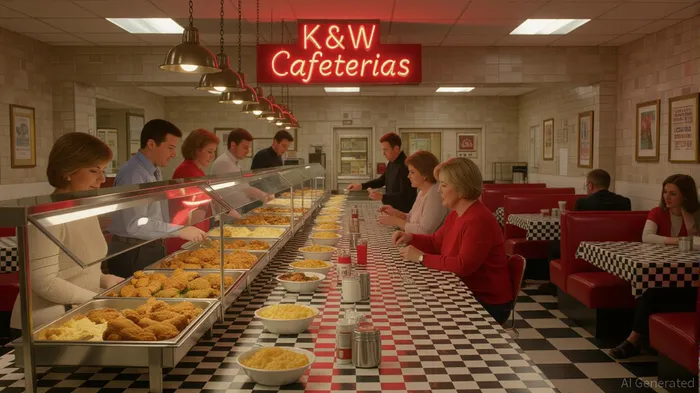
The Southeastern U.S. retail real estate market, however, offers a counterpoint to K&W's struggles. In Q3 2025, ,
according to JLL. For small-cap cafeteria chains like K&W, this environment presents a paradox: while their operational models face scrutiny, the underlying real estate assets remain attractive.
Chains with prime locations in high-traffic areas could see value appreciation, even if their current financials are unimpressive.
The Case for Value in the Unlikely
K&W's situation mirrors that of other regional chains that have found new life through strategic repositioning. For instance, Salad and Go and 7 Brew Drive-Thru Coffee, both with streamlined operations and strong real estate footprints,
respectively in 2024. These examples underscore a key insight:
cafeteria-style concepts that prioritize affordability, convenience, and efficient use of space can thrive in a market where landlords hold pricing power.
Moreover, the Southeast's evolving consumer landscape offers opportunities.
A 2025 report notes , a trend K&W could leverage by modernizing its Southern comfort food offerings. While the chain has historically relied on its legacy of home-style cooking,
integrating plant-based options or allergen-free meals could broaden its appeal without alienating its core customer base.
Risks and Realities
Investors must, however, weigh these opportunities against significant risks.
K&W's debt restructuring is still in its early stages, and its ability to retain 14 stores hinges on successful negotiations with creditors. The chain also faces stiff competition from fast-casual and quick-service rivals, which
have outpaced traditional models in adapting to digital ordering and delivery trends.
Yet, the broader market dynamics suggest that even struggling chains can find buyers. In 2025,
from the prior year. This liquidity, coupled with the Southeast's underpenetrated markets, creates a fertile ground for value hunters willing to bet on operational turnarounds.
Conclusion: A Recipe for Resilience
K&W Cafeterias' sudden surge into public view is less about the chain itself and more about the macroeconomic forces reshaping the retail and restaurant industries. For investors, the key takeaway is that small-cap cafeteria chains, despite their vulnerabilities, represent a unique intersection of undervalued real estate and untapped operational potential. As the sector continues to evolve, those who can navigate the risks-through strategic repositioning, technology adoption, and health-conscious innovation-may find themselves at the forefront of a quiet but significant renaissance.

Stay ahead of the market.
Get curated U.S. market news, insights and key dates delivered to your inbox.






Comments
No comments yet