
K&W Cafeteria's Sudden Closure and Its Ripple Effects on the Restaurant Sector


 Aime Summary
Supply Chain Fragility: A Silent Killer
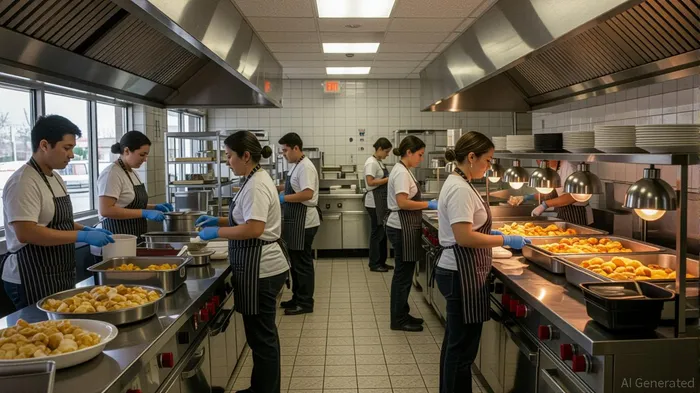 K&W Cafeteria's decline is inextricably linked to the fragility of its supply chain. While specific supplier details remain opaque, industry-wide trends reveal a sector grappling with rising costs and operational disruptions. A 2024 report by highlights how the food industry has faced "severe economic challenges" due to inflation, labor shortages, and global logistics bottlenecks. These pressures disproportionately affect buffet-style chains like K&W, which rely on high-volume procurement and tight margin management.
The chain's inability to adapt to these conditions became evident in its operational decisions. For instance, the Wilmington location shuttered in December 2024 due to prolonged renovations, a move that left it unable to sustain operations. This highlights a critical flaw: when supply chain delays or cost spikes force temporary closures, the financial strain often becomes insurmountable. For investors, this signals the need to prioritize businesses with diversified supplier networks and contingency planning.
Retail Real Estate Exposure: A Double-Edged Sword
K&W's fate is also tied to its reliance on traditional retail real estate, a sector undergoing rapid transformation. The chain's presence in malls and commercial hubs made it vulnerable to redevelopment trends. A case in point is the former K&W location at Chapel Hill's University Place mall, which was demolished in March 2024 and replaced by a Chick-fil-A. This shift reflects a broader pattern: retailers are increasingly favoring fast-casual and quick-service concepts over traditional dining formats.
The commercial real estate (CRE) market, while historically stable due to low vacancy rates, is not immune to these shifts. A 2025 analysis by KBS notes that "retail closures are reshaping commercial landscapes," with landlords prioritizing tenants that align with evolving consumer preferences. For K&W, this meant a dwindling pool of viable locations and escalating lease costs. The chain's 2020 Chapter 11 bankruptcy filing-amid pandemic-related restrictions-further illustrates how inflexible lease terms can exacerbate financial distress.
A recent Massachusetts bankruptcy court ruling in In re Herritt adds another layer of complexity. The decision clarified that lease termination and surrender are governed by federal law, potentially altering how landlords calculate claims during bankruptcies according to legal experts. This legal shift could embolden landlords to pursue stricter terms, increasing exposure for struggling tenants.
Sector-Wide Implications for Investors
K&W's collapse serves as a cautionary tale for investors. In the supply chain domain, businesses must prioritize resilience through localized sourcing, inventory buffers, and agile procurement strategies. For real estate, the lesson is equally clear: traditional mall-based models are increasingly untenable. Investors should favor operators with flexible lease terms and a presence in mixed-use or experiential retail environments.
Moreover, the interplay between supply chain and real estate risks cannot be ignored. A disruption in one can amplify vulnerabilities in the other. For example, K&W's inability to secure affordable locations likely exacerbated its supply chain challenges, as higher rent left fewer resources for supplier diversification.
Conclusion
K&W Cafeteria's demise is not an isolated event but a symptom of systemic weaknesses in the restaurant sector. As supply chain pressures persist and retail real estate evolves, businesses must adapt or face obsolescence. For investors, the path forward lies in scrutinizing operational flexibility, lease terms, and alignment with consumer trends. The lessons from K&W's closure are clear: resilience is no longer optional-it is a survival imperative.

Delivering real-time insights and analysis on emerging financial trends and market movements.
Latest Articles
Stay ahead of the market.
Get curated U.S. market news, insights and key dates delivered to your inbox.






Comments
No comments yet