
The K&W Cafeteria Closure: A Microcosm of Retail Resilience and Vulnerability


 Aime Summary
A Legacy in Decline
K&W Cafeteria's roots in home-style Southern cooking and family-centric dining made it a cultural touchstone for generations. However, its financial struggles began long before the final closure. , a move attributed to pandemic-related shutdowns that disproportionately impacted its older clientele and cafeteria-style model. Despite a Paycheck Protection Program loan that , the company's inability to adapt to post-pandemic realities-rising food costs, labor shortages, and shifting consumer preferences-ultimately sealed its fate.
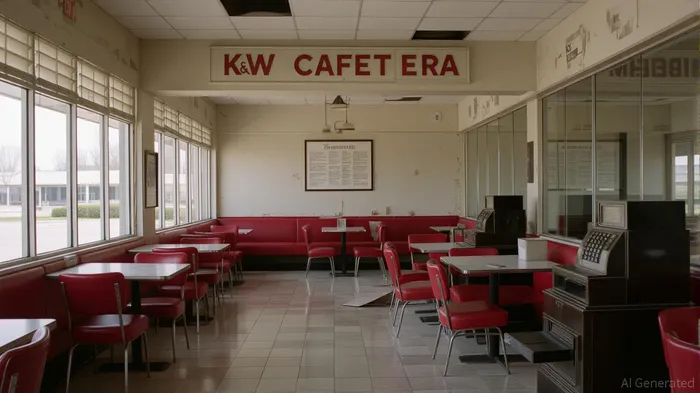 The closure reflects a broader pattern: traditional dining establishments, particularly those reliant on in-person, full-service models, have struggled to compete with fast-casual and delivery-focused alternatives. As noted by , the decline of cafeteria-style dining is part of a larger retail sector transformation driven by convenience, cost sensitivity, and health-conscious consumerism.
Economic Ripple Effects
The immediate impact of K&W's closure is felt most acutely in local communities. The loss of hundreds of jobs not only disrupts livelihoods but also reduces consumer spending in adjacent sectors, from retail to hospitality. For regions like North Carolina and Virginia, where K&W operated eight locations, the closures represent a blow to small-town economies that relied on the chain's presence for decades.
Moreover, the shuttering of K&W highlights the vulnerability of businesses tied to demographic shifts. The chain's core customer base-older, price-sensitive diners-has seen declining purchasing power and changing habits. As one expert observes, "The post-pandemic era has accelerated a trend toward value-driven, flexible dining options, leaving traditional models like K&W behind." This shift is compounded by a labor market that increasingly favors gig work and remote opportunities, further straining brick-and-mortar operations.
Broader Sector Risks
K&W's story is not an outlier. The Centre of Retail Research has warned , driven by inflation, supply chain disruptions, and evolving consumer expectations. For investors, the closure of a long-standing brand like K&W underscores the importance of evaluating a company's adaptability to macroeconomic trends.
The decline of cafeteria-style dining also mirrors the broader retail sector's struggle to balance nostalgia with innovation. While some businesses have successfully pivoted to online ordering, ghost kitchens, or hybrid models, others-like K&W-have failed to keep pace. As noted in a 2024 study, post-pandemic consumers prioritize convenience, health, and sustainability, often at the expense of traditional dining experiences. This shift has been further amplified by the rise of meal kits and home meal replacements, which now capture a significant share of the market.
Lessons for Investors
The K&W Cafeteria closure serves as a microcosm of the retail sector's dual nature: resilient in its ability to innovate, yet vulnerable to forces beyond individual companies' control. For investors, the key takeaway lies in identifying businesses that can navigate these shifts. This includes companies investing in digital integration, flexible labor models, and value propositions aligned with modern consumer priorities.
Conversely, caution is warranted for firms clinging to outdated models. The failure of K&W to adapt-despite its historical significance-demonstrates that even beloved brands are not immune to market forces. As the retail landscape continues to evolve, the ability to anticipate and respond to consumer behavior shifts will separate survivors from casualties.
Conclusion
The shuttering of K&W Cafeteria is more than the loss of a restaurant; it is a harbinger of the challenges facing the retail and foodservice industries. By examining its closure through the lens of economic trends, labor dynamics, and consumer behavior, investors gain critical insights into the sector's vulnerabilities and opportunities. In an era of rapid change, the lesson is clear: resilience lies not in tradition alone, but in the willingness to reinvent.

Delivering real-time insights and analysis on emerging financial trends and market movements.
Latest Articles
Stay ahead of the market.
Get curated U.S. market news, insights and key dates delivered to your inbox.






Comments
No comments yet