
Cabo Verde: A High-Growth Frontier Market in West Africa's Tech-Driven Transformation


 Aime Summary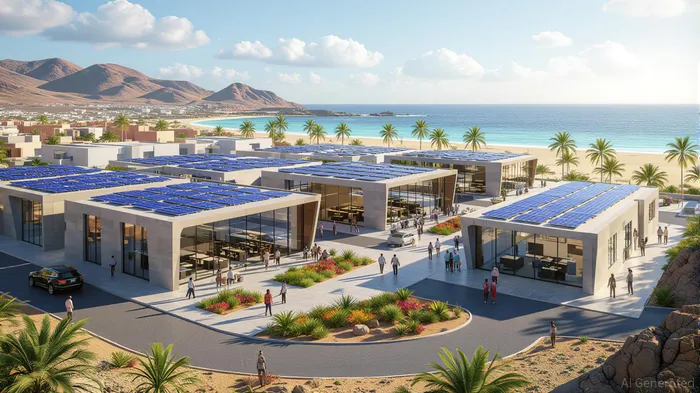
Cabo Verde, a small island nation in the Atlantic, has emerged as a compelling frontier market in West Africa, driven by strategic infrastructure investments, digital transformation, and a forward-looking policy framework. As global investors seek opportunities in emerging economies with structural resilience, Cabo Verde's unique blend of geographic advantage, political stability, and innovation-driven reforms positions it as a high-growth destination. This article examines how recent policy shifts, surging foreign investment, and tech-centric infrastructure projects are unlocking value in sectors like renewable energy, fintech865201--, and e-commerce, offering early-stage investors a window to capitalize on a nation poised for exponential growth.
Policy Reforms: Laying the Foundation for Sustainable Growth
Cabo Verde's 2023–2025 economic reforms have prioritized fiscal discipline, gender equality, and infrastructure modernization. The 2025 World Bank report, Unlocking Women's Economic Potential, highlights the country's progress in reducing poverty (now below pre-pandemic levels) and maintaining a fiscal deficit of just 1.1% of GDP. By addressing structural vulnerabilities—such as overreliance on tourism and state-owned enterprise (SOE) inefficiencies—the government has created a stable environment for long-term investment.
A critical pillar of this strategy is the push for SOE governance reforms and public infrastructure spending. For instance, the government has accelerated investments in transportation, energy, and digital connectivity, which are directly tied to economic diversification. These reforms are not just about growth but about building resilience against external shocks, such as climate-related disruptions and global commodity volatility.
Foreign Investment Inflows: A Surge in Confidence
Foreign direct investment (FDI) in Cabo Verde has surged in recent years, reflecting growing confidence in its economic model. In 2023, FDI reached $158.74 million, a 30% increase from 2022, and by Q1 2025, inflows hit 3,476.40 CVE million—a figure surpassing the 10-year average. This momentum is fueled by Cabo Verde's strategic location, political stability, and targeted incentives for tech and green sectors.
The launch of TechPark CV, a €50 million digital innovation hub backed by the African Development Bank, exemplifies this trend. By offering a 2.5% corporate tax rate, VAT exemptions, and a Special Economic Zone for Technologies (ZEET), the government has attracted global tech firms and startups. The project aims to create 1,500 high-value jobs and reduce tourism dependency, aligning with broader goals of economic diversification.
Digital Infrastructure: Building a Regional Tech Hub
Cabo Verde's digital infrastructure expansion is a cornerstone of its economic transformation. The Cabo Verde Regional Digital Connectivity project, supported by the European Investment Bank (EIB) with €37 million, is modernizing the country's subsea cable systems and connecting it to Google's Equiano cable. This initiative positions Cabo Verde as a digital transit point between Africa, Europe, and South America, leveraging its 75% internet penetration rate—one of the highest in sub-Saharan Africa.
The government's Connect Cabo Verde initiative is expanding affordable internet access to schools and public spaces, while partnerships with MicrosoftMSFT-- and Starlink are addressing connectivity gaps in remote islands. These efforts are complemented by the Economic Technology Zone (ZET), a regulatory sandbox inspired by Estonia and Rwanda, which offers tax incentives and flexible innovation rules to attract global tech talent.
Renewable Energy: A Green Transition with Global Appeal
Cabo Verde's renewable energy sector is a prime example of its forward-looking strategy. The country aims to generate 50% of its electricity from renewables by 2030, with wind and solar projects already contributing 20% of current output. Key projects include the Cabeólica Phase II wind expansion (adding 13.5 MW of capacity) and a 5 MW solar park on Sal Island, the largest in the country.
International funding, including €39 million from the EIB and €19.6 million from the African Development Bank, underscores the sector's scalability. These projects not only reduce reliance on imported fossil fuels but also create a blueprint for sustainable energy in island economies. For investors, Cabo Verde's renewable energy sector offers exposure to green infrastructure, energy storage innovation, and climate-resilient development.
Fintech and E-Commerce: Digital Inclusion as a Growth Engine
Cabo Verde's fintech ecosystem is gaining traction, driven by a young, tech-savvy population and supportive regulatory policies. The government's focus on financial inclusion has spurred the rise of local fintechs and partnerships with international institutions. Tax incentives and streamlined licensing processes are attracting startups in digital payments, blockchain, and microfinance.
E-commerce is also expanding rapidly, fueled by 80% internet penetration and initiatives like Digital Cape Verde, which supports tech entrepreneurship. While the sector is still nascent, the government's investments in logistics and digital infrastructure—such as electric vehicle charging stations and satellite internet—position it for exponential growth.
Investment Thesis: Why Cabo Verde?
Cabo Verde's combination of strategic infrastructure, digital innovation, and policy stability makes it a standout in West Africa's emerging markets. For early-stage investors, the following sectors offer compelling opportunities:
- Renewable Energy: Cabo Verde's wind and solar projects, backed by international funding, present a scalable model for green infrastructure.
- Fintech: A supportive regulatory environment and growing digital adoption make Cabo Verde a hub for financial innovation.
- E-Commerce: With a young, connected population and expanding digital infrastructure, the sector is primed for disruption.
However, risks remain, including climate vulnerabilities and reliance on tourism. Investors should prioritize companies with strong local partnerships and diversified revenue streams.
Conclusion: A Nation on the Rise
Cabo Verde's transformation from a tourism-dependent economy to a tech-driven, diversified hub is a testament to its strategic vision. By leveraging its geographic advantages, digital infrastructure, and policy reforms, the country is creating a fertile ground for innovation and investment. For those willing to act early, Cabo Verde offers a rare opportunity to participate in a frontier market with the potential to redefine West Africa's economic landscape.

Stay ahead of the market.
Get curated U.S. market news, insights and key dates delivered to your inbox.






Comments
No comments yet