
BYD to Start Local EV Assembly in Pakistan by 2026 to Bypass Import Restrictions and Cut Costs
 Aime Summary
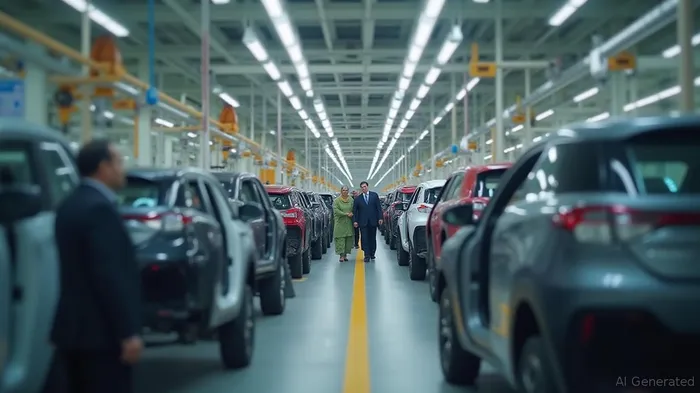
Chinese automaker BYD has announced plans to begin local assembly of electric vehicles (EVs) in Pakistan by mid-2026, a move signaling its expansion into South Asia’s emerging EV market. The company, which leads global EV sales, will partner with Mega Motor Company, a subsidiary of Pakistani utility Hub Power, to operate a 25,000-unit-per-year plant near Karachi. The facility, under construction since April, will initially focus on domestic demand but could eventually export right-hand-drive models if freight costs and market conditions align [1]. BYD Pakistan’s Vice President of Sales and Strategy, Danish Khaliq, stated the plant will combine imported parts with locally produced non-electric components, aiming to bypass import restrictions that have historically hindered EV adoption in the country [2].
The Pakistan venture is part of BYD’s broader strategy to diversify production beyond China, where declining profit margins have prompted the automaker to seek cost-advantaged locations. Khaliq noted that local assembly will reduce costs and enable the company to meet surging regional demand for plug-in hybrids, which are seen as more practical for Pakistani drivers due to limited public charging infrastructure. The government’s 45% tariff cut for EV chargers in January 2025 further supports this shift [1]. BYD’s Pakistan unit reported a profit of 444 million rupees (US$1.56 million) in the quarter ending March 2025, reflecting early success in the market [2].
BYD’s initial offerings will include the Shark 6 plug-in hybrid pickup truck, set to debut later this week. This model targets a market where traditional internal combustion engine vehicles dominate, but analysts suggest plug-in hybrids may gain traction as practical alternatives. Competitors like MG and Haval are also entering the segment, creating a competitive landscape for BYD to navigate [5]. Khaliq predicts total EV and plug-in hybrid sales in Pakistan could grow threefold to fourfold in 2025 from roughly 1,000 units in 2024, with BYD targeting a 30–35% market share in this segment [2].
The Pakistan project aligns with BYD’s global expansion into emerging markets, following similar moves in Southeast Asia and the Middle East. However, challenges remain, including supply chain disruptions and regulatory hurdles. Khaliq expressed confidence in meeting the mid-2026 production timeline, citing strong pre-order interest and government support for green energy initiatives. The company’s ability to integrate local components into its vehicles will be critical to achieving cost efficiency and long-term profitability [5].
Separately, BYD has announced a slower rollout for its Hungarian plant, delaying mass production until 2026 and operating below capacity for the first two years. Meanwhile, it plans to accelerate output in Turkey, leveraging lower labor costs—a shift that may impact European Union efforts to incentivize Chinese EV investment through tariffs. These strategic adjustments highlight BYD’s focus on optimizing production costs while expanding its global footprint [1].
Sources:
[1] [China's BYD to assemble EVs in Pakistan from 2026](https://www.reuters.com/sustainability/boards-policy-regulation/chinas-byd-assemble-evs-pakistan-2026-2025-07-24/)
[2] [BYD to launch first locally assembled EV in Pakistan by mid-2026](https://profit.pakistantoday.com.pk/2025/07/24/byd-to-launch-first-locally-assembled-ev-in-pakistan-by-mid-2026/)
[5] [BYD Pakistan to launch first plug-in hybrid electric pickup](https://profit.pakistantoday.com.pk/2025/07/24/byd-pakistan-to-launch-first-plug-in-hybrid-electric-pickup-shark-6/)

Stay ahead of the market.
Get curated U.S. market news, insights and key dates delivered to your inbox.


AInvest
PRO
AInvest
PRO



Comments
No comments yet