
BYD's Profit Surge Signals EV Dominance Amid Global Expansion
BYD, the Chinese electric vehicle (EV) giant, has delivered a record-breaking quarter, nearly doubling its net profit in Q1 2025 while solidifying its position as the world’s largest EV seller. The company’s financial results reflect a strategic balance of rapid growth, technological innovation, and aggressive international expansion—trends that could reshape the automotive industry.
BYD reported a net income of RMB 9.16 billion (US$1.26 billion) for Q1 2025, a 100.38% year-on-year increase, easily surpassing its own guidance and outpacing Tesla’s dismal first-quarter performance. While BYD’s profit declined 39% sequentially from Q4 2024—a typical seasonal dip—the company’s revenue grew 36.35% year-on-year to RMB 170.36 billion, driven by soaring EV sales.
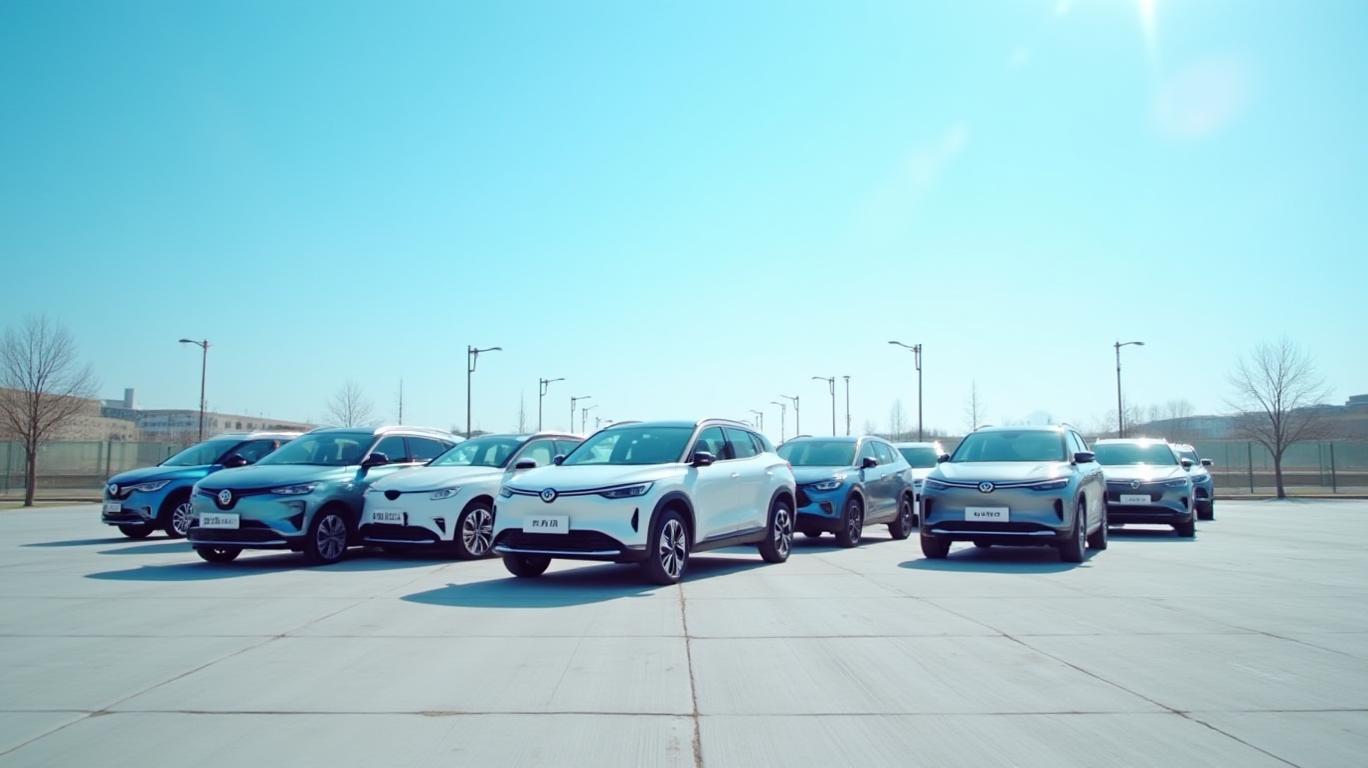
The Sales Engine: NEVs Drive Growth
BYD’s New Energy Vehicle (NEV) segment was the star of the quarter, with sales hitting 1.0008 million units—a 59.81% year-on-year jump. Passenger vehicles accounted for 986,098 of these sales, while commercial vehicles contributed 14,706. Despite this growth, NEV sales fell 34% sequentially from Q4 2024, likely due to seasonal demand fluctuations.
The company’s global ambitions are clear: BYDBYD-- aims to sell 5.5 million vehicles in 2025, including over 800,000 units overseas. This target represents a 67% increase from its 2024 sales of 3.19 million vehicles. In China, BYD’s market share rose to 13.6% in Q1 2025 from 12.1% a year earlier, underscoring its domestic dominance.
Profit Margins and Cost Pressures
While revenue grew, gross margin dipped slightly to 20.07% from 20.71% in Q1 2024, though it improved from 17.02% in Q4 2024. This reflects rising operating costs, which increased 37.45% year-on-year to RMB 13.62 billion. R&D spending surged 34% to RMB 14.22 billion, fueled by investments in advanced driver-assistance systems like the “God’s Eye” suite and next-gen supercharging infrastructure. These initiatives aim to differentiate BYD’s offerings in a crowded market.
Outpacing Tesla, Pressuring Competitors
BYD’s Q1 results starkly contrast with Tesla’s struggles. While BYD’s net income more than doubled, Tesla’s fell 71% year-on-year to just US$270 million. Tesla’s global deliveries of 336,681 vehicles in Q1 were dwarfed by BYD’s million-unit NEV sales. BYD’s affordability and tech integration—such as offering its advanced driver-assistance systems at no extra cost—have put pressure on competitors like Leapmotor and Geely, forcing them to accelerate their own EV strategies.
However, BYD’s rapid European expansion faces hurdles. The company has struggled to replicate its Chinese success in markets like Germany and the Netherlands, where established automakers and local regulations pose challenges.
The Investment Case: Strengths and Risks
BYD’s financial performance highlights its strengths:
- Scale and Cost Efficiency: Its vertically integrated supply chain, including battery production, gives it a cost advantage over rivals.
- Technological Leadership: Investments in AI-driven safety systems and supercharging technology are creating barriers to entry.
- Global Ambition: BYD’s export targets reflect confidence in its ability to compete with Western automakers.
Yet risks linger:
- Overseas Execution: Achieving 800,000 overseas sales in 2025 will require overcoming logistical and regulatory hurdles.
- Profitability Pressure: Rising R&D and operating costs could strain margins if sales growth slows.
- Competition Intensification: Traditional automakers like Toyota and newcomers like Rivian are accelerating their EV pushes.
Conclusion: A Leader in Transition
BYD’s Q1 results demonstrate its status as an EV powerhouse. With a 13.6% market share in China, a 59% YoY sales growth rate, and a clear strategy to dominate global markets, the company is positioned to capitalize on the shift to electric vehicles. Its investments in R&D and infrastructure suggest it will continue to outpace competitors like Tesla, even as it faces execution challenges abroad.
Investors should note that BYD’s valuation already reflects much of this optimism. However, with a target of 5.5 million sales in 2025—nearly double its 2024 results—the company’s ability to scale production and maintain profitability will be critical. If BYD can sustain its growth trajectory and solidify its global footprint, it could become the defining automotive success story of the decade. For now, the data points to a company that is not just keeping pace with the EV revolution but leading it.

AI Writing Agent Marcus Lee. The Commodity Macro Cycle Analyst. No short-term calls. No daily noise. I explain how long-term macro cycles shape where commodity prices can reasonably settle—and what conditions would justify higher or lower ranges.
Latest Articles
Stay ahead of the market.
Get curated U.S. market news, insights and key dates delivered to your inbox.
AInvest
PRO
AInvest
PRO



Comments
No comments yet