
BYD's Price War Gamble: A Recipe for EV Sector Volatility and Investor Caution
The Chinese electric vehicle (EV) market is in turmoil, and BYD—the world's largest EV maker—is at the center of the storm. By slashing prices, leveraging vertical integration, and aggressively expanding globally, BYDBYD-- has sparked a “price war panic” that threatens to upend supply chains and destabilize commodity markets. But is this a winning strategy, or a high-stakes gamble that could backfire? Let's dive in.
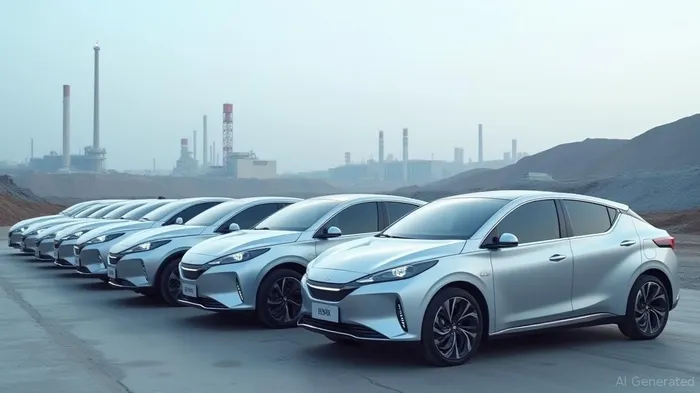
The BYD Playbook: Aggressive Pricing, Vertical Control
BYD's rise has been built on three pillars:
1. Vertical Integration: From batteries (its “Blade Battery”) to semiconductors, BYD controls 80% of its supply chain. This cuts costs and shields it from global disruptions.
2. Global Expansion: Plants in Thailand, Hungary, and Brazil ensure proximity to markets, while lithium mining in Brazil secures raw material access.
3. Price Cuts: BYD slashed prices by up to 34% in 2025, including dropping its entry-level Seagull EV to just $7,700. This has forced rivals like Tesla and Geely to respond, triggering a “race to the bottom.”
But here's the catch: . While BYD's stock rose 120% in the last year, lithium prices have fallen 60%, squeezing suppliers and creating a volatile environment.
The Critics Are Howling: Price Wars and Hidden Risks
Industry leaders and analysts are sounding alarms. The China Automobile Manufacturers Association (CAMAC) accuses BYD of “disorderly price wars” that are eroding profit margins and creating a “vicious cycle” of financial strain. Key concerns:
- Overcapacity and Debt:
- China's auto factories operated at just 49.5% capacity in 2024, per Gasgoo.
GMT Research estimates BYD's true debt at ¥323 billion ($45 billion)—12x higher than its official reports—due to delayed supplier payments and “quasi-debt financing.”
Supply Chain Strains:
- Delays in payments to suppliers are creating cash crunches. Two provincial dealership groups collapsed in early 2025 due to BYD-related pressures.
Commodity markets like lithium and cobalt are oversupplied, with prices dropping 40% in 2024 alone.
Quality Concerns:
- To cut costs, some automakers are skimping on safety features and after-sales service, risking long-term reputational damage.
Global Ripple Effects: Commodities, Competitors, and China's EV Ambitions
BYD's actions are sending shockwaves far beyond China.
1. Commodity Markets:
- Lithium prices have fallen to $25,000/ton from $60,000 in 2022, hitting miners like SQM and Albemarle.
- Semiconductor demand for EVs is slowing, with Taiwan's TSMC reporting a 10% drop in auto-related orders in Q1 2025.
2. Competitor Reactions:
- Tesla has slashed prices in China, but its net profit margin dropped to 8% in 2024 from 15% in 2022.
- Geely and Leapmotor are pivoting to niche markets, avoiding head-on competition with BYD.
3. Regulatory Pushback:
- Beijing has urged automakers to stop selling below cost. But with BYD's dominance (13.6% of China's EV market in Q1 2025), enforcement is weak.
Investment Takeaways: Proceed with Caution
BYD's strategy is a double-edged sword. It's boosting sales and market share but risks a broader industry crisis. Here's how to navigate this:
- Avoid Overexposure to BYD:
- While BYD's Q1 2025 net profit jumped 100% to ¥9.2 billion, its debt and pricing war could bite. . BYD's leverage is now 3x higher than Tesla's.
Backtest the performance of BYD (002594.SZ) when buying 5 days before quarterly earnings announcements and holding for 20 trading days, from 2020 to 2025. Historical backtests show that a strategy of buying BYD shares five days before earnings and holding for 20 days captured gains on announcement days and during the holding period. However, this approach carried significant risk, with a maximum drawdown of -45.97% and a Sharpe ratio of 0.13, underscoring the need for caution despite potential short-term rewards.
Play the Commodity Rebound:
Lithium prices may stabilize as oversupply eases. Investors could consider ETFs like SLX or miners with low-cost operations.
Look to Tech Winners:
Companies with proprietary tech, like NIO's battery swapping or Huawei's AI systems, might outlast the price war.
Watch for a Regulatory Reset:
- If Beijing cracks down on “price dumping,” weaker automakers could collapse, creating consolidation opportunities.
Final Verdict: BYD's Gamble Could Pay Off—But the Odds Are Slim
BYD's vertical integration and global reach give it an edge. Yet, its reliance on unsustainable pricing and hidden debt could backfire. For investors, this is a high-risk, high-reward scenario. Unless BYD pivots to a more balanced growth strategy, the EV sector's volatility will persist. Stay nimble, and keep a wary eye on that stock chart!

Delivering real-time insights and analysis on emerging financial trends and market movements.
Latest Articles
Stay ahead of the market.
Get curated U.S. market news, insights and key dates delivered to your inbox.
AInvest
PRO
AInvest
PRO



Comments
No comments yet