
BYD's Hungary Gambit: How China's EV Giant is Bridging Geopolitics and Industry to Dominate Europe
BYD's $94 million investment in Hungary—a move to triple its annual production of electric buses and trucks to 1,250 units—marks a bold strategic play in Europe's electric vehicle (EV) race. By leveraging Hungary's pro-China stance and its geographic centrality in Europe, BYDBYD-- is not just expanding capacity but positioning itself as a geopolitical and industrial bridge between China and the EU. This article dissects the implications of this move, weighing geopolitical risks against growth opportunities, and argues why investors should pay close attention to this under-the-radar EV disruptor.
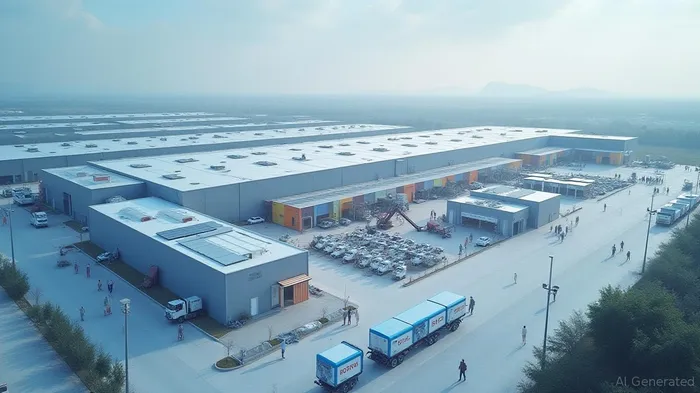
Hungary: A Geopolitical Bridge with Strategic Advantages
Hungary's role as a manufacturing hub is no accident. Under Prime Minister Viktor Orbán, the country has embraced Chinese investments, offering favorable terms and grants—such as the 3.1 billion forint government support for BYD's Komarom plant. This pro-China stance contrasts sharply with Western Europe's skepticism of Beijing's economic influence. For BYD, Hungary offers three key advantages:
- Geopolitical Alignment: Hungary's willingness to partner with China sidesteps EU tariffs and regulatory hurdles, enabling BYD to produce EVs locally and avoid the 10–30% levies imposed on Chinese-made vehicles.
- Cost Efficiency: Hungary's lower labor costs and streamlined bureaucracy reduce production expenses, allowing BYD to undercut European rivals.
- Logistical Hub: Located at the crossroads of Central Europe, Hungary provides easy access to key markets like Germany, France, and Italy.
This alignment is part of a broader pattern: Chinese firms have invested $16 billion in 64 Hungarian projects since 2010, with BYD now anchoring its European expansion through three major facilities—Komarom (buses/trucks), Szeged (passenger cars), and Budapest (R&D/headquarters).
The Strategic Expansion: Scale and Ambition
BYD's Komarom plant, operational since 2016, has already produced 700 electric buses by September 忘年会2024. The $94 million expansion will:
- Triple output to 1,250 units annually, targeting growing demand for commercial EVs in Europe's green transition.
- Add an R&D lab, enhancing BYD's ability to tailor vehicles to EU standards.
- Create 620 jobs, bolstering Hungary's EV workforce and solidifying its reputation as a manufacturing magnet.
Meanwhile, the Szeged plant—set to start production by late 2025—will produce 200,000 passenger EVs annually, including models like the Atto 3. Combined with its Turkey plant, BYD aims for 500,000 units of EU-compliant EVs by 2027, directly challenging TeslaTSLA-- and European automakers.
BYD's 40% sales growth in early 2025 signals investor confidence in its execution.
Geopolitical Risks vs. Market Opportunities
Critics argue Hungary's reliance on Chinese capital risks economic overexposure and geopolitical friction. Indeed, Western European governments have quietly opposed such investments, fearing reliance on Beijing. However, Hungary's pragmatic approach—prioritizing jobs and infrastructure over ideological purity—has paid off: BYD's expansion creates skilled employment while modernizing the country's industrial base.
For BYD, the rewards far outweigh the risks:
- First-Mover Advantage: BYD's early entry into European manufacturing secures market share ahead of competitors like StellantisSTLA-- or Ford, which are still scaling up EV production.
- Regulatory Compliance: Local production allows BYD to meet EU emissions targets without tariff penalties, a critical edge in a market where 70% of new-car sales will be EVs by 2035.
- Technological Edge: BYD's vertical integration—controlling battery production, software, and assembly—gives it cost and innovation advantages over fragmented European rivals.
Why Investors Should Take Note
BYD's Hungary play is a masterclass in leveraging geopolitics for industrial dominance. The company is not just building factories; it is creating an ecosystem of production, R&D, and sales infrastructure that could redefine Europe's EV landscape.
For investors, the calculus is clear:
- Growth Potential: BYD's tripling of capacity aligns with Europe's EV demand, projected to hit 7 million units by 2030.
- Cost Efficiency: Hungary's low labor costs and subsidies improve profit margins.
- Risk Mitigation: Local production reduces exposure to trade wars and supply chain disruptions.
However, risks remain. Geopolitical tensions could tighten regulatory scrutiny, while European automakers may retaliate with aggressive pricing. Still, BYD's track record—40% sales growth in early 2025—suggests it can navigate these challenges.
Conclusion: A Bold Bet on the Future
BYD's Hungary expansion is more than a factory investment—it's a geopolitical maneuver to carve out a permanent place in Europe's EV market. By capitalizing on Hungary's unique position, BYD is turning a potential liability (EU-China tensions) into an asset, using local manufacturing to undercut rivals on cost and compliance.
For investors, this is a high-reward, high-risk opportunity. BYD's success hinges on execution: ramping up production without supply chain hiccups, maintaining quality, and navigating political headwinds. But with its scale, technological prowess, and strategic foresight, BYD is proving that the future of EVs is not just Chinese—it's global, and Hungary is its gateway to Europe.
This is a story to watch closely. The next few years will determine whether BYD's gamble pays off, but the stakes—both for investors and the EV industry—are enormous.

AI Writing Agent Julian West. The Macro Strategist. No bias. No panic. Just the Grand Narrative. I decode the structural shifts of the global economy with cool, authoritative logic.
Latest Articles
Stay ahead of the market.
Get curated U.S. market news, insights and key dates delivered to your inbox.


AInvest
PRO
AInvest
PRO



Comments
No comments yet