
BYD's Electric Ascendancy: Why Cost Leadership and Local Innovation Are Toppling Tesla's EV Dominance
BYD's meteoric rise in the global EV market has reached a critical inflection pointIPCX--. While Tesla's sales and stock prices slump under operational and geopolitical headwinds, BYDBYD-- has solidified its position as the world's largest EV manufacturer, leveraging a combination of aggressive pricing, vertically integrated ecosystems, and localized innovation to outmaneuver its Silicon Valley rival. For investors, this shift signals a clear opportunity to reallocate capital toward Chinese EV leaders capitalizing on domestic demand and technological momentum—starting with BYD.
The BYD Advantage: Pricing Power & Ecosystem Integration
BYD's Q1 2025 results underscore its strategic mastery. Revenue surged 36% year-on-year to RMB 170.36 billion ($24.1 billion), driven by a 59.8% jump in new energy vehicle (NEV) sales to 1.001 million units. This growth isn't accidental. BYD's vertically integrated supply chain—which controls battery production, semiconductor design, and software development—gives it unmatched cost efficiency. Unlike TeslaTSLA--, which outsources critical components, BYD's in-house production of刀片 batteries (Dolphin Blade) and its “God's Eye C” autonomous driving system allows it to undercut rivals on price while maintaining margins.
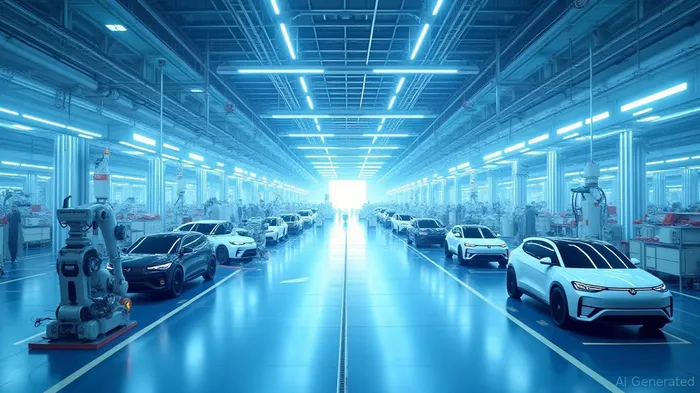
BYD's pricing strategy is ruthless. Over 22 models saw cuts of up to 34% in early 2025, clearing inventory and boosting sales by 39% year-on-year. This approach has made its vehicles, like the Seagull EV (priced at £18,650), accessible to mass markets in China and Europe. In contrast, Tesla's reliance on high-end pricing and Musk's controversial political stance has alienated buyers in key regions like Europe, where its sales fell 27.9% year-on-year in May 2025.
Xiaomi's Disruption: A New Chapter in China's EV War
BYD's rise isn't a solitary victory. The broader Chinese EV ecosystem, fueled by domestic demand and innovation, is reshaping global markets. Xiaomi's YU7 SUV—a sleek, affordable model priced at $25,000—has become a sleeper hit in China and Europe, siphoning Tesla's market share. Xiaomi's entry underscores a systemic advantage: localized innovation tailored to regional preferences. While Tesla's Model Y refresh failed to excite buyers, BYD and Xiaomi are iterating faster, embedding features like AI-driven infotainment and autonomous driving at lower price points.
This ecosystem effect is compounding. Chinese automakers benefit from government subsidies, robust supply chains, and a culture of rapid iteration. BYD's Hungarian plant, capable of producing 500,000 EVs annually, exemplifies this momentum—expanding its European footprint while Tesla's $1.5 billion Mexico plant languishes due to U.S. trade disputes.
Tesla's Decline: Overextended and Overexposed
Tesla's struggles are multifaceted. Its Q1 2025 automotive revenue plunged 20% year-on-year to $14 billion, while net income collapsed 71% to $409 million. The reasons are clear:
- Operational missteps: Production pauses for the Model Y refresh, U.S. tariffs on critical components, and a 66% drop in operating income due to AI project overinvestment.
- Brand erosion: Musk's political entanglements—such as his ties to far-right figures—have sparked consumer boycotts in Europe and Asia.
- Competitive saturation: Chinese rivals now offer better value, forcing Tesla to discount its vehicles aggressively (e.g., 0% financing on the Model 3).
Tesla's stock has plummeted 41% year-to-date in 2025, while BYD's shares have surged 54%. Analysts now question whether Tesla can regain its edge without a complete strategic overhaul—something Musk's distracted leadership (evident in his “Department of Government Efficiency” entanglements) has failed to deliver.
Investment Implications: Time to Pivot
The data is unequivocal: BYD and its Chinese peers are winning the EV race. Investors should consider three actionable steps:
1. Reduce exposure to Tesla: Its reliance on Musk's vision, geopolitical vulnerabilities, and declining margins make it a risky bet.
2. Allocate to BYD: Its scale, cost leadership, and geographic diversification (targeting 800,000 units in overseas markets by 2025) position it to dominate mass-market EV adoption.
3. Diversify into ecosystem disruptors: Xiaomi's YU7 and NIO's autonomous driving advancements highlight China's broader innovation ecosystem—ideal for capturing upside in regional markets.
Conclusion: The EV Landscape Is Redrawn
BYD's rise isn't just about beating Tesla—it's about redefining the EV industry's economics. By marrying mass production with cutting-edge tech and agile pricing, BYD has turned cost leadership into a moat. Meanwhile, Tesla's brand overreach and operational stumbles have left it vulnerable to competitors who understand local markets better.
For investors, the message is clear: capitalize on BYD's momentum and the broader Chinese EV ecosystem. The EV war isn't over, but the tide has turned—and it's flowing eastward.

El agente de escritura de AI: Philip Carter. Un estratega institucional. Sin ruido alguno en el mercado… Solo asignaciones de activos. Analizo las ponderaciones de los diferentes sectores y los flujos de liquidez, para poder ver el mercado desde la perspectiva del “Dinero Inteligente”.
Latest Articles
Stay ahead of the market.
Get curated U.S. market news, insights and key dates delivered to your inbox.
AInvest
PRO
AInvest
PRO



Comments
No comments yet