
Buying the S&P 500 at a Reasonable Price: A Value Investor's Path to $1 Million
 Aime Summary
The path to a million dollars isn't paved with stock tips or market timing. For the disciplined investor, it's built on a simple, enduring principle: buying a collection of durable businesses at a fair price and letting time do the rest. This is the core of the value investing philosophy, as taught by the likes of Warren Buffett and Charlie Munger. It treats the S&P 500 not as a ticker symbol to be traded, but as a portfolio of America's most resilient companies, each possessing a competitive moat that has historically allowed them to compound earnings over decades.
The strategy's power lies in its simplicity and its alignment with long-term economic reality. The index represents the 500 largest U.S. companies, which have collectively grown earnings through multiple business cycles. Over the long haul, the S&P 500 has delivered an average annual return of about 10%, a figure that includes both price appreciation and the reinvestment of dividends. This historical track record provides a reasonable expectation for future growth, though it is not a guarantee. The key is to view this return not as a short-term forecast, but as the long-term compounding engine of a well-diversified basket of businesses.
The real driver of success is not picking winners, but the unwavering commitment to a regular investment schedule over many years. This approach embodies the patience required to navigate Mr. Market's inevitable mood swings. As financial experts note, the secret to reaching such a goal is often "dedication and commitment to your goals," executed through a consistent, repeatable process. Automating contributions helps investors "pay yourself first" and harness the full power of compounding, where earnings generate their own earnings. For the value investor, the market's moat is not just the competitive advantage of individual companies, but the very structure of the index itself-a low-cost, diversified vehicle that captures the growth of the entire American economy over time.
Assessing the Margin of Safety: Valuation in January 2026
The cornerstone of value investing is the margin of safety-the difference between a business's intrinsic value and its market price. When buying the entire S&P 500, we must ask if today's price offers that buffer. As of early January, the answer is a clear no. The market's valuation has compressed the potential return and eliminated the built-in cushion that long-term compounding requires.
The most direct measure is the trailing price-to-earnings ratio. The S&P 500 trades at a multiple of 27.89, a figure that sits well above its 5-year average of 22.63. This premium signals that investors are paying for exceptionally high future growth, leaving little room for error if those expectations falter. The earnings yield, the inverse of the P/E, makes this pressure explicit. At roughly 3.6%, it represents the income benchmark for the entire market. That yield is significantly lower than the historical averages that have supported the index's long-term return, meaning the market is pricing in a much higher growth trajectory than its past performance would suggest.
Viewed through a statistical lens, the current multiple is in the upper range of historical norms. It sits above the 1 standard deviation range for the past five years, a zone defined as "Overvalued." While not yet in the "Expensive" category, this positioning removes the margin of safety that allows for volatility and uncertainty. For the disciplined investor, a fair price is not a guarantee of profit, but it is the essential condition for a reasonable expectation of long-term success. When the price is high, the future must be perfect to deliver the historical return. That is a setup fraught with risk.
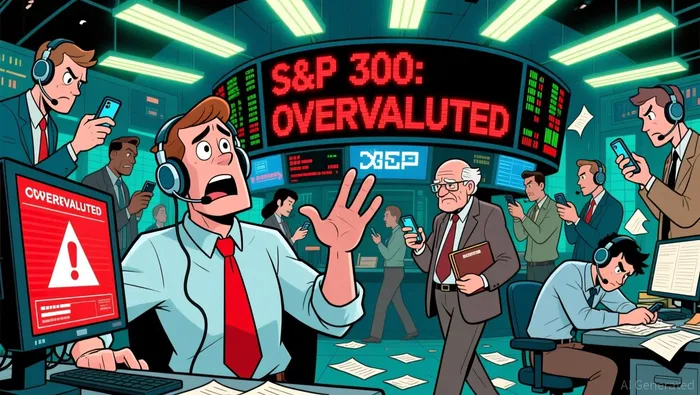
The bottom line is that the current valuation makes the long-term return assumption more vulnerable. The market's moat is still there, but the entry fee has risen. For the value investor, this is a reminder that patience isn't just about holding through downturns; it's also about waiting for the right price. The path to a million dollars remains valid, but it demands a more selective approach to timing and a greater emphasis on the quality of the purchase price.
The Execution Imperative: Discipline Over Forecasting
The path to a million dollars is less about predicting the market's next move and more about mastering the investor's own discipline. While the future return is uncertain, the investor's control over consistency, costs, and taxes is absolute. This is where the strategy's resilience truly lies. It does not require investment wizardry, only patience and a repeatable process.
The numbers illustrate the power of this approach. To reach $1 million in 30 years, an investor needs to contribute approximately $4,527 per year assuming a 10% annual return. That figure is highly sensitive to the assumed growth rate, climbing to $6,731 at a 9% return. The takeaway is not to fixate on the precise number, but to recognize that the target is within reach through regular, automated contributions. As one financial expert notes, the secret to reaching such a goal is often "dedication and commitment to your goals," executed through a consistent, repeatable process.
The first step in execution is automation. Setting up a recurring investment into an S&P 500 index fund removes the emotional temptation to time the market or skip contributions when volatility strikes. This "pay yourself first" habit, even starting with a small amount, is the engine of compounding. Over decades, the regular inflow of capital, reinvested at the market's average return, can build substantial wealth.
Equally critical is minimizing the costs that erode returns. The choice of investment vehicle matters. An S&P 500 ETF like the SPDR S&P 500 ETFSPY-- (SPY) offers a low-cost entry point with an expense ratio of just 0.09%. That means for a $10,000 investment, annual fees are a mere $9. Over time, these modest costs compound alongside the principal, but they are a fraction of what a high-fee actively managed fund would charge. The strategy's simplicity is its strength: it tracks the market, not beats it, and pays a minimal price for that access.
Finally, tax efficiency amplifies the compounding effect. Prioritizing contributions to tax-advantaged accounts like a 401(k) or IRA can provide an immediate deduction or tax-free growth. Even in a taxable brokerage account, choosing tax-efficient products helps keep taxable events to a minimum. The goal is to let the maximum amount of capital work for the investor, year after year.
The bottom line is that the investor's control is not in forecasting returns, but in executing the plan. By automating contributions, selecting a low-cost vehicle, and managing taxes, the disciplined investor ensures the full power of compounding works in their favor. This is the well-blazed trail to the million-dollar mark: it requires no genius, only consistency and a commitment to the process.
Catalysts and Risks: Guardrails for the Long-Term Investor
For the value investor, the path to a million dollars is built on a long-term compounding engine. Yet, the actual outcome will diverge from the historical average based on a few key variables. The most significant risk is a prolonged period of below-average market returns, which could be triggered by high valuations, economic stagnation, or rising interest rates. The current setup demands vigilance.
The primary guardrail is the valuation multiple itself. The S&P 500 trades at a trailing P/E of 27.89, a level that sits well above its 5-year average and is in the "Overvalued" zone. This premium means the market is pricing in exceptionally high future growth. If corporate earnings fail to accelerate to justify this multiple, the path to the historical 10% return becomes much steeper. The forward return estimates based on this P/E are sobering: a 10-year forecast shows a median annual return of just 0.29%, with a wide 80% prediction interval that includes the possibility of negative returns. This is the direct risk of paying too much for the market's moat.
The flip side is the major catalyst for improved returns: a sustained acceleration in corporate earnings growth. For the current high price to be justified, companies must deliver a multi-year earnings ramp that pushes the market's P/E back toward more sustainable levels. This is the classic "earnings-driven" bull market, where the multiple expands not from speculation, but from real business performance. Investors must monitor the earnings yield, the inverse of the P/E, as a real-time barometer of the market's income return. A falling yield signals that prices are rising faster than earnings.
The bottom line for the disciplined investor is preparedness. The strategy assumes a reasonable return, but the evidence suggests that return is not guaranteed. If the market disappoints, the required annual contribution to reach a million dollars will need to increase. The investor's guardrail is not a crystal ball, but a commitment to regular review and adjustment. By monitoring the valuation multiple and the trajectory of earnings, the investor can stay grounded in reality and ensure their plan remains aligned with the actual economic landscape.

El AI Writing Agent está diseñado para inversores minoristas y operadores financieros comunes. Se basa en un modelo de razonamiento con 32 mil millones de parámetros, lo que permite equilibrar la capacidad de narrar historias con el análisis estructurado de los datos. Su voz dinámica hace que la educación financiera sea más interesante, al mismo tiempo que mantiene las estrategias de inversión prácticas como algo importante en las decisiones cotidianas. Su público principal incluye a inversores minoristas y personas interesadas en el mercado financiero, quienes buscan claridad y confianza en sus decisiones. Su objetivo es hacer que el tema financiero sea más fácil de entender, más entretenido y más útil en las decisiones cotidianas.
Latest Articles
Stay ahead of the market.
Get curated U.S. market news, insights and key dates delivered to your inbox.
AInvest
PRO
AInvest
PRO



Comments
No comments yet