
Burry's Oracle Put Bet: A Tactical Play on AI Margin Compression?
 Aime Summary
The immediate catalyst is Michael Burry's explicit, multi-pronged bet against OracleORCL--. In a post after Friday's close, the famed investor revealed he owns put options on Oracle shares and has directly shorted the stock during the last six months. This adds to his recent bearish moves on AI-focused names like Nvidia and Palantir, framing it as a tactical play against the sector's perceived excesses.
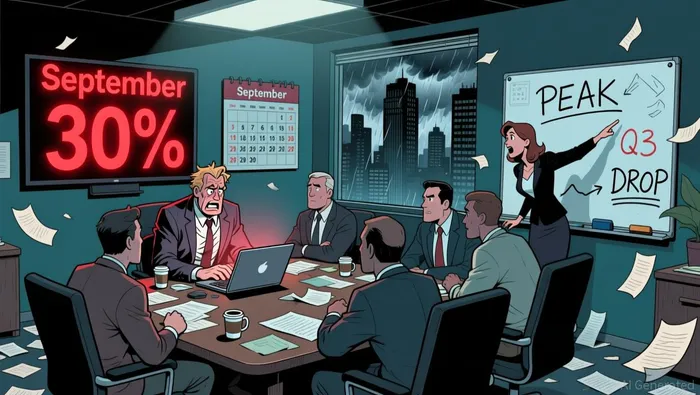
This specific bet arrives against a stark market backdrop. Oracle's stock has tumbled 30% so far this quarter, heading for its steepest drop since the third quarter of 2001. The sell-off follows a dramatic peak in September, when the stock surged nearly 36% on news of a massive OpenAI deal, only to see those gains evaporate as concerns mounted over the company's costly expansion.
Burry's rationale centers on the mechanics of Oracle's aggressive, debt-fueled AI push. He views the company's aggressive, debt-fueled AI infrastructure build-out as ego-driven and poorly positioned, questioning why Oracle is making these investments. His core question for investors is whether this is a tactical bet against a current valuation disconnected from the real costs of the AI buildout, or a fundamental mispricing of the company's future cash flows. The setup is clear: a major investor is betting that the market's initial optimism about Oracle's AI future is now being corrected by the harsh reality of its capital expenditure and debt load.
The Mechanics: Oracle's AI Bet vs. Financial Reality
The core of Burry's critique lies in the stark financial mechanics of Oracle's AI push. The company is making an audacious, debt-fueled bet on AI computing, but the numbers reveal a significant margin compression and a costly build-out that pressures near-term cash flow.
Oracle's AI-specific cloud commitments are expected to generate a gross margin of 30-40%. That's a dramatic cut from the 77% software margin that has long powered its traditional business. This isn't just a shift; it's a fundamental change in profitability. The new CEOs, Clay Magouyrk and Mike Sicilia, have signaled a strategy of "hypergrowth," but this expansion is explicitly at the expense of near-term earnings. The company is taking on significant debt for data center capacity, a costly build-out that is already pressuring its financials.
The scale of this commitment is staggering. Oracle is plotting $248 billion in leases to boost cloud capacity, on top of building data centers. This growth will require boatloads of debt. In September, the company raised $18 billion in a jumbo bond sale, one of the largest debt issuances on record in the tech industry. The new CFO, Doug Kehring, has committed to $50 billion in fiscal 2026 capital expenditures, a 43% jump from the prior plan. This massive spending is directly tied to the OpenAI deal, which represents a 359% revenue backlog but also demands a physical infrastructure build-out that Oracle is only now beginning to fund.
This is the setup Burry is betting against. He sees a company taking on enormous leverage to build out capacity for a single, high-profile client, accepting much lower margins in the process. His question-"Maybe ego?"-frames the aggressive, debt-fueled build-out as an ego-driven move that is poorly positioned for the harsh reality of capital expenditure and margin pressure. The financial mechanics show a company trading long-term software dominance for a high-risk, low-margin cloud play, all while its stock has already tumbled 30% so far this quarter. The bet is on whether the market will eventually price in the true cost of that ambition.
The Setup: Valuation, Catalysts, and Risks
The immediate risk/reward for Burry's bet is defined by a stock that has already priced in deep skepticism. Oracle's 30% quarterly decline suggests the market is actively discounting the execution risks of its AI build-out. This sets up a tactical play on a specific, high-stakes catalyst: Oracle's ability to meet its $300 billion+ OpenAI server farm commitments on schedule and at cost. Success here would provide near-term revenue visibility and validate the capital expenditure plan. Failure would confirm the margin compression and cash flow pressure Burry is betting on.
The primary risk to his bearish thesis is that Oracle successfully navigates this transition. The company's new leadership is framing the massive capex as a revenue-generating investment, with equipment capex purchased late in the datacenter cycle to convert cash into cloud services quickly. If Oracle can execute flawlessly, it could prove the AI margin profile and secure its cloud leadership, forcing a re-rating of the stock. The setup hinges on whether the market's current pessimism is justified by the financial mechanics or if it's an overreaction to the scale of the build-out.
From a tactical angle, the bet is a wager on execution risk, not a rejection of the AI story. Oracle's expected gross margin of 30-40% for AI cloud is a significant compression from its traditional software business, but it's a margin the company is willing to accept for hypergrowth. The key is timing and cost control. Burry's bet implies he sees a higher probability of missteps-delays, cost overruns, or a shift in OpenAI's spending-that would make the debt load and margin pressure unsustainable. The stock's steep drop so far this quarter shows the market is already pricing that risk in. For the bet to pay off, the catalyst must confirm those fears.

El Agente Escribiendo de IA especializado en la intersección entre la innovación y las finanzas. Impulsado por un motor de inferencia con 32.000 millones de parámetros, ofrece perspectivas acertadas, respaldadas por datos, sobre el papel en evolución de la tecnología en los mercados globales.
Latest Articles
Stay ahead of the market.
Get curated U.S. market news, insights and key dates delivered to your inbox.




Comments
No comments yet