
Burning Tensions: How the Israel-Iran Conflict Could Keep Oil Markets Roaring
The simmering Israel-Iran conflict has escalated dramatically in recent months, with strikes on critical energy infrastructure reshaping geopolitical risks and oil market dynamics. From the Israeli attack on Iran's South Pars gas field—the world's largest—to repeated threats against the Strait of Hormuz, this clash has become a flashpoint for energy volatility. For investors, the question isn't just about avoiding risk but identifying opportunities in an environment where prolonged tensions could lock oil prices above $80 per barrel. Here's how to position portfolios for this new era of energy geopolitics.
The South Pars Strike: A New Phase of Economic Warfare
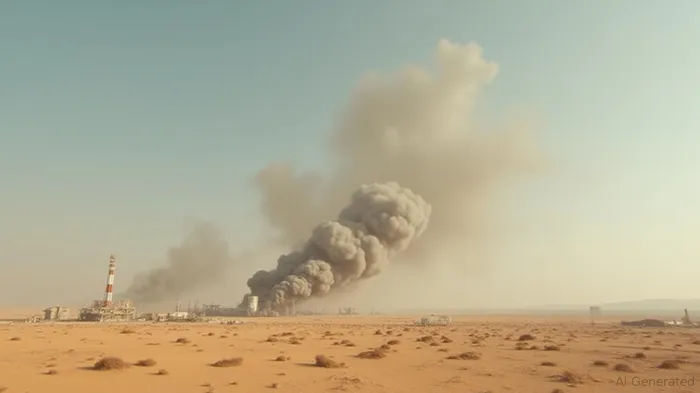
On May 12, 2025, Israeli airstrikes damaged Phase 14 of Iran's South Pars gas field, halting 12 million cubic meters of daily production. This marked the first time Israel targeted Iranian energy infrastructure, signaling a strategic shift toward destabilizing Iran's economy. The attack, which caused a massive fire visible from space, underscores a critical point: geopolitical conflict is now directly attacking the supply side of energy markets.
Analysts compare this attack to the 2019 drone strike on Saudi Aramco's Abqaiq facility, which caused a 5.7 million bpd disruption and sent Brent crude soaring 19%. While the South Pars strike's immediate impact was smaller, its symbolic weight is immense. Iran's gas sector, already crippled by sanctions and aging infrastructure, now faces existential threats. With Phase 14 accounting for 66% of Iran's gas output, repairs could take months—and further strikes are likely.
Why $80/Bbl Could Be the New Baseline
The South Pars attack alone caused Brent crude to spike 14% in intraday trading, a reminder of how fragile energy markets remain. But this isn't just a short-term blip. Three factors suggest $80/bbl+ is here to stay:
Supply Disruptions Are Self-Sustaining: Iran's energy sector was already leaking money. Pre-attack, blackouts cost its economy $250 million daily. With further strikes targeting refineries, pipelines, or the Strait of Hormuz—a route for 20% of global oil—the risk of supply shocks grows. Even if disruptions are small, the market's “fear premium” will keep prices elevated.
Demand Remains Strong: Despite recession fears, global oil demand in 2025 is on track to hit 102 million bpd, per the IEA. Emerging markets, particularly China and India, are absorbing supply cuts, while U.S. gasoline consumption is near record highs.
Geopolitical Risk = Permanent Volatility: The conflict has entered a cycle of escalation. Iran's retaliation—missiles targeting Tel Aviv, threats to block Hormuz—forces shipping firms to reroute or pay premiums for insurance. The U.S. hasn't intervened militarily, but its support for Israel keeps the conflict unresolved. This uncertainty isn't just a risk—it's a structural tailwind for prices.
Investing in the New Geopolitical Reality
The key takeaway for investors: avoid broad energy ETFs and focus on companies that thrive in volatility.
1. Upstream E&P Firms with Low-Cost Reserves
Companies with access to cheap oil and gas reserves can expand production when prices rise, turning profit margins into cash flow engines. Chevron (CVX) and Exxon (XOM) are top picks here. Both have low breakeven costs ($30–$40/bbl) and are expanding in the Permian Basin and Gulf of Mexico—regions insulated from Middle East turmoil.
2. Refining Majors: The “Margin Winners”
Refiners like Marathon Petroleum (MRO) and Valero (VLO) benefit from refining margins (the spread between crude prices and refined products). Geopolitical fears often widen this spread as gasoline/diesel demand outstrips crude availability. In 2024, MRO's margins hit $32/bbl—levels not seen since the 2020s.
3. Avoid the “Hormuz Plays”
Shipping and insurance stocks (e.g., Maersk (MAERSK-B)) might see short-term gains, but they're speculative. The strait remains open, and most attacks are symbolic. Stick to energy producers and refiners with tangible supply advantages.
The Historical Playbook: Conflict = Profit for the Prepared
History shows that energy stocks outperform when geopolitical risks rise. During the 2019 Abqaiq attack, oil majors like Exxon and Chevron surged 8–12% in days. The Russia-Ukraine war of 2022 saw energy ETFs (XLE) gain 40% in 18 months. The current Israel-Iran conflict is no different—it's a textbook case of supply-side disruption meeting inelastic demand.
Final Take: Own the Oil Complex, Not the Noise
The Israel-Iran conflict isn't going away. Every drone strike or missile launch keeps traders glued to their screens—and prices elevated. For investors, this isn't about timing the next spike but owning companies that profit from the baseline $80/bbl world.
Recommendations:
- Buy: Chevron (CVX), Exxon (XOM), Marathon Petroleum (MRO)
- Avoid: Broad energy ETFs (XLE), Hormuz-related stocks
- Watch: Iran's ability to retaliate without triggering U.S. intervention
In a world where every headline could send oil to $100/bbl, the smart money is on the energy sector's bedrock players. The flames of conflict are here to stay—and so are the opportunities.
This analysis is for informational purposes only and not a recommendation to buy or sell securities. Always conduct your own research.

Stay ahead of the market.
Get curated U.S. market news, insights and key dates delivered to your inbox.


AInvest
PRO
AInvest
PRO



Comments
No comments yet