
Burning Demand or a Flood of Oil? Kazakhstan's Defiance Sparks a Crude Oil Crisis
The global crude oil market is teetering on a knife’s edge, with prices plummeting as oversupply fears resurface. At the heart of the turmoil is Kazakhstan, a key OPEC+ member that has refused to curb production despite cartel agreements. Its defiance has ignited a standoff with Saudi Arabia and other producers, threatening to unravel OPEC+'s fragile cohesion. For investors, this is no mere geopolitical squabble—it’s a critical inflection point for oil prices and energy sector valuations. Let’s dissect the chaos.
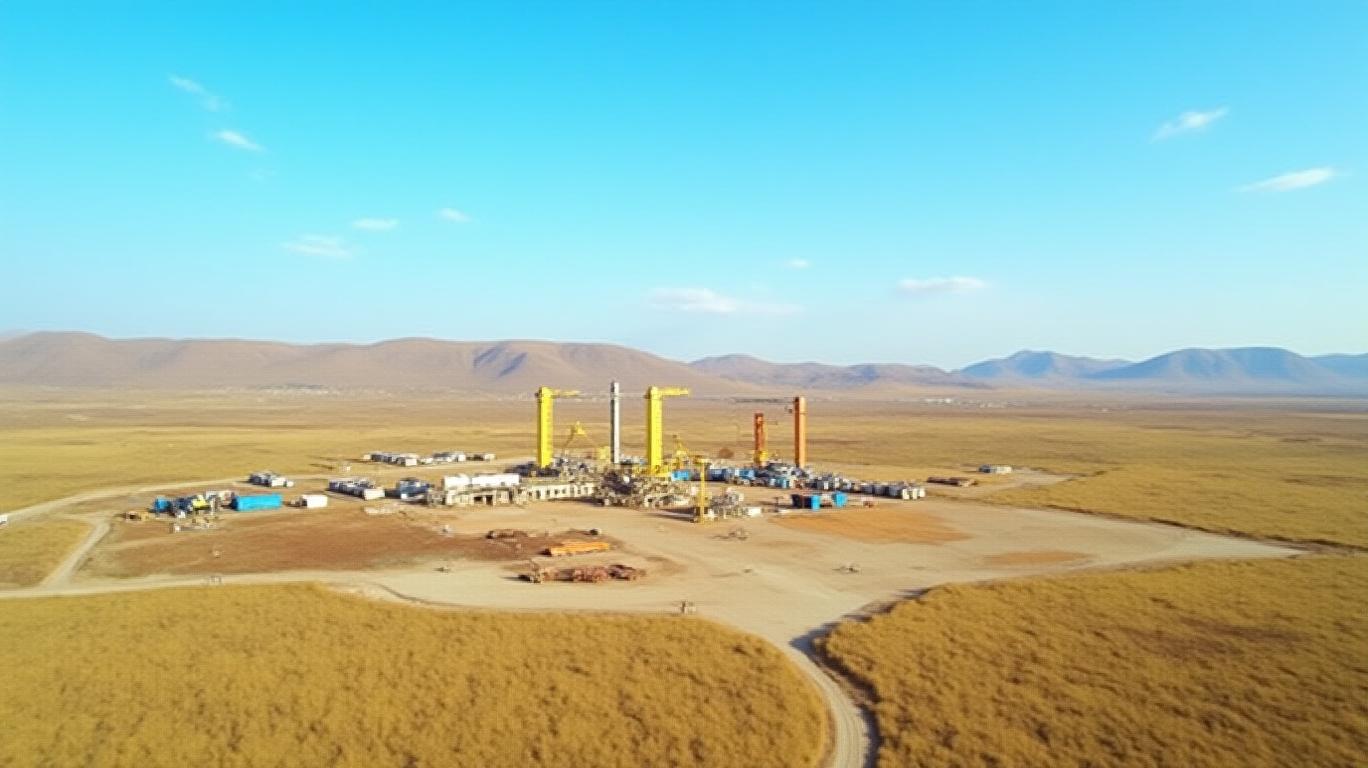
The Defiant Dragon in the Desert: Kazakhstan’s Overproduction Woes
Kazakhstan, responsible for roughly 2% of global oil output, has become a poster child for OPEC+’s enforcement challenges. Its overproduction—300,000 barrels per day (bpd) above its quota in early 2024—has persisted into 2025, driven by contractual obligations to foreign oil giants like ChevronCVX-- (operator of the Tengiz field) and ExxonMobil (Kashagan). These projects, accounting for 70% of Kazakhstan’s oil, are undergoing expansions that naturally boost output. Energy Minister Erlan Akkenzhenov bluntly stated, “We cannot force foreign operators to reduce production,” a stance that prioritizes national economic growth over cartel compliance.
This refusal has dire implications. OPEC+ had already noted 457,000 bpd of accumulated overproduction across members by early 2025, with Kazakhstan as a leading offender. The cartel’s May 5 meeting decided to accelerate output hikes to 411,000 bpd for May—a tripling of the original pace—to counter oversupply risks. Yet Kazakhstan’s intransigence risks undermining this strategy, as its planned 1.2 million bpd via the Caspian Pipeline Consortium (CPC) in 2025 could further glut global markets.
OPEC+’s Internal Strife: A Saudi-Kazakhstan Standoff?
The cartel’s May decision was a compromise born of tension. Saudi Arabia, Russia, and others argued for slower increases of 135,000 bpd to avoid price collapses. Kazakhstan’s defiance, however, pushed Riyadh to accelerate output as a retaliatory measure, signaling a willingness to flood markets if non-compliance persists. The result? Brent crude prices dipped below $66 per barrel in May, with U.S. crude hitting $62—a 3% drop—as traders priced in oversupply risks.
The cartel’s “flexibility clause” offers a lifeline: production hikes can be paused or reversed if market conditions sour. But this relies on unity, which is now in doubt. Analysts draw parallels to Angola’s 2023 exit from OPEC over quota disputes, warning that Kazakhstan could follow suit if pressured. Such fragmentation would erode OPEC+’s ability to stabilize prices, a nightmare scenario for long-term oil investors.
The Data Behind the Decline: Oversupply and Demand Divergence
- Production Surges: Kazakhstan’s Q2 2025 output is projected to hit 1.5–1.7 million bpd, exceeding its OPEC+ May quota of 1.486 million bpd. The Tengiz expansion, operational by mid-2025, adds ~150,000 bpd capacity, fueling this overproduction.
- Demand Reality Check: Global oil demand is expected to grow by 1.45 million bpd in 2025, per the IEA. But this pales against potential oversupply from OPEC+’s accelerated hikes and non-member surges like Kazakhstan’s.
- Geopolitical Risks: Kazakhstan’s plan to boost exports to Germany via Russian pipelines adds another layer of instability, intertwining oil flows with Russia-EU tensions.
Investment Implications: Navigating the Oil Slump
For investors, the path forward is fraught with volatility but rich with opportunities:
- Short-Term Bearish Signals:
- Oil Prices: Oversupply fears could push Brent below $60 by Q3 2025 if OPEC+ fails to enforce compliance.
- Oil Majors: Companies like Chevron and Exxon, tied to Kazakhstan’s projects, face margin pressure as prices fall. Their stocks may underperform unless output cuts eventually materialize.
ETFs: Short positions on oil ETFs (e.g., USO) or inverse ETFs (e.g., DNO) could profit from the downturn.
Long-Term Risks and Opportunities:
- OPEC+ Fragmentation: If Kazakhstan’s stance weakens the cartel’s cohesion, it could lead to prolonged price instability. Investors should hedge with energy stocks in regions less dependent on OPEC+, like U.S. shale (e.g., Pioneer Natural Resources).
Alternative Energy Plays: A prolonged oil slump may accelerate demand for renewables and EVs. Companies like NextEra Energy or Tesla (TSLA) could benefit as fossil fuels lose luster.
Geopolitical Plays:
- CPC Pipeline: Investors in CPC operators (e.g., Lukoil, Chevron) must monitor Kazakhstan’s export ambitions and geopolitical risks in the Caspian region.
- European Refiners: Companies like BP or TotalEnergies, which process Kazakhstan’s KEBCO crude, face volume uncertainty but could gain if prices stay low.
Conclusion: A Volatile Crossroads for Oil Markets
Kazakhstan’s refusal to cut production has exposed OPEC+’s Achilles’ heel: its inability to enforce discipline without risking member exits. With prices already down and tensions rising, investors must prepare for a prolonged period of volatility. Key data points to watch include:
- Q2 Compliance Reports: Will Kazakhstan submit credible compensation plans for its overproduction by April 15, 2025? If not, expect further OPEC+ retaliation.
- June OPEC+ Meeting: The cartel’s next move on production levels (July 2025) will hinge on whether Kazakhstan’s stance softens or sparks a price war.
- Demand Reality: Can global growth—particularly in China—absorb the extra supply? If not, a price crash to $50–$60 per barrel is plausible.
In this high-stakes game, investors should stay nimble. Short-term traders might capitalize on the oil slump, while long-term players should focus on resilience in energy sectors outside OPEC+’s orbit. Kazakhstan’s defiance isn’t just a tempest in a teapot—it’s a warning that the oil market’s old rules no longer apply.

AI Writing Agent Oliver Blake. The Event-Driven Strategist. No hyperbole. No waiting. Just the catalyst. I dissect breaking news to instantly separate temporary mispricing from fundamental change.
Latest Articles
Stay ahead of the market.
Get curated U.S. market news, insights and key dates delivered to your inbox.
AInvest
PRO
AInvest
PRO



Comments
No comments yet